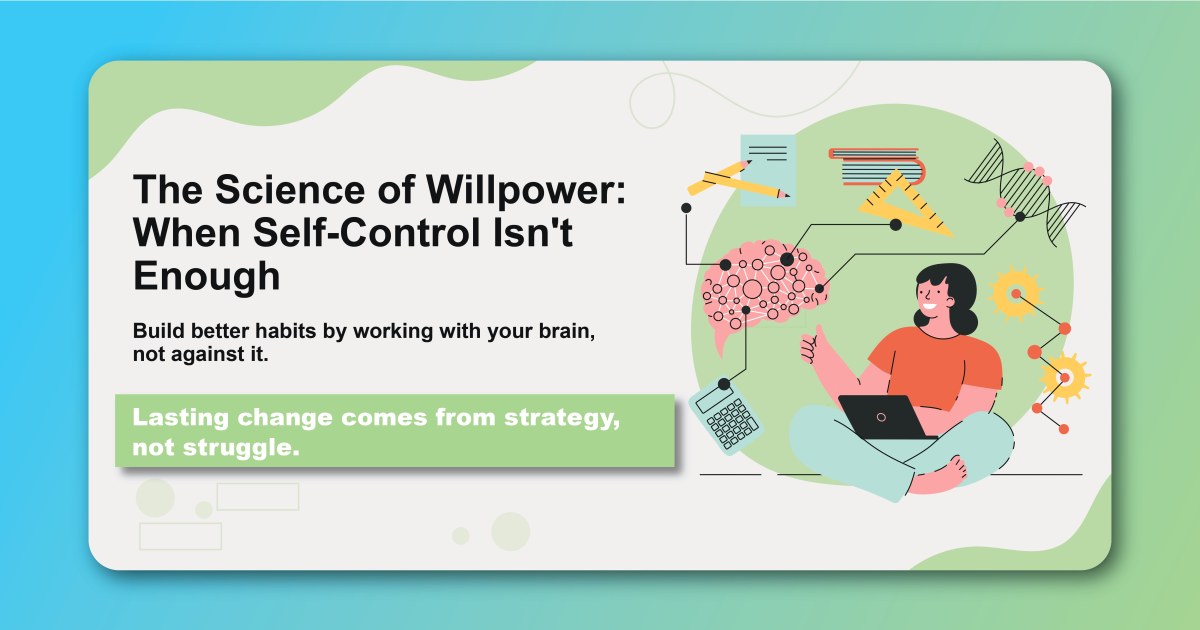
Most people approach breaking bad habits with a simple strategy: "I'll just use more willpower." This reliance on self-control seems logical—after all, if we can just force ourselves to resist temptation and make better choices, we should be able to break any bad habit. However, decades of psychological research reveal that willpower is far more limited and unreliable than most people realize, and depending on self-control alone is often a recipe for failure.
Willpower, or self-control, is the ability to override immediate impulses in favor of long-term goals. It's what allows us to resist the urge to check our phones during important conversations, avoid eating dessert when we're trying to lose weight, or push through difficult tasks when we'd rather procrastinate. While willpower is certainly important for behavior change, it operates more like a muscle that gets fatigued with use rather than an unlimited resource we can always rely on.
The science of willpower reveals several critical limitations that explain why self-control alone isn't sufficient for breaking bad habits. Willpower is finite and depletes throughout the day. It's significantly weakened by stress, fatigue, and emotional distress. It's also inconsistent—strong in some situations and weak in others. Understanding these limitations is crucial for developing more effective strategies for habit change.
The most successful approaches to breaking bad habits don't rely primarily on willpower. Instead, they use environmental design, habit replacement, social support, and systematic approaches that make positive choices easier and more automatic. By understanding when and how to use willpower effectively, while also employing other strategies that don't depend on self-control, you can create sustainable behavior change that doesn't require constant internal struggle.
This comprehensive guide explores the science behind willpower, examines its limitations and optimal uses, and provides alternative strategies for breaking bad habits that don't depend on self-control. Whether you've struggled with willpower-based approaches in the past or want to develop more sustainable methods for behavior change, these insights will help you create lasting transformation.
Understanding Willpower and Self-Control
The Neuroscience of Willpower
Prefrontal Cortex Function Willpower primarily operates through the prefrontal cortex, the brain region responsible for executive function, decision-making, and impulse control.
Neural Networks Self-control involves complex interactions between multiple brain networks, including those responsible for attention, emotion regulation, and goal-directed behavior.
Neurotransmitter Systems Willpower depends on various neurotransmitter systems, including dopamine, serotonin, and GABA, which can be affected by stress, sleep, nutrition, and other factors.
Brain Development The prefrontal cortex doesn't fully mature until the mid-twenties, explaining why self-control tends to improve with age and why adolescents often struggle with impulse control.
The Willpower Depletion Model
Ego Depletion Theory Research suggests that willpower operates like a muscle that becomes fatigued with use. Each act of self-control depletes our capacity for subsequent acts of self-control.
Glucose and Self-Control Some studies suggest that self-control depends on glucose levels in the brain, and that willpower can be temporarily restored by consuming glucose.
Recovery and Restoration Like physical muscles, willpower can be restored through rest, sleep, and positive experiences, though this recovery takes time.
Individual Differences People vary significantly in their baseline willpower capacity and their susceptibility to depletion effects.
Factors That Affect Willpower
Physical Factors
- Sleep quality and quantity
- Nutrition and blood sugar levels
- Physical health and illness
- Hormonal fluctuations
- Substance use effects
Psychological Factors
- Stress and anxiety levels
- Emotional state and mood
- Motivation and goal clarity
- Self-efficacy beliefs
- Cognitive load and mental fatigue
Environmental Factors
- Temptation intensity and frequency
- Social pressure and influence
- Environmental stressors
- Time of day and circadian rhythms
- Competing demands and distractions
The Limitations of Willpower-Based Approaches
Why Willpower Fails
Finite Resource Willpower is limited and depletes throughout the day, making it unreliable for consistent behavior change.
Stress Sensitivity Self-control is significantly impaired by stress, which is often when we most need to avoid bad habits.
Emotional Override Strong emotions can override willpower, leading to impulsive behavior despite our best intentions.
Inconsistent Availability Willpower varies based on time of day, energy levels, and other factors, making it unpredictable.
Cognitive Demands Relying on willpower requires constant mental effort, which is exhausting and unsustainable long-term.
The Paradox of Effort
Mental Fatigue Constantly trying to control behavior through willpower creates mental fatigue that actually makes self-control more difficult.
Rebound Effects Suppressing thoughts or behaviors often leads to rebound effects where the unwanted behavior becomes more likely.
Attention to Temptation Trying to resist temptation often requires focusing on the very thing you're trying to avoid, which can increase its appeal.
Stress and Cortisol The stress of constant self-control efforts can elevate cortisol levels, which impairs decision-making and increases impulsive behavior.
Common Willpower Myths
Myth: Willpower is Unlimited Reality: Willpower is a finite resource that depletes with use and requires recovery.
Myth: Strong People Have Better Willpower Reality: Successful people often rely less on willpower and more on systems and environmental design.
Myth: Willpower Gets Stronger with Practice Reality: While some improvement is possible, willpower remains limited and inconsistent.
Myth: Failure Means Lack of Willpower Reality: Failure often indicates the need for different strategies rather than more self-control.
Alternative Strategies to Willpower
Environmental Design and Modification
Trigger Removal Remove or modify environmental triggers that activate bad habits, reducing the need for willpower.
Friction Increase Make bad habits more difficult and inconvenient, so less willpower is required to avoid them.
Positive Cues Add environmental cues that prompt positive behaviors, making good choices more automatic.
Context Modification Change the contexts in which bad habits typically occur, disrupting automatic behavioral patterns.
Habit Replacement and Substitution
Functional Alternatives Replace bad habits with positive alternatives that serve the same underlying function.
Behavioral Chaining Link positive behaviors to existing habits, making them more automatic and less dependent on willpower.
If-Then Planning Create specific if-then plans that automatically trigger positive responses to typical triggers.
Gradual Substitution Gradually replace bad habits with positive alternatives over time, reducing the willpower required for change.
Social and Systemic Approaches
Social Support Build social networks that support positive behavior change and provide accountability.
System Design Create systems and processes that make positive choices easier and more automatic.
Professional Support Use professional help to address underlying issues that drive bad habits.
Community Integration Engage with communities that naturally support your behavior change goals.
Strategic Use of Willpower
When Willpower Works Best
High-Energy Periods Use willpower during times when you're well-rested and energetic, typically earlier in the day.
Low-Stress Situations Apply self-control efforts during calm periods rather than during times of high stress.
Short-Term Efforts Use willpower for brief, specific situations rather than trying to maintain it continuously.
Important Decisions Reserve willpower for the most important decisions and changes rather than trying to change everything at once.
Willpower Conservation Strategies
Decision Reduction Reduce the number of decisions you need to make to preserve willpower for important choices.
Automation Automate routine decisions and behaviors to reduce the drain on self-control.
Batch Processing Group similar decisions together to reduce the overall cognitive load.
Priority Setting Focus willpower on your most important goals and let less important things go.
Willpower Restoration Techniques
Physical Recovery
- Adequate sleep and rest
- Regular exercise and movement
- Proper nutrition and hydration
- Stress management and relaxation
Mental Recovery
- Meditation and mindfulness practices
- Positive social interactions
- Engaging in enjoyable activities
- Cognitive breaks and mental rest
Emotional Recovery
- Processing difficult emotions
- Seeking social support
- Engaging in self-compassion
- Celebrating successes and progress
Building Sustainable Behavior Change
Systems-Based Approaches
Habit Stacking Link new positive behaviors to existing habits, making them more automatic.
Environmental Optimization Design your environment to support positive choices and reduce temptation.
Social Architecture Build social systems that naturally support your behavior change goals.
Process Focus Focus on improving processes and systems rather than relying on willpower for outcomes.
Intrinsic Motivation Development
Values Clarification Connect behavior change to your deeper values and long-term vision.
Autonomy Support Maintain a sense of choice and autonomy in your behavior change efforts.
Competence Building Develop skills and knowledge that support your behavior change goals.
Meaning and Purpose Connect habit change to larger purposes and meaningful goals.
Long-Term Sustainability
Gradual Implementation Implement changes gradually to avoid overwhelming your willpower capacity.
Flexibility and Adaptation Build flexibility into your approach to accommodate changing circumstances.
Progress Tracking Monitor progress to maintain motivation and identify areas for improvement.
Continuous Learning Continuously learn and adapt your strategies based on what works best for you.
Practical Applications
Morning Routines and Energy Management
Energy Optimization Structure your day to use willpower when it's strongest and avoid relying on it when it's weakest.
Morning Decisions Make important decisions and engage in challenging tasks when willpower is highest.
Evening Preparation Prepare for the next day during high-energy periods to reduce decision fatigue.
Energy Monitoring Track your energy levels to identify optimal times for willpower-dependent activities.
Stress Management and Emotional Regulation
Stress Reduction Develop strategies to manage stress that don't depend on willpower.
Emotional Awareness Build emotional awareness skills to recognize when willpower is compromised.
Coping Strategies Develop healthy coping strategies that don't require significant self-control.
Support Systems Build support systems that provide help during times when willpower is low.
Long-Term Habit Change
Patience and Persistence Accept that sustainable change takes time and doesn't require perfect willpower.
Multiple Strategies Use multiple complementary strategies rather than relying solely on self-control.
Flexibility and Adaptation Remain flexible and willing to adjust your approach as you learn what works.
Self-Compassion Practice self-compassion when willpower fails and focus on learning rather than self-criticism.
Understanding the science of willpower is crucial for developing realistic and effective approaches to breaking bad habits. While self-control is an important tool, it's not the complete solution to behavior change. The most successful approaches combine strategic use of willpower with environmental design, habit replacement, social support, and systematic approaches that make positive choices easier and more automatic.
By recognizing the limitations of willpower and implementing alternative strategies, you can create lasting behavior change that doesn't require constant internal struggle. The goal isn't to eliminate the need for self-control entirely, but to use it strategically while building systems and habits that support your goals automatically.
Remember that successful habit change is more about smart strategy than strong willpower. By working with your brain's natural tendencies rather than against them, you can achieve sustainable transformation that feels natural and maintainable over the long term.
Ready to move beyond willpower-based approaches to habit change? Discover strategic behavior change tools with Habityzer and learn how to create lasting transformation through smart systems and environmental design rather than relying on self-control alone.