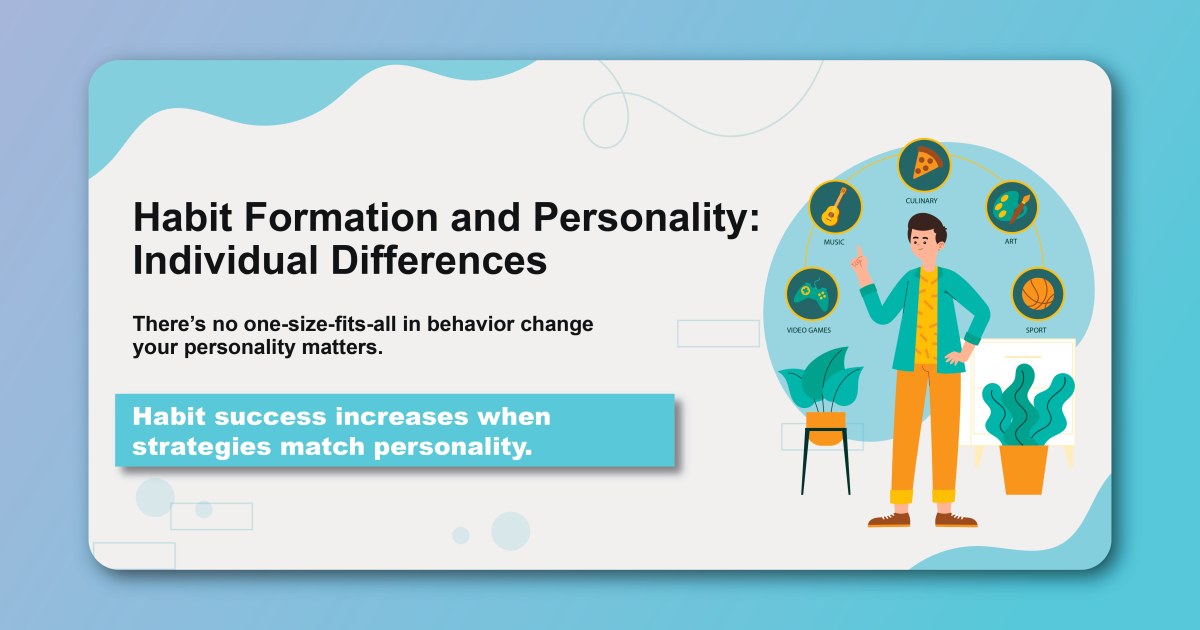
The relationship between personality and habit formation is one of the most fascinating and practical areas of behavioral psychology. While the basic mechanisms of habit formation remain consistent across individuals, the way these mechanisms express themselves varies dramatically based on personality traits, cognitive styles, and individual differences. Understanding your unique personality profile can transform your approach to habit formation, making it more effective, sustainable, and aligned with your natural tendencies.
Research in personality psychology has revealed that different personality traits create distinct patterns of motivation, attention, and behavior regulation that profoundly influence how successfully people form and maintain habits. What works brilliantly for one personality type may feel forced or unsustainable for another. This individual variation explains why so many people struggle with generic habit formation advice and why personalized approaches tend to be more effective.
The Big Five personality traits – openness, conscientiousness, extraversion, agreeableness, and neuroticism – each create unique opportunities and challenges for habit formation. Additionally, other personality frameworks like the Myers-Briggs Type Indicator, Enneagram, and various cognitive style assessments provide additional insights into how individual differences affect behavior change success.
Understanding these personality-based differences doesn't mean being limited by your traits, but rather working with your natural tendencies while gradually expanding your behavioral repertoire. Personality-informed habit formation is about leveraging your strengths while developing strategies to address your potential weaknesses. It's about finding the path of least resistance that leads to sustainable positive change.
This personalized approach to habit formation represents a significant advancement over one-size-fits-all methodologies. By tailoring strategies to individual personality profiles, we can increase success rates, reduce frustration, and create more sustainable long-term behavior change. The key is learning to work with, rather than against, your natural personality patterns.
The Big Five Personality Traits and Habit Formation
Conscientiousness: The Habit Formation Advantage
Natural Habit Formers Individuals high in conscientiousness have natural advantages in habit formation due to their inherent self-discipline and organization.
Conscientiousness Characteristics:
- High self-discipline and impulse control
- Natural organization and planning abilities
- Goal-oriented and achievement-focused mindset
- Persistence in the face of obstacles
- Attention to detail and systematic approaches
Habit Formation Strengths:
- Excellent at maintaining consistent routines
- Natural ability to resist temptations and distractions
- Systematic approach to behavior change
- Long-term perspective and patience with gradual progress
- Strong intrinsic motivation for self-improvement
Potential Challenges:
- May be overly rigid in approach
- Perfectionism can lead to all-or-nothing thinking
- May struggle with flexibility when circumstances change
- Can be too hard on themselves when they slip up
- May neglect spontaneity and enjoyment in favor of discipline
Optimized Strategies for High Conscientiousness:
- Leverage natural planning abilities with detailed habit schedules
- Use systematic tracking and measurement systems
- Set challenging but achievable goals
- Build in flexibility to prevent rigidity
- Focus on long-term benefits and personal growth
Extraversion: Social Habit Formation
Energized by Social Connection Extraverted individuals thrive on social interaction and external stimulation, which significantly influences their habit formation approach.
Extraversion Characteristics:
- High energy and enthusiasm
- Preference for social interaction and group activities
- External processing and thinking out loud
- Optimistic and positive outlook
- Responsiveness to external rewards and recognition
Habit Formation Strengths:
- Excellent at social and group-based habit formation
- High energy and enthusiasm for new challenges
- Natural ability to inspire and motivate others
- Resilience and quick recovery from setbacks
- Comfort with public accountability and sharing progress
Potential Challenges:
- May struggle with solo or quiet habits
- Tendency to take on too many habits at once
- May lose motivation without external support
- Can be distracted by social opportunities
- May prioritize social connection over individual goals
Optimized Strategies for High Extraversion:
- Incorporate social elements into habit formation
- Use group challenges and community support
- Leverage external accountability and check-ins
- Create habits that involve interaction with others
- Use public commitment and social recognition
Neuroticism: Managing Emotional Volatility
Emotional Sensitivity and Habit Formation Individuals high in neuroticism face unique challenges in habit formation due to emotional volatility and stress sensitivity.
Neuroticism Characteristics:
- High emotional reactivity and sensitivity
- Tendency toward anxiety and worry
- Stress sensitivity and overwhelm
- Negative thought patterns and rumination
- Difficulty with emotional regulation
Habit Formation Challenges:
- Emotional ups and downs can disrupt consistency
- Stress and anxiety can interfere with motivation
- All-or-nothing thinking patterns
- Self-criticism and negative self-talk
- Difficulty bouncing back from setbacks
Habit Formation Strengths:
- High motivation for stress reduction and wellness
- Attention to emotional states and self-awareness
- Ability to recognize when habits are needed
- Empathy and understanding of others' struggles
- Potential for significant life improvement through habit change
Optimized Strategies for High Neuroticism:
- Focus on stress-reducing and mood-stabilizing habits
- Use gentle, gradual approach to avoid overwhelm
- Incorporate mindfulness and emotional regulation practices
- Build in extra support and self-compassion
- Address underlying anxiety and stress management
Openness: Creative and Flexible Approaches
Intellectual Curiosity and Novelty Seeking Individuals high in openness bring creativity and intellectual curiosity to habit formation but may struggle with routine consistency.
Openness Characteristics:
- High intellectual curiosity and creativity
- Preference for novelty and new experiences
- Abstract thinking and conceptual understanding
- Appreciation for complexity and nuance
- Tendency toward unconventional approaches
Habit Formation Strengths:
- Creative problem-solving in habit design
- Ability to see big picture and understand systems
- Willingness to experiment with new approaches
- Intellectual understanding of habit formation principles
- Ability to adapt and modify strategies
Potential Challenges:
- May get bored with routine and repetition
- Tendency to overcomplicate simple habits
- May start many habits but struggle to maintain them
- Can be distracted by new and interesting opportunities
- May resist structured or conventional approaches
Optimized Strategies for High Openness:
- Incorporate variety and novelty into habit design
- Use creative and artistic approaches to tracking
- Focus on the intellectual challenge of habit formation
- Experiment with different techniques and methods
- Connect habits to larger values and meaning
Agreeableness: Collaborative Habit Formation
Harmony and Cooperation Focus Individuals high in agreeableness are motivated by harmony and cooperation, which affects their approach to habit formation.
Agreeableness Characteristics:
- High empathy and consideration for others
- Preference for harmony and cooperation
- Tendency to put others' needs before their own
- Collaborative and supportive approach
- Sensitivity to social dynamics and relationships
Habit Formation Strengths:
- Excellent at supporting others' habit formation
- Natural ability to create supportive environments
- Motivation through helping and serving others
- Collaborative approach to shared goals
- Sensitivity to social and environmental factors
Potential Challenges:
- May neglect personal needs in favor of others
- Difficulty with self-focused or competitive approaches
- May struggle with habits that require assertiveness
- Can be influenced by others' negative habits
- May lack self-advocacy in maintaining personal goals
Optimized Strategies for High Agreeableness:
- Frame habits in terms of service to others
- Use collaborative and supportive approaches
- Focus on habits that improve relationships
- Include family and friends in habit formation
- Emphasize how personal habits benefit others
Cognitive Styles and Habit Formation
Thinking vs. Feeling Decision-Making
Rational vs. Emotional Approaches Different cognitive styles require different approaches to habit formation and motivation.
Thinking-Oriented Approaches:
- Logical analysis of habit benefits and costs
- Data-driven tracking and measurement
- Systematic problem-solving when obstacles arise
- Focus on efficiency and optimization
- Objective evaluation of progress and outcomes
Feeling-Oriented Approaches:
- Emotional connection to habit goals and values
- Focus on how habits make you feel
- Attention to impact on relationships and others
- Motivation through personal meaning and purpose
- Subjective evaluation of habit success
Integration Strategies:
- Combine logical analysis with emotional connection
- Use both data and feeling-based feedback
- Address both rational and emotional motivations
- Create habits that satisfy both cognitive preferences
- Develop awareness of when to use each approach
Judging vs. Perceiving Preferences
Structure vs. Flexibility in Habit Formation Preferences for structure versus flexibility significantly impact habit formation success.
Judging-Oriented Approaches:
- Structured schedules and consistent timing
- Clear goals and specific outcomes
- Systematic tracking and measurement
- Preference for closure and completion
- Advance planning and preparation
Perceiving-Oriented Approaches:
- Flexible timing and adaptive scheduling
- Open-ended goals and exploratory approaches
- Spontaneous habit formation opportunities
- Comfort with ambiguity and uncertainty
- Responsive and adaptive planning
Balanced Approaches:
- Combine structure with flexibility
- Use minimum viable structure while allowing adaptation
- Set general direction while remaining open to adjustment
- Balance planning with spontaneity
- Create systems that can accommodate both preferences
Motivational Patterns and Individual Differences
Intrinsic vs. Extrinsic Motivation
Internal vs. External Driving Forces Understanding your primary motivational patterns helps design more effective habit formation strategies.
Intrinsic Motivation Patterns:
- Motivation from personal growth and mastery
- Satisfaction from the process itself
- Autonomy and self-direction in goal setting
- Focus on internal rewards and satisfaction
- Long-term perspective and patience
Extrinsic Motivation Patterns:
- Motivation from external rewards and recognition
- Satisfaction from achieving visible outcomes
- Responsiveness to social approval and feedback
- Focus on external validation and achievement
- Short-term focus and immediate gratification
Hybrid Approaches:
- Combine internal and external motivators
- Use external rewards to build intrinsic motivation
- Create systems that satisfy both motivational types
- Develop awareness of when each type is most effective
- Gradually shift from extrinsic to intrinsic motivation
Approach vs. Avoidance Orientation
Moving Toward vs. Moving Away Different individuals are primarily motivated by moving toward positive outcomes or away from negative consequences.
Approach-Oriented Strategies:
- Focus on positive benefits and outcomes
- Emphasize growth and improvement
- Use positive reinforcement and rewards
- Highlight progress and achievements
- Create inspiring and uplifting goal statements
Avoidance-Oriented Strategies:
- Focus on preventing negative outcomes
- Emphasize risk reduction and problem solving
- Use negative consequences as motivators
- Highlight costs of not changing
- Create accountability systems with consequences
Balanced Approaches:
- Use both positive and negative motivators
- Address both opportunities and threats
- Create systems that appeal to both orientations
- Develop awareness of which approach is most effective in different situations
- Gradually develop capacity for both motivational styles
Practical Applications and Personalization
Personality-Based Habit Design
Tailoring Habits to Individual Differences Effective habit formation requires adapting strategies to individual personality profiles.
Assessment and Awareness:
- Take personality assessments to understand your profile
- Identify your natural strengths and potential challenges
- Recognize your motivational patterns and preferences
- Understand your cognitive style and decision-making preferences
- Develop awareness of how personality affects behavior
Personalized Strategy Development:
- Choose habit formation approaches that align with your personality
- Adapt generic advice to fit your individual needs
- Experiment with different strategies to find what works
- Build on your natural strengths while addressing weaknesses
- Create systems that feel natural and sustainable
Environmental and Social Considerations
Matching Environment to Personality Creating environments that support your personality-based habit formation needs.
Environmental Design:
- Create physical spaces that support your personality type
- Minimize environmental factors that trigger negative patterns
- Design social environments that support your habit goals
- Use technology and tools that align with your preferences
- Build in flexibility to accommodate personality-based needs
Social Support Systems:
- Choose accountability partners who complement your personality
- Create social environments that support your habit goals
- Communicate your personality-based needs to others
- Build diverse support networks that address different needs
- Use social media and online communities aligned with your style
Adaptive Strategies for Different Situations
Flexibility Within Personality-Based Approaches While personality provides a foundation, successful habit formation requires adaptability.
Situational Adaptation:
- Recognize when to adapt your approach to different circumstances
- Develop backup strategies for challenging situations
- Build flexibility into personality-based systems
- Learn from setbacks and adjust accordingly
- Maintain awareness of changing needs and circumstances
Growth and Development:
- Use habit formation as a tool for personality development
- Gradually expand your behavioral repertoire
- Challenge yourself to try approaches outside your comfort zone
- Develop skills that complement your natural tendencies
- Maintain balance between leveraging strengths and addressing weaknesses
Integration and Synthesis
Combining Multiple Personality Frameworks
Holistic Understanding of Individual Differences The most effective approach combines insights from multiple personality frameworks.
Multi-Framework Integration:
- Use Big Five traits as a foundation
- Add insights from other personality systems
- Consider cognitive styles and thinking preferences
- Include motivational patterns and values
- Integrate emotional and social intelligence factors
Practical Application:
- Create comprehensive personality profiles for habit formation
- Use multiple assessment tools and frameworks
- Develop nuanced understanding of individual differences
- Avoid oversimplification or stereotyping
- Maintain flexibility and openness to new insights
Future Directions in Personality-Based Habit Formation
Emerging Trends and Technologies The field of personality-based habit formation continues to evolve with new research and technology.
Technological Integration:
- AI-powered personality assessment and recommendation systems
- Adaptive habit tracking that responds to personality patterns
- Social matching based on personality compatibility
- Real-time adjustment of strategies based on personality feedback
- Integration of multiple data sources for comprehensive personality understanding
Research Developments:
- Longitudinal studies of personality and habit formation
- Cross-cultural research on personality and behavior change
- Integration of neuroscience with personality psychology
- Development of more sophisticated personality assessment tools
- Research on personality change and development through habit formation
Understanding the relationship between personality and habit formation provides a powerful framework for creating more effective, sustainable behavior change strategies. Rather than fighting against your natural tendencies, you can learn to work with them while gradually expanding your capabilities and flexibility.
The key is to start with your personality strengths while systematically developing strategies to address your potential challenges. This approach honors your individual differences while promoting growth and development. Most importantly, it makes habit formation more enjoyable and sustainable by aligning with your natural patterns and preferences.
Remember that personality is not destiny – it's a starting point for understanding yourself and designing strategies that work with your natural tendencies. With awareness, intentionality, and practice, you can develop habit formation skills that transcend your initial personality limitations while leveraging your unique strengths.
Ready to discover how your personality can enhance your habit formation success? Start building your personality-informed habit practice with Habityzer and unlock personalized strategies that align with your unique traits and preferences.