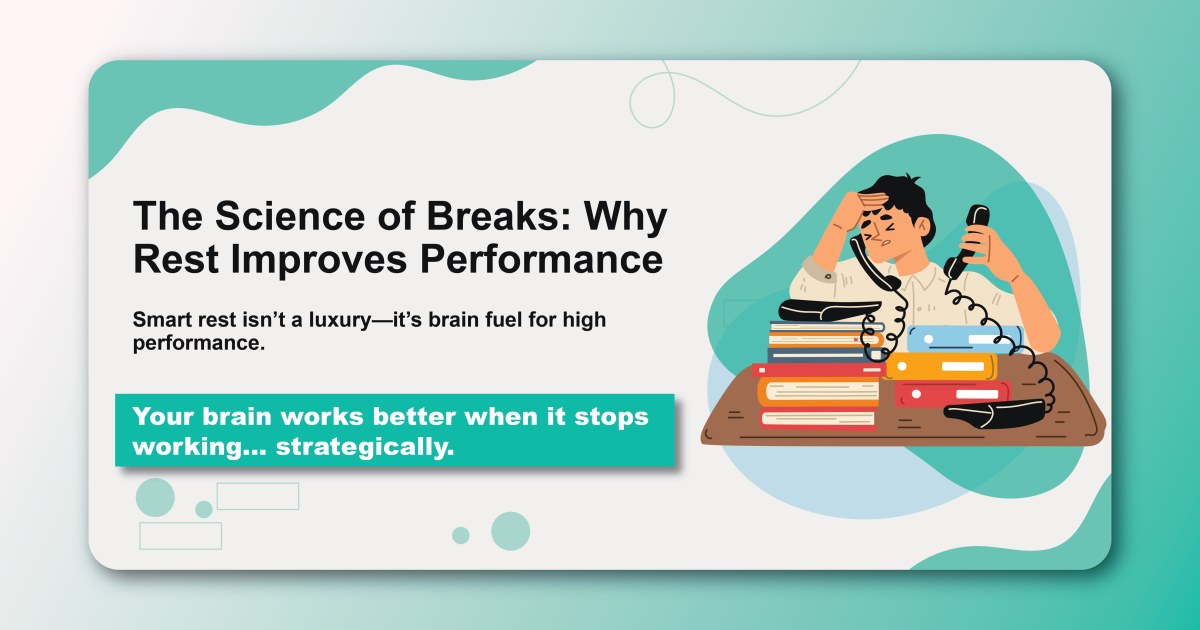
We've all been there: staring at a screen, mind foggy, typing the same sentence over and over. The deadline is looming, the work is piling up, and the logical response seems to be pushing harder, working longer, and powering through the fatigue.
But what if this approach is not just ineffective—what if it's counterproductive?
What if the secret to better performance isn't more work, but better rest?
Modern neuroscience is revealing a surprising truth: our brains aren't designed for continuous focused work. Just as athletes need recovery time to build strength, our cognitive abilities require regular breaks to function at their best. The most productive people aren't those who work the longest—they're those who rest the smartest.
This isn't about being lazy or making excuses. It's about understanding how your brain actually works and designing your work patterns around biological reality rather than cultural expectations.
The Neuroscience of Mental Fatigue
How Your Brain Gets Tired
Glucose Depletion Your brain consumes about 20% of your body's glucose, and intensive mental work depletes this fuel rapidly. Unlike physical fatigue, mental fatigue often feels like a loss of willpower, motivation, or focus.
Attention Residue When you switch between tasks or maintain focus for extended periods, fragments of your attention remain stuck on previous tasks. This "attention residue" accumulates throughout the day, making it harder to think clearly.
Default Mode Network Your brain has a "default mode network" that activates during rest. This network is crucial for memory consolidation, creative insights, and emotional processing. When you never truly rest, this system can't function properly.
Neurotransmitter Imbalance Continuous work depletes neurotransmitters like dopamine and norepinephrine, which are essential for motivation, focus, and positive mood. Rest allows these chemicals to replenish.
The Cost of Continuous Work
Diminishing Returns Research shows that after 55 hours of work per week, productivity drops so dramatically that you accomplish less than if you had worked 40 hours. The same principle applies to daily work sessions.
Increased Errors Mental fatigue increases error rates exponentially. A tired brain makes more mistakes, requiring more time to correct them later.
Reduced Creativity Breakthrough insights rarely happen during intense focused work. They emerge during relaxed states when your mind can make unexpected connections.
Stress Accumulation Chronic stress hormones like cortisol impair memory, reduce immune function, and damage long-term health. Regular breaks help reset your stress response.
The Science of Different Types of Breaks
Micro-Breaks (30 seconds to 5 minutes)
The Research Studies show that 30-second breaks every 10 minutes can improve focus by 13% and reduce eye strain by 50%. These tiny pauses allow your attention to reset without losing momentum.
Effective Micro-Breaks
- Look away from your screen and focus on distant objects
- Take three deep breaths
- Stretch your neck and shoulders
- Stand up and sit back down
- Close your eyes for 30 seconds
When to Use
- During intensive computer work
- While reading or studying
- During long meetings
- When feeling eye strain or tension
Short Breaks (5-15 minutes)
The Research The "ultradian rhythm" research shows that our brains naturally cycle through periods of high and low alertness every 90-120 minutes. Taking breaks during low-alertness periods can restore focus.
Effective Short Breaks
- Walk outside or around the building
- Do light stretching or yoga
- Practice mindfulness or meditation
- Have a healthy snack
- Listen to music
When to Use
- After completing a task or project segment
- When feeling mentally stuck
- During natural energy dips
- Between different types of work
Long Breaks (15-60 minutes)
The Research Longer breaks allow for deeper cognitive recovery and can lead to creative insights. The "incubation effect" shows that stepping away from problems allows your unconscious mind to work on solutions.
Effective Long Breaks
- Take a walk in nature
- Exercise or do physical activity
- Have a proper meal
- Take a power nap (10-20 minutes)
- Engage in a hobby or creative activity
When to Use
- Mid-morning and mid-afternoon
- After completing major milestones
- When feeling overwhelmed or stressed
- During creative blocks
Rest Days and Vacations
The Research Extended rest periods are crucial for memory consolidation, creative breakthroughs, and preventing burnout. Studies show that vacations improve job performance for months after returning.
Effective Extended Rest
- Complete disconnection from work
- Engaging in novel experiences
- Spending time in nature
- Pursuing personal interests
- Connecting with loved ones
When to Use
- Weekly rest days
- Regular vacations
- Between major projects
- During high-stress periods
The Art of Active Recovery
Physical Movement
Why Movement Matters Physical activity increases blood flow to the brain, releases endorphins, and helps clear mental fatigue. Even light movement can dramatically improve cognitive function.
Effective Movement Breaks
- 5-minute walks
- Desk stretches
- Stair climbing
- Light calisthenics
- Dancing to music
Nature Exposure
The Research "Attention Restoration Theory" shows that natural environments help restore directed attention. Even looking at nature photos can improve focus and reduce stress.
Nature Break Ideas
- Walk in a park or garden
- Sit outside and observe surroundings
- Look at plants or trees from a window
- Listen to nature sounds
- View nature photography
Social Connection
The Science Brief social interactions can boost mood, reduce stress, and provide cognitive stimulation. The key is choosing interactions that energize rather than drain you.
Social Break Options
- Chat with supportive colleagues
- Call a friend or family member
- Share a meal with others
- Join a group activity
- Help someone else
Mindfulness and Meditation
The Research Mindfulness practices activate the parasympathetic nervous system, reducing stress and improving attention. Even brief meditation can enhance cognitive performance.
Mindful Break Practices
- Deep breathing exercises
- Body scan meditation
- Mindful walking
- Gratitude practice
- Progressive muscle relaxation
Strategic Break Planning
The Pomodoro Technique
How It Works Work for 25 minutes, then take a 5-minute break. After four cycles, take a longer 15-30 minute break. This matches natural attention cycles and prevents mental fatigue.
Benefits
- Maintains consistent energy levels
- Prevents overwhelming work sessions
- Creates natural progress checkpoints
- Builds sustainable work habits
Ultradian Rhythm Breaks
Understanding Your Cycles Most people have 90-120 minute cycles of high and low alertness. Working with these natural rhythms optimizes both work and rest.
Implementation
- Track your energy levels throughout the day
- Schedule demanding work during peak periods
- Take breaks during natural low points
- Adjust timing based on your personal patterns
Energy-Based Breaks
Match Break Type to Need
- High Energy → Low Energy: Physical movement, outdoor time
- Low Energy → High Energy: Nutrition, hydration, brief rest
- High Stress → Low Stress: Meditation, deep breathing, nature
- Low Motivation → High Motivation: Social connection, inspiring content
Common Break Mistakes
Mistake 1: Passive Screen Time
The Problem: Checking social media, watching videos, or browsing the web doesn't restore mental resources. It often increases cognitive load and stress.
The Solution: Choose activities that genuinely rest your mind—movement, nature, or face-to-face interaction.
Mistake 2: Work-Related Breaks
The Problem: Thinking about work, checking emails, or having work conversations during breaks prevents cognitive recovery.
The Solution: Create clear boundaries between work and rest time. Use breaks for completely different activities.
Mistake 3: Guilt About Resting
The Problem: Feeling guilty about taking breaks leads to rushed, ineffective rest that doesn't provide cognitive benefits.
The Solution: Remember that breaks are an investment in performance, not a waste of time. Quality rest leads to better work.
Mistake 4: Inconsistent Break Patterns
The Problem: Taking breaks only when exhausted or stressed means you're always playing catch-up with fatigue.
The Solution: Build regular breaks into your schedule before you feel you need them. Prevention is more effective than recovery.
Building a Personal Break System
Week 1: Assessment
Track Your Patterns
- Monitor energy levels throughout the day
- Note when you feel most and least focused
- Identify signs of mental fatigue
- Observe current break habits
Identify Needs
- What types of work drain you most?
- What activities restore your energy?
- When do you typically hit mental walls?
- What break activities appeal to you?
Week 2: Design
Create Your Break Menu
- List 5-10 activities for different break lengths
- Choose activities that genuinely restore you
- Include options for different energy levels
- Plan for different locations and situations
Schedule Break Times
- Plan breaks before you feel you need them
- Use calendar reminders and alarms
- Communicate your break schedule to others
- Protect break time like any other appointment
Week 3: Implementation
Start Small
- Begin with micro-breaks every hour
- Add one longer break mid-morning and mid-afternoon
- Experiment with different break activities
- Track how breaks affect your performance
Adjust and Refine
- Notice which breaks work best for you
- Adjust timing based on your natural rhythms
- Modify activities based on effectiveness
- Fine-tune your approach
Week 4: Optimization
Analyze Results
- How do breaks affect your focus and creativity?
- Which activities provide the most restoration?
- What timing works best for your schedule?
- How can you make breaks more effective?
Build Long-term Habits
- Establish consistent break routines
- Create environmental cues for break time
- Develop accountability systems
- Plan for challenging periods
The Future of Rest
Workplace Evolution
Results-Oriented Environments Organizations are shifting from time-based to results-based work, recognizing that well-rested employees are more productive and creative.
Break-Friendly Policies Progressive companies are implementing break policies, rest spaces, and mental health support that prioritize employee wellbeing.
Technology and Rest
Break Reminder Apps Technology can help optimize break timing and activities based on individual patterns and needs.
Recovery Analytics Wearable devices and apps are beginning to track cognitive load and recommend optimal break timing.
Virtual Nature VR and AR technologies are creating immersive nature experiences for urban workers who can't access natural environments.
The science is clear: strategic breaks aren't a luxury—they're a necessity for optimal performance. When you give your brain the rest it needs, you don't just avoid burnout; you enhance creativity, improve decision-making, and increase overall life satisfaction.
Your brain is your most valuable asset. Treat it with the care it deserves by building strategic rest into your daily routine. The work will still be there when you return, but you'll be better equipped to handle it.
Ready to harness the power of strategic breaks for better performance? Track your break habits and optimize your rest with Habityzer and discover how strategic rest can transform your productivity.