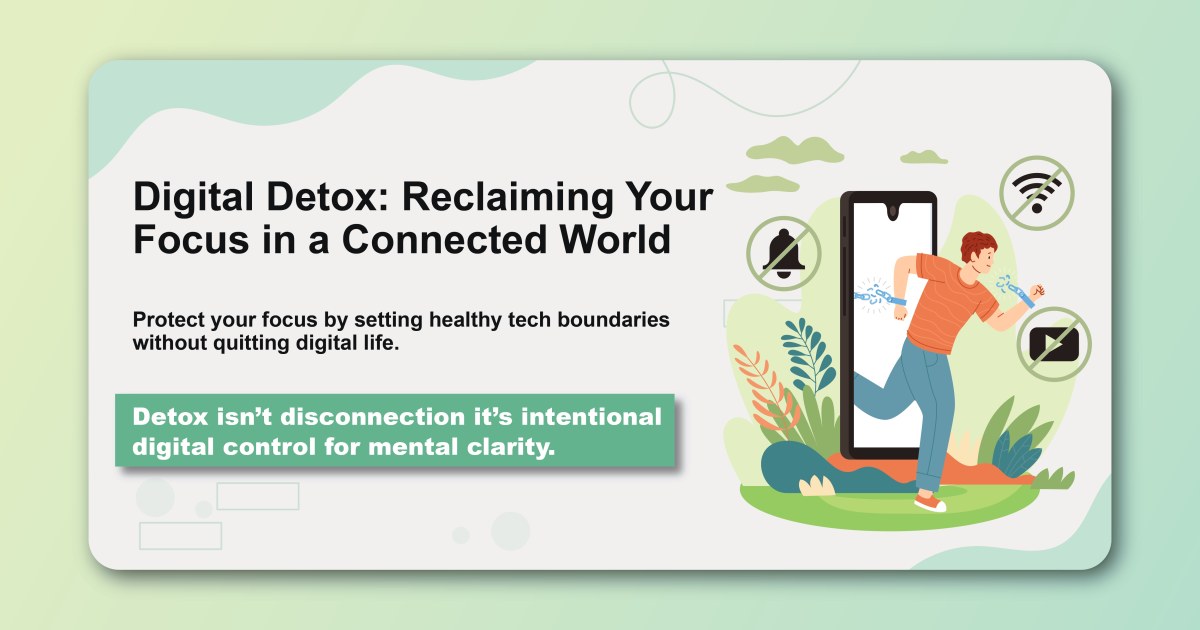
In our hyperconnected world, the average person checks their phone 96 times per day and spends over 7 hours looking at screens. While technology has revolutionized how we work, learn, and connect, it has also created an unprecedented challenge: digital overwhelm. A digital detox isn't about rejecting technology entirely—it's about creating intentional boundaries that allow you to harness technology's benefits while protecting your attention, well-being, and real-world relationships.
Understanding Digital Overwhelm
Digital overwhelm occurs when the constant stream of information, notifications, and digital stimulation exceeds our cognitive capacity to process it effectively. This leads to a cascade of negative effects on our mental health, productivity, and relationships.
Signs of Digital Overwhelm:
- Attention Fragmentation: Difficulty focusing on single tasks for extended periods
- Phantom Vibrations: Feeling your phone vibrate when it hasn't
- Sleep Disruption: Using devices late at night or checking them upon waking
- Social Comparison: Feeling inadequate after viewing social media
- FOMO (Fear of Missing Out): Anxiety about not being constantly connected
- Reduced Face-to-Face Social Skills: Difficulty with in-person interactions
The Science of Digital Addiction
Dopamine and Variable Reward Schedules
Technology companies employ behavioral psychology principles, particularly variable reward schedules, to make their products addictive. Each notification, like, or message triggers a dopamine release, creating a psychological dependency similar to gambling addiction.
Attention Residue and Task Switching
Research by Dr. Sophie Leroy shows that switching between digital tasks creates "attention residue"—part of our attention remains stuck on the previous task. Constant digital switching significantly reduces cognitive performance and increases mental fatigue.
Neuroplasticity and Digital Habits
Our brains adapt to our digital behaviors through neuroplasticity. Heavy technology use can rewire our brains to crave constant stimulation, making it increasingly difficult to enjoy simple pleasures or engage in deep, focused work.
The Attention Economy
Tech companies profit from capturing and monetizing our attention. Understanding this helps us recognize that many "features" are designed to maximize engagement, not user well-being.
Types of Digital Detox
Micro-Detoxes (Minutes to Hours)
Phone-Free Meals:
- Keep all devices away from dining areas
- Focus on conversation and food appreciation
- Use meal times for mindful eating practice
- Create device-free zones in specific rooms
Morning Routines:
- Avoid checking phones for the first hour after waking
- Establish analog morning activities (journaling, exercise, meditation)
- Use a traditional alarm clock instead of your phone
- Create intentional morning rituals
Digital Sunset:
- Stop using screens 1-2 hours before bedtime
- Replace evening screen time with reading, conversation, or relaxation
- Use blue light filters or night mode settings
- Charge devices outside the bedroom
Mini-Detoxes (Half-Day to Full Day)
Digital Sabbath:
- Designate one day per week as largely technology-free
- Focus on in-person activities, nature, and offline hobbies
- Inform others about your digital sabbath boundaries
- Plan engaging offline activities in advance
Work-Life Boundaries:
- Create clear cutoff times for work-related digital communication
- Use separate devices or accounts for work and personal use
- Establish "office hours" for email and messaging responses
- Practice saying no to after-hours digital demands
Extended Detoxes (Multiple Days to Weeks)
Weekend Retreats:
- Plan technology-free weekends or getaways
- Choose locations with limited or no internet access
- Focus on outdoor activities, reading, and social connection
- Document experiences through non-digital means (journaling, sketching)
Vacation Detoxes:
- Take genuine breaks from work-related technology during vacations
- Use auto-responders to set clear boundaries
- Explore destinations and activities that don't require constant documentation
- Practice being present without the urge to share experiences immediately
The RESET Framework for Digital Detox
R - Recognize Current Patterns
Digital Audit Process:
- Track your screen time using built-in tools or apps
- Document when and why you reach for devices
- Identify trigger situations that lead to excessive use
- Notice emotional states associated with digital behaviors
Self-Assessment Questions:
- How often do you check your phone without a specific purpose?
- What emotions drive your social media use?
- When do you feel most compelled to use technology?
- How does technology use affect your sleep, relationships, and work?
E - Establish Clear Boundaries
Time-Based Boundaries:
- Set specific hours for checking email and social media
- Create technology-free time blocks throughout the day
- Establish morning and evening routines without devices
- Use timers to limit recreational technology use
Space-Based Boundaries:
- Designate technology-free zones in your home (bedroom, dining room)
- Create a "parking station" for devices during family time
- Establish work and personal device separation
- Use physical barriers to reduce access to devices
Purpose-Based Boundaries:
- Use technology only for specific, intentional purposes
- Avoid mindless scrolling or browsing
- Set clear goals before opening social media or entertainment apps
- Practice the "pause and purpose" method before device use
S - Substitute Digital Activities
Physical Activities:
- Replace scrolling time with walking or exercise
- Engage in hands-on hobbies (cooking, gardening, crafts)
- Practice yoga, stretching, or other mindful movement
- Participate in sports or outdoor activities
Social Activities:
- Plan in-person gatherings with friends and family
- Join clubs, classes, or community groups
- Volunteer for causes you care about
- Engage in face-to-face conversations and activities
Creative Activities:
- Read physical books or magazines
- Practice drawing, painting, or other visual arts
- Learn musical instruments or sing
- Write in a journal or try creative writing
Mindful Activities:
- Practice meditation or mindfulness exercises
- Engage in deep breathing or relaxation techniques
- Spend time in nature without devices
- Practice gratitude and reflection
E - Evaluate and Adjust
Regular Assessment:
- Weekly reviews of your digital habits and boundaries
- Monthly evaluation of what's working and what isn't
- Adjust boundaries based on life changes and circumstances
- Celebrate successes and learn from setbacks
Continuous Improvement:
- Experiment with different detox strategies
- Seek feedback from family and friends about your digital behavior
- Stay informed about healthy technology practices
- Remain flexible and adaptable in your approach
T - Transform Your Relationship with Technology
Mindful Technology Use:
- Practice intentional engagement with digital tools
- Use technology to enhance rather than replace real-world experiences
- Focus on quality over quantity in digital interactions
- Regularly assess whether technology is serving your goals and values
Practical Digital Detox Strategies
App and Device Management
Notification Optimization:
- Turn off non-essential notifications
- Use "Do Not Disturb" modes strategically
- Customize notification settings for different times of day
- Group notifications to reduce interruption frequency
App Organization:
- Remove social media and entertainment apps from your home screen
- Use app timers and usage limits
- Delete apps that don't serve your goals or well-being
- Replace mindless apps with educational or productivity tools
Phone Setup for Reduced Use:
- Switch to grayscale mode to reduce visual appeal
- Use airplane mode during focused work sessions
- Keep your phone in another room while sleeping
- Use a traditional alarm clock instead of your phone
Environmental Design
Physical Environment:
- Create charging stations away from common areas
- Use physical books, magazines, and newspapers
- Set up comfortable spaces for non-digital activities
- Remove televisions from bedrooms and dining areas
Work Environment:
- Use website blockers during focused work time
- Close unnecessary browser tabs and applications
- Create separate user accounts for work and personal use
- Establish clear physical boundaries between work and leisure technology
Social and Communication Strategies
Setting Expectations:
- Communicate your digital boundaries to family, friends, and colleagues
- Set auto-responders that indicate your response times
- Explain the benefits of your digital detox to get support
- Model healthy technology use for others
Building Offline Communities:
- Join local clubs, groups, or organizations
- Participate in community events and activities
- Cultivate hobbies that involve face-to-face interaction
- Strengthen relationships through in-person time and conversation
Overcoming Digital Detox Challenges
FOMO and Social Pressure
Challenge: Fear of missing important information or social connections.
Solutions:
- Recognize that most "urgent" digital communication isn't truly urgent
- Establish specific times for catching up on news and social media
- Focus on the quality of your offline experiences
- Trust that important information will reach you through multiple channels
Work-Related Pressure
Challenge: Professional expectations for constant availability.
Solutions:
- Discuss realistic response time expectations with colleagues and supervisors
- Use auto-responders to set clear availability windows
- Demonstrate that focused, uninterrupted work produces better results
- Advocate for company-wide healthy technology policies
Boredom and Habit
Challenge: Reaching for devices out of habit or to avoid boredom.
Solutions:
- Plan engaging offline activities for times when you typically use devices
- Practice sitting with boredom as a normal, healthy state
- Use the "STOP" technique: Stop, Take a breath, Observe, Proceed mindfully
- Develop a list of quick offline activities for moments of restlessness
Withdrawal Symptoms
Challenge: Feeling anxious, restless, or uncomfortable without devices.
Solutions:
- Start with short detox periods and gradually increase
- Practice relaxation and breathing techniques during withdrawal
- Remind yourself that discomfort is temporary and normal
- Focus on the positive benefits you're experiencing
Digital Wellness Habits for Long-Term Success
Daily Practices
Morning Intentions:
- Start each day with 30 minutes of no-device time
- Set intentions for how you want to use technology that day
- Practice gratitude or meditation before checking devices
- Plan your most important work during high-focus morning hours
Mindful Transitions:
- Take a pause before picking up any device
- Ask yourself: "What is my purpose for using this right now?"
- Set a timer for planned device sessions
- Practice the "three-breath rule" before checking phones
Evening Boundaries:
- Stop work-related technology use at a specific time
- Create a device shutdown ritual
- Replace evening screen time with calming activities
- Prepare for tomorrow using analog methods (paper planning)
Weekly and Monthly Practices
Digital Decluttering:
- Regularly unsubscribe from unnecessary email lists
- Delete photos, files, and apps you no longer need
- Review and adjust your privacy settings on social platforms
- Clean up your digital workspace for better focus
Relationship Investment:
- Schedule regular device-free time with family and friends
- Plan activities that don't involve technology
- Practice active listening without digital distractions
- Show appreciation for others through non-digital means
Technology for Good
Intentional Content Consumption:
- Curate your social media feeds to include inspiring and educational content
- Subscribe to newsletters and podcasts that align with your values and goals
- Use technology for learning new skills and pursuing interests
- Limit exposure to negative news and social comparison triggers
Digital Tools for Wellness:
- Use apps that support your health and well-being goals
- Leverage technology for meditation, exercise, and learning
- Connect with others who share your digital wellness values
- Track your progress and celebrate improvements
Measuring Digital Detox Success
Quantitative Measures
Screen Time Metrics:
- Track daily and weekly screen time across devices
- Monitor specific app usage patterns
- Measure the number of phone unlocks per day
- Track notification frequency and response times
Sleep and Health Indicators:
- Monitor sleep quality and duration
- Track physical activity and exercise frequency
- Measure stress levels and mood changes
- Assess cognitive performance and focus duration
Qualitative Assessments
Life Satisfaction Surveys:
- Rate your overall happiness and life satisfaction
- Assess the quality of your relationships
- Evaluate your sense of presence and mindfulness
- Measure your ability to enjoy simple pleasures
Reflection Questions:
- How has reducing screen time affected your mood and energy?
- What offline activities have you discovered or rediscovered?
- How have your relationships changed since implementing digital boundaries?
- What aspects of technology use do you appreciate more now?
Building a Sustainable Digital Lifestyle
Integration vs. Elimination
The goal of digital detox isn't to eliminate technology entirely but to create a balanced, intentional relationship with it. This means:
- Using technology as a tool rather than entertainment
- Maintaining awareness of your digital habits and their effects
- Regularly reassessing and adjusting your boundaries
- Staying connected to your values and priorities
Long-Term Perspective
Digital wellness is an ongoing practice, not a one-time fix. Like physical fitness, it requires consistent attention and adjustment. The key is to develop systems and habits that support your well-being while allowing you to benefit from technology's genuine advantages.
Community and Support
Creating lasting change is easier with support from others who share your values. Consider:
- Finding friends or family members to join your digital wellness journey
- Joining online communities focused on digital minimalism and mindful technology use
- Sharing your experiences and learning from others
- Modeling healthy technology habits for the people around you
The Path Forward
Your digital detox journey is unique to your life, goals, and circumstances. Start small, be patient with yourself, and focus on progress rather than perfection. The goal is to reclaim your attention, deepen your relationships, and create space for what matters most in your life.
Remember that every moment you choose presence over digital distraction is a victory. Every notification you ignore to finish a conversation is a step toward better relationships. Every morning you start without immediately checking your phone is an investment in your well-being.
The digital world will always be there when you need it. But this moment—this conversation, this sunset, this feeling of peace—is happening right now, and it deserves your full attention.
Ready to transform your relationship with technology? Track your digital wellness habits with Habityzer and discover how intentional technology use can enhance rather than dominate your life.