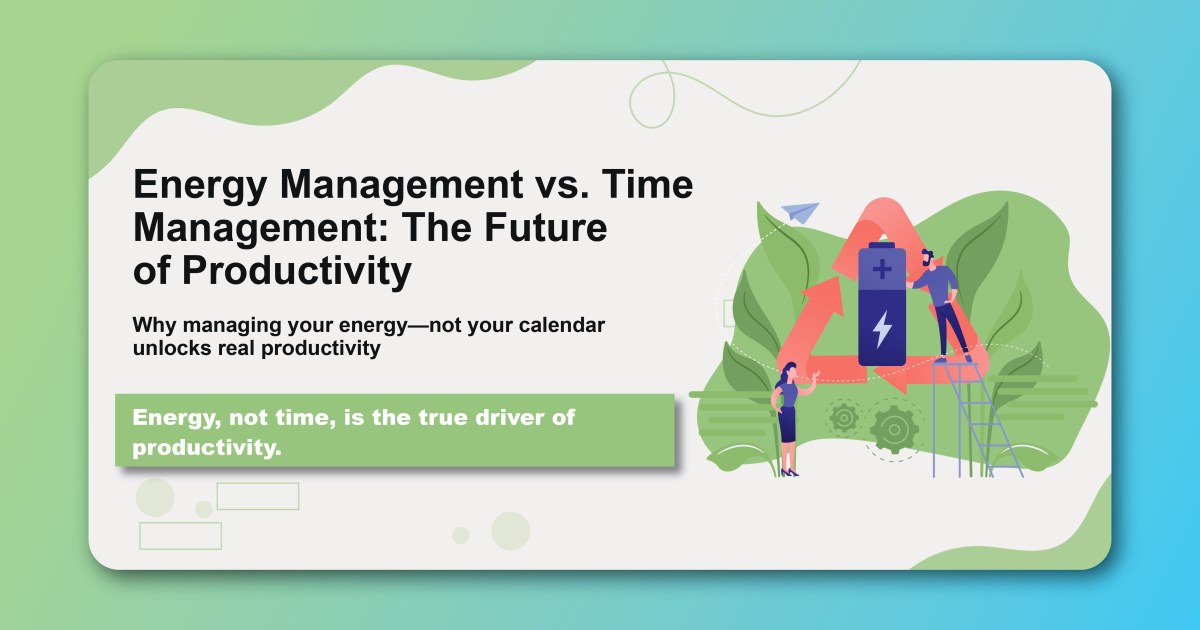
For decades, productivity advice has focused on time management: better calendars, improved scheduling, and more efficient task lists. But what if we've been approaching productivity from the wrong angle? What if the secret to getting more done isn't about finding more time, but about managing something far more valuable—your energy?
While time is a finite resource that moves at a constant pace for everyone, energy is dynamic, renewable, and entirely within your control. The most successful people aren't those who manage their time best—they're those who manage their energy most effectively.
This fundamental shift from time management to energy management is revolutionizing how we think about productivity, performance, and sustainable success.
The Limitations of Time Management
Why Time Management Falls Short
Time is Constant, Performance is Variable Everyone has the same 24 hours in a day, but not everyone has the same capacity to use those hours effectively. A tired, stressed person working for 8 hours will accomplish less than an energized, focused person working for 4 hours.
Time Management Ignores Natural Rhythms Traditional time management treats all hours as equal. But science shows that our cognitive abilities, creativity, and decision-making capacity fluctuate dramatically throughout the day based on our circadian rhythms and energy levels.
Time Management Creates Artificial Pressure Focusing solely on time often leads to a scarcity mindset, where we feel constantly rushed and stressed. This pressure actually reduces our cognitive performance and creativity, making us less productive overall.
Time Management Doesn't Account for Recovery Most time management systems treat rest and recovery as "unproductive" time. But research shows that strategic recovery is essential for sustained high performance and creativity.
The Problems with Traditional Productivity Advice
The Myth of Constant Availability Time management systems often assume we should be equally productive at all times. This leads to burnout, decreased creativity, and ultimately lower overall output.
One-Size-Fits-All Approaches Time management strategies rarely account for individual differences in energy patterns, work styles, and personal circumstances.
Focus on Efficiency Over Effectiveness Time management emphasizes doing things faster, not necessarily doing the right things when we're best equipped to do them.
Understanding Energy Management
The Four Types of Energy
Physical Energy: The foundation of all other energy types
- Affected by sleep, nutrition, exercise, and health
- Determines your stamina and endurance
- Influences your ability to focus and concentrate
- Directly impacts your stress resilience
Emotional Energy: Your feelings and mood states
- Affects motivation, enthusiasm, and engagement
- Influences your ability to connect with others
- Determines your resilience to setbacks
- Impacts your creativity and problem-solving
Mental Energy: Your cognitive resources and focus
- Determines your ability to think clearly and make decisions
- Affects your learning capacity and memory
- Influences your ability to solve complex problems
- Impacts your strategic thinking abilities
Spiritual Energy: Your sense of purpose and meaning
- Provides intrinsic motivation and drive
- Influences your persistence and resilience
- Affects your ability to inspire others
- Determines your long-term satisfaction and fulfillment
The Science of Energy Management
Circadian Rhythms and Performance Research by Dr. Russell Foster at Oxford shows that our cognitive performance follows predictable patterns throughout the day. Most people experience peak mental performance between 10 AM and 2 PM, with a secondary peak in early evening.
Ultradian Rhythms and Focus Studies reveal that our attention and energy naturally cycle every 90-120 minutes. Working with these rhythms rather than against them can increase productivity by 30-50%.
Decision Fatigue and Mental Energy Research by Dr. Roy Baumeister demonstrates that our decision-making quality decreases throughout the day as our mental energy depletes. This is why successful people make important decisions when their mental energy is highest.
Recovery and Performance Studies show that strategic recovery periods don't just prevent burnout—they actually enhance performance. The brain needs downtime to consolidate learning and generate creative insights.
The Energy Management Framework
Step 1: Energy Audit
Track Your Energy Patterns For one week, rate your energy levels every 2 hours on a scale of 1-10 across all four energy types. Note:
- What activities increase or decrease your energy
- Your peak performance times
- How different foods, activities, and environments affect you
- Your natural sleep and wake patterns
Identify Energy Drains Common energy drains include:
- Unresolved conflicts or difficult relationships
- Cluttered or disorganized environments
- Multitasking and constant task-switching
- Poor nutrition and irregular eating
- Inadequate sleep or irregular sleep schedules
- Lack of clear priorities and purpose
Discover Energy Sources Activities that typically boost energy:
- Physical exercise and movement
- Meaningful work aligned with your values
- Social connections with positive people
- Learning and skill development
- Creative expression and play
- Time in nature and natural light
Step 2: Energy Optimization
Physical Energy Optimization
- Sleep: 7-9 hours of quality sleep, consistent sleep schedule
- Nutrition: Regular, balanced meals with stable blood sugar
- Exercise: Regular movement, especially strength training and cardio
- Hydration: Consistent water intake throughout the day
- Environment: Optimized lighting, temperature, and air quality
Mental Energy Optimization
- Deep Work Blocks: Schedule demanding cognitive tasks during peak hours
- Single-Tasking: Focus on one task at a time to preserve mental energy
- Cognitive Load Management: Reduce decisions and distractions
- Strategic Breaks: Take breaks before mental fatigue sets in
- Learning Rhythms: Align learning activities with optimal mental states
Emotional Energy Optimization
- Positive Relationships: Invest time in supportive, energizing relationships
- Stress Management: Develop healthy coping strategies
- Emotional Regulation: Practice mindfulness and emotional awareness
- Joy and Play: Include activities that bring genuine happiness
- Gratitude Practice: Regular appreciation and positive reflection
Spiritual Energy Optimization
- Purpose Alignment: Connect daily work to larger meaning and values
- Growth Mindset: Focus on learning and development
- Service: Contribute to something larger than yourself
- Reflection: Regular time for introspection and planning
- Vision: Clear picture of desired future and progress toward it
Step 3: Energy-Based Scheduling
Match Tasks to Energy States
- High Mental Energy: Complex problem-solving, strategic thinking, creative work
- Medium Mental Energy: Routine tasks, email, administrative work
- Low Mental Energy: Organizing, planning, simple tasks
- High Physical Energy: Exercise, active projects, challenging physical tasks
- Low Physical Energy: Reading, reflection, gentle movement
Design Your Ideal Day
- Morning Ritual: Energizing activities that set positive tone
- Peak Performance Block: Most important work during highest energy
- Recovery Periods: Scheduled breaks and restoration activities
- Evening Wind-Down: Activities that promote rest and reflection
- Sleep Optimization: Consistent bedtime routine and sleep environment
Advanced Energy Management Strategies
The Energy Investment Portfolio
High-Energy Activities (20% of time, 80% of results)
- Strategic planning and vision work
- Creative problem-solving and innovation
- Building key relationships and networks
- Learning new skills and capabilities
- Leading and inspiring others
Medium-Energy Activities (60% of time, 15% of results)
- Routine work and maintenance tasks
- Meetings and regular communication
- Administrative and organizational tasks
- Skill practice and refinement
- Relationship maintenance
Low-Energy Activities (20% of time, 5% of results)
- Email and message management
- Data entry and simple processing
- Organization and cleanup tasks
- Routine research and information gathering
- Simple planning and scheduling
Energy Multipliers
Delegation and Automation
- Delegate energy-draining tasks that others can do
- Automate routine decisions and processes
- Create systems that reduce cognitive load
- Build templates and procedures for common tasks
Environmental Design
- Create spaces that naturally boost energy
- Eliminate energy-draining clutter and distractions
- Design environments for specific types of work
- Use lighting, color, and sound to enhance energy
Social Energy Management
- Spend time with people who energize you
- Limit time with energy-draining individuals
- Build supportive communities and networks
- Create accountability and support systems
Energy Recovery Strategies
Active Recovery
- Light exercise or movement
- Engaging in hobbies or creative activities
- Spending time in nature
- Socializing with positive people
Passive Recovery
- Meditation and mindfulness practices
- Reading or listening to music
- Gentle stretching or yoga
- Adequate sleep and rest
Strategic Recovery
- Weekly planning and reflection time
- Monthly goal review and adjustment
- Quarterly retreat or deep planning
- Annual vision and life planning
Combining Energy and Time Management
The Integrated Approach
Energy-First Scheduling
- Identify your peak energy periods
- Schedule most important work during these times
- Use medium energy times for routine tasks
- Reserve low energy periods for rest and simple activities
Time-Aware Energy Management
- Recognize that energy ebbs and flows throughout the day
- Plan buffer time around high-energy activities
- Build in recovery time after energy-intensive tasks
- Use time blocks to protect energy for important work
Sustainable Productivity Systems
- Balance high-intensity work with adequate recovery
- Plan for energy cycles rather than constant output
- Build flexibility into schedules to accommodate energy fluctuations
- Focus on energy maintenance over time optimization
The 80/20 Rule for Energy
80% of Results Come from 20% of Activities Identify the activities that provide the highest return on energy investment:
- Core business activities that directly impact goals
- Relationship-building that creates long-term value
- Learning and skill development for future capability
- Creative work that generates new opportunities
80% of Energy Drain Comes from 20% of Activities Identify and eliminate or minimize energy-draining activities:
- Unnecessary meetings and communications
- Perfectionism on low-impact tasks
- Conflict and negativity in relationships
- Disorganization and lack of systems
Common Energy Management Mistakes
Mistake 1: Ignoring Physical Energy
The Problem: Focusing only on mental productivity while neglecting physical health The Solution: Treat physical energy as the foundation of all other energy types
Action Steps:
- Prioritize sleep quality and consistency
- Maintain regular exercise routine
- Eat for sustained energy, not quick fixes
- Take regular movement breaks throughout the day
Mistake 2: Constant High-Intensity Work
The Problem: Trying to maintain peak performance all day, every day The Solution: Embrace natural energy cycles and build in recovery
Action Steps:
- Schedule demanding work during peak energy hours
- Build in regular breaks and recovery periods
- Plan for seasonal and weekly energy fluctuations
- Celebrate rest and recovery as productive activities
Mistake 3: One-Size-Fits-All Approaches
The Problem: Copying others' energy management strategies without personalization The Solution: Develop a system based on your unique energy patterns and needs
Action Steps:
- Conduct your own energy audit
- Experiment with different approaches
- Adjust strategies based on results
- Build systems that work with your natural rhythms
Mistake 4: Neglecting Emotional and Spiritual Energy
The Problem: Focusing only on physical and mental energy while ignoring emotional and spiritual needs The Solution: Address all four types of energy for sustainable high performance
Action Steps:
- Align work with personal values and purpose
- Invest in positive relationships and emotional well-being
- Include meaning and service in your work
- Practice gratitude and reflection regularly
Building Your Energy Management System
Week 1: Assessment and Awareness
Daily Energy Tracking
- Rate energy levels every 2 hours across all four types
- Note activities that increase or decrease energy
- Identify patterns and peak performance times
- Track sleep, nutrition, and exercise impact
Energy Audit
- List your top energy drains and sources
- Identify your natural circadian rhythms
- Assess current recovery practices
- Evaluate alignment between work and energy patterns
Week 2: Optimization and Experimentation
Physical Energy Experiments
- Try different sleep schedules and routines
- Experiment with nutrition timing and types
- Test different exercise schedules and intensities
- Optimize your work environment
Mental Energy Experiments
- Schedule demanding tasks during peak hours
- Try different break schedules and activities
- Experiment with single-tasking vs. multitasking
- Test different focus techniques and environments
Week 3: System Implementation
Energy-Based Scheduling
- Restructure your daily schedule around energy patterns
- Block time for high-energy activities during peak periods
- Schedule recovery time and protect it
- Create energy-specific task lists
Environment Design
- Optimize your workspace for energy
- Create separate spaces for different types of work
- Eliminate energy-draining clutter and distractions
- Design morning and evening routines for energy
Week 4: Refinement and Sustainability
System Refinement
- Adjust based on what worked and what didn't
- Fine-tune scheduling and task matching
- Optimize recovery and restoration practices
- Create sustainable long-term practices
Maintenance Planning
- Schedule regular energy audits
- Plan for seasonal energy changes
- Build flexibility into your system
- Create accountability and support systems
The Future of Productivity
Beyond Time Management
The future of productivity isn't about finding more time—it's about optimizing the energy we bring to the time we have. This shift represents a fundamental change in how we think about work, performance, and success.
From Efficiency to Effectiveness Energy management focuses on doing the right things at the right time, not just doing things faster.
From Constant Output to Sustainable Performance Energy management recognizes that sustainable high performance requires cycles of intensity and recovery.
From One-Size-Fits-All to Personalized Systems Energy management acknowledges that everyone has unique patterns and needs.
The Integrated Future
The most effective productivity systems of the future will integrate both time and energy management, creating frameworks that are:
- Personalized to individual energy patterns
- Flexible enough to accommodate natural fluctuations
- Sustainable over long periods
- Focused on both performance and well-being
This integrated approach doesn't abandon time management—it enhances it by adding the critical dimension of energy optimization.
Your Energy Management Action Plan
Immediate Actions (This Week)
- Start tracking your energy patterns
- Identify your peak performance times
- Schedule one important task during your highest energy period
- Implement one energy-boosting habit
Short-term Goals (Next Month)
- Complete a comprehensive energy audit
- Restructure your schedule around energy patterns
- Optimize your physical energy through sleep, nutrition, and exercise
- Create energy-specific task lists and workflows
Long-term Vision (Next Quarter)
- Develop a fully integrated energy management system
- Build sustainable practices for all four energy types
- Create environments that naturally boost your energy
- Establish systems for ongoing energy optimization
The shift from time management to energy management isn't just about productivity—it's about creating a more sustainable, fulfilling, and effective way of working and living. When you manage your energy well, you don't just get more done—you feel better doing it.
Start with awareness, experiment with optimization, and build systems that work with your natural rhythms rather than against them. Your future self will thank you for the investment in sustainable, energy-conscious productivity.
Ready to optimize your energy and transform your productivity? Track your energy patterns and build sustainable productivity habits with Habityzer and discover how energy management can revolutionize your performance.