Two people set similar goals: "Get in shape" and "Lose 20 pounds in 4 months." On the surface, these goals might seem equally valid, but psychologically, they operate very differently. One person feels energized and motivated, while the other struggles to maintain interest. One goal inspires consistent action, while the other leads to procrastination and eventual abandonment.
The difference isn't in the goals themselves—it's in how they align with fundamental psychological principles that drive human motivation and behavior. Understanding these principles is the key to creating goals that not only capture your attention but sustain your effort over time.
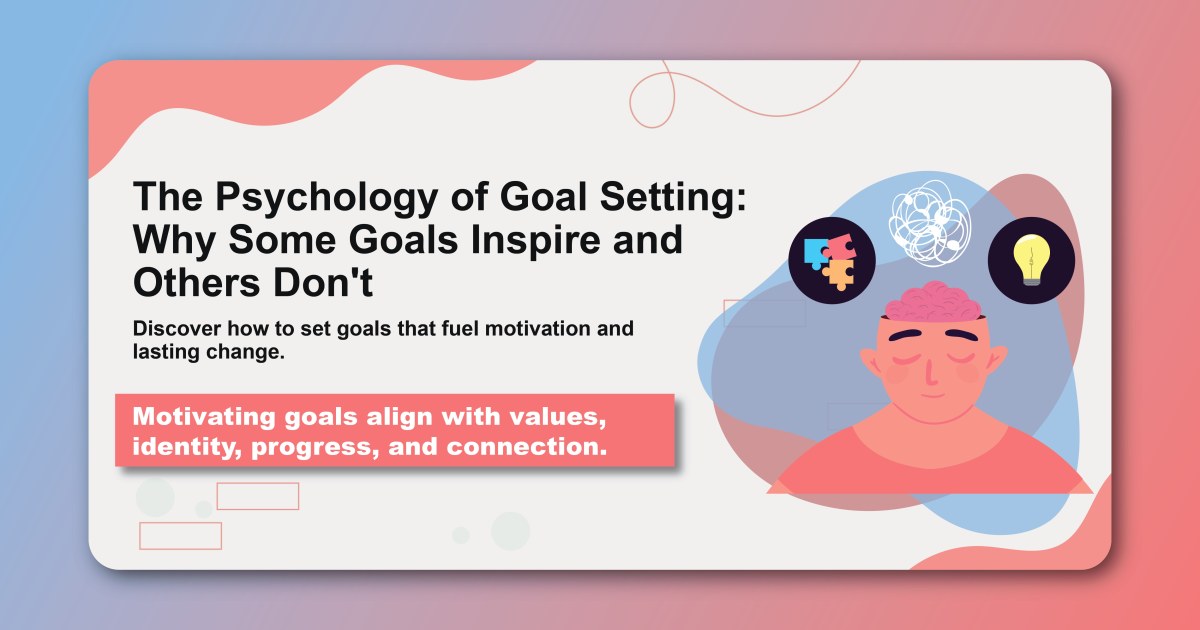
The psychology of goal setting reveals that effective goals do more than provide direction—they tap into our deepest motivations, connect with our identity, and create psychological conditions that make success feel both possible and inevitable. When you understand what makes goals psychologically compelling, you can design objectives that naturally inspire action and maintain momentum even when facing challenges.
This isn't about willpower or forcing yourself to care about arbitrary outcomes. It's about understanding how your mind works and crafting goals that align with your psychological wiring for maximum motivation and effectiveness.
The Neuroscience of Goal Motivation
The Brain's Reward System
Dopamine and Anticipation: Your brain releases dopamine not just when you achieve a goal, but in anticipation of achieving it. Goals that trigger this anticipation response are naturally more motivating.
Prediction Error: When outcomes exceed expectations, your brain releases more dopamine, reinforcing the behavior. Goals that include potential for pleasant surprises maintain higher motivation.
Progress Feedback: The brain craves progress signals. Goals that provide regular feedback about advancement maintain higher engagement than those with delayed or ambiguous feedback.
The Prefrontal Cortex and Future Thinking
Prospective Memory: Your prefrontal cortex allows you to imagine future states and plan accordingly. Goals that engage this system effectively create stronger pull toward action.
Cognitive Load: Complex or overwhelming goals overload your prefrontal cortex, leading to decision fatigue and reduced motivation. Psychologically compelling goals balance challenge with cognitive manageability.
Executive Function: Your brain's executive system manages attention, planning, and decision-making. Goals that align with rather than fight against these functions are more sustainable.
The Four Pillars of Psychologically Compelling Goals
1. Autonomy: The Self-Determination Factor
What It Means: Goals that feel self-chosen and aligned with your values create intrinsic motivation that sustains long-term effort.
Why It Matters: When you feel controlled or pressured by external forces, your brain activates resistance mechanisms that undermine motivation.
Autonomous Goals:
- Arise from your own interests and values
- Feel personally meaningful and relevant
- Allow for choice in how to achieve them
- Connect to your identity and self-concept
Non-Autonomous Goals:
- Imposed by others or social pressure
- Feel like obligations rather than opportunities
- Offer little flexibility in approach
- Conflict with your natural preferences
Example Comparison:
- Autonomous: "I want to learn photography because I love capturing beautiful moments and sharing them with others"
- Non-Autonomous: "I should learn photography because it might help my career prospects"
2. Competence: The Mastery Drive
What It Means: Goals that challenge you while remaining achievable tap into your innate drive for mastery and growth.
Why It Matters: Your brain is wired to seek optimal challenges—tasks that are neither too easy (boring) nor too hard (overwhelming).
Competence-Building Goals:
- Stretch your abilities without overwhelming them
- Build on existing skills and knowledge
- Provide clear criteria for success
- Include progressive skill development
Competence-Undermining Goals:
- Are too easy and provide no growth
- Are impossibly difficult and create helplessness
- Have unclear success criteria
- Jump too far ahead of current capabilities
Example Comparison:
- Competence-Building: "Run a 5K in 3 months" (when you can currently run 1 mile)
- Competence-Undermining: "Run a marathon next month" (when you're sedentary)
3. Relatedness: The Connection Component
What It Means: Goals that connect you with others or contribute to something larger than yourself tap into your fundamental need for belonging and meaning.
Why It Matters: Humans are inherently social beings. Goals that isolate you or serve only selfish interests often lack the psychological pull of more connected objectives.
Relatedness-Rich Goals:
- Involve or benefit other people
- Connect to your relationships and community
- Contribute to causes you care about
- Create opportunities for social connection
Relatedness-Poor Goals:
- Serve only individual interests
- Isolate you from others
- Have no broader social impact
- Create competition rather than collaboration
Example Comparison:
- Relatedness-Rich: "Learn to cook so I can host dinner parties for friends and family"
- Relatedness-Poor: "Learn to cook to save money on restaurants"
4. Progress: The Momentum Principle
What It Means: Goals that provide regular progress signals maintain motivation through consistent positive feedback.
Why It Matters: Progress is the best predictor of continued effort. Goals without clear progress markers often lose momentum even when you're actually advancing.
Progress-Enabled Goals:
- Break down into measurable milestones
- Provide frequent feedback about advancement
- Include both leading and lagging indicators
- Celebrate incremental improvements
Progress-Obscured Goals:
- Are too vague to measure advancement
- Provide feedback only at the end
- Focus solely on final outcomes
- Don't recognize intermediate achievements
Example Comparison:
- Progress-Enabled: "Write 500 words daily for my book project"
- Progress-Obscured: "Write a book someday"
The Psychological Barriers to Goal Achievement
1. The Paradox of Choice
The Problem: Too many options can lead to decision paralysis and reduced satisfaction with choices made.
How It Affects Goals: When you have too many potential goals or too many ways to achieve them, you may become paralyzed and fail to commit to any.
Solution: Limit yourself to 2-3 major goals at a time and provide clear decision criteria for choosing approaches.
2. The Planning Fallacy
The Problem: People consistently underestimate the time and effort required to achieve goals.
How It Affects Goals: Unrealistic timelines lead to discouragement and abandonment when progress doesn't match expectations.
Solution: Add buffer time to your estimates and plan for obstacles and setbacks.
3. The Intention-Action Gap
The Problem: The gap between intending to do something and actually doing it is often larger than expected.
How It Affects Goals: Good intentions don't automatically translate to action without proper implementation planning.
Solution: Create specific implementation intentions—if-then plans that specify when and how you'll act.
4. The Hedonic Treadmill
The Problem: People quickly adapt to positive changes, returning to baseline happiness levels.
How It Affects Goals: Achieving goals may provide less lasting satisfaction than expected, leading to goal abandonment or constant goal shifting.
Solution: Focus on process-oriented goals and appreciate the journey, not just the destination.
5. The Social Comparison Trap
The Problem: Comparing your progress to others can undermine motivation and satisfaction.
How It Affects Goals: Social media and competitive environments can make your achievements feel inadequate.
Solution: Focus on personal progress and growth rather than relative performance.
Creating Psychologically Compelling Goals
The INSPIRE Framework
I - Intrinsic Motivation
- Connect goals to your core values and interests
- Ensure goals feel self-chosen rather than imposed
- Focus on inherent satisfaction rather than external rewards
N - Natural Progression
- Build on existing skills and knowledge
- Create logical stepping stones toward larger objectives
- Ensure each step feels achievable yet challenging
S - Social Connection
- Include elements that involve or benefit others
- Create opportunities for collaboration and support
- Connect goals to your relationships and community
P - Progress Visibility
- Define clear, measurable progress indicators
- Create regular milestone celebrations
- Track both effort and outcomes
I - Identity Alignment
- Ensure goals reflect who you want to become
- Connect objectives to your self-concept
- Frame goals as identity development rather than just behavior change
R - Realistic Optimism
- Set challenging but achievable targets
- Plan for obstacles without becoming pessimistic
- Maintain hope while preparing for reality
E - Emotional Engagement
- Connect goals to emotions that energize you
- Include elements that generate excitement and passion
- Create positive associations with goal-related activities
The Values-Based Goal Setting Process
Step 1: Values Clarification
- Identify your core values (what matters most to you)
- Rank these values in order of importance
- Consider how your current goals align with these values
- Adjust goals to better reflect your value system
Step 2: Identity Integration
- Envision who you want to become
- Identify the gap between current and desired identity
- Create goals that bridge this gap
- Frame goals as identity development opportunities
Step 3: Social Embedding
- Consider how your goals affect others
- Find ways to involve supportive relationships
- Create accountability structures with people you trust
- Design goals that contribute to others' well-being
Step 4: Progress Architecture
- Define clear success criteria
- Create measurable milestones
- Establish regular review and adjustment periods
- Design celebration rituals for achievements
The Psychology of Different Goal Types
Approach vs. Avoidance Goals
Approach Goals: Moving toward desired outcomes
- Example: "Eat 5 servings of vegetables daily"
- Psychology: Engage the brain's reward system and create positive motivation
- Effectiveness: Generally more motivating and sustainable
Avoidance Goals: Moving away from undesired outcomes
- Example: "Stop eating junk food"
- Psychology: Activate the brain's threat detection system
- Effectiveness: Can be motivating short-term but often lead to psychological reactance
Mastery vs. Performance Goals
Mastery Goals: Focus on learning and skill development
- Example: "Become proficient in Spanish conversation"
- Psychology: Engage intrinsic motivation and growth mindset
- Effectiveness: More resilient to setbacks and maintain long-term motivation
Performance Goals: Focus on demonstrating ability or achieving specific outcomes
- Example: "Score 90% on the Spanish proficiency test"
- Psychology: Can create anxiety and ego involvement
- Effectiveness: May motivate short-term effort but can undermine intrinsic motivation
Process vs. Outcome Goals
Process Goals: Focus on the activities and behaviors
- Example: "Practice piano for 30 minutes daily"
- Psychology: Provide immediate control and regular satisfaction
- Effectiveness: Build consistency and reduce anxiety about outcomes
Outcome Goals: Focus on the end results
- Example: "Perform a piano recital flawlessly"
- Psychology: Can create pressure and anxiety
- Effectiveness: Provide clear direction but may undermine enjoyment
Troubleshooting Unmotivating Goals
Diagnosis Questions
For Autonomy Issues:
- Does this goal feel self-chosen or imposed?
- Am I pursuing this because I want to or because I should?
- Does this goal align with my values and interests?
- Do I have choice in how to achieve this goal?
For Competence Issues:
- Is this goal too easy or too difficult?
- Do I have the skills needed to succeed?
- Are there clear criteria for success?
- Does this goal build on my existing abilities?
For Relatedness Issues:
- How does this goal connect me with others?
- Does achieving this goal benefit anyone besides me?
- Will pursuing this goal isolate me or bring me closer to others?
- Does this goal contribute to something larger than myself?
For Progress Issues:
- How will I know if I'm making progress?
- Are there regular milestones to celebrate?
- Can I track my advancement clearly?
- Do I get frequent feedback about my efforts?
Remedies for Common Problems
Goal Feels Overwhelming:
- Break it into smaller, manageable steps
- Focus on the next action rather than the entire goal
- Create a minimum viable progress standard
- Celebrate small wins along the way
Goal Feels Boring:
- Connect it to your deeper values and interests
- Add elements that make it more engaging
- Find ways to involve others or create social aspects
- Reframe it as an opportunity for growth
Goal Feels Impossible:
- Adjust the timeline or scope to be more realistic
- Identify skills or resources you need to develop
- Create stepping-stone goals that build confidence
- Find examples of others who have achieved similar goals
Goal Feels Meaningless:
- Connect it to your identity and values
- Identify how it benefits others or serves a larger purpose
- Explore why you originally wanted this goal
- Consider whether it's truly important to you
The psychology of goal setting reveals that effective goals do more than provide direction—they align with how your mind naturally works to create motivation, maintain effort, and sustain progress over time. When you understand these psychological principles, you can design goals that feel inspiring rather than overwhelming, engaging rather than burdensome, and achievable rather than impossible.
Remember that the best goals are those that tap into your intrinsic motivation, build on your existing competencies, connect you with others, and provide clear progress signals. When you create goals that honor these psychological principles, you're not just setting objectives—you're designing experiences that naturally inspire action and create lasting change.
Take time to evaluate your current goals against these psychological principles. Are they autonomy-supporting, competence-building, relatedness-enhancing, and progress-enabling? If not, consider how you might adjust them to better align with your psychological wiring for motivation and success.
Ready to create psychologically compelling goals that naturally inspire action? Design and track motivating goals with Habityzer and experience how understanding goal psychology can transform your achievement and satisfaction.