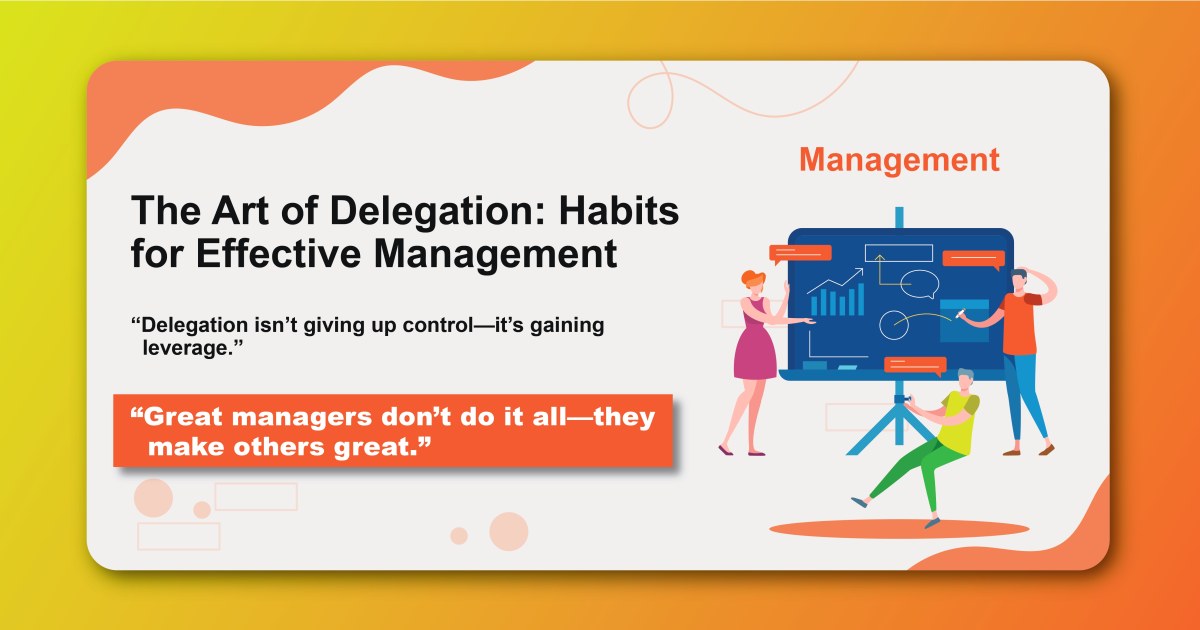
Delegation is one of the most critical skills for management success, yet it's often one of the most challenging to master. Many managers struggle with letting go of control, worry about quality standards, or simply don't know how to delegate effectively. However, delegation is not just about offloading work—it's about empowering others, developing team capabilities, and creating leverage that allows managers to focus on their highest-value activities while building stronger, more capable teams.
Effective delegation requires a fundamental shift in mindset from "doing everything yourself" to "achieving results through others." This shift is essential for career advancement, as the ability to delegate effectively often determines whether someone can successfully transition from individual contributor to manager, and from manager to senior leader. The most successful managers understand that their job is not to be the best performer on their team, but to create conditions where their team can perform at their best.
The art of delegation lies in finding the right balance between providing clear direction and allowing autonomy, between maintaining quality standards and giving others room to learn and grow. It requires developing systems and habits that ensure accountability while building trust, and creating processes that support success while avoiding micromanagement. When done well, delegation becomes a powerful tool for both immediate results and long-term team development.
Common delegation mistakes include waiting until overwhelmed to delegate, delegating only mundane tasks, failing to provide adequate support, or micromanaging the process. These approaches often lead to frustration for both managers and team members, reinforcing the belief that "it's easier to do it myself." However, managers who develop effective delegation habits find that they can achieve better results while developing their teams and creating more strategic value for their organizations.
This comprehensive guide explores the daily habits that transform delegation from a struggle into a strategic advantage. Whether you're a new manager learning to delegate or an experienced leader looking to improve your delegation effectiveness, these habits will help you empower others, achieve better results, and build stronger teams.
The Foundation of Effective Delegation
Understanding Delegation Benefits
Leverage and Scalability Delegation allows managers to achieve more than they could accomplish individually by working through others.
Team Development Delegation provides growth opportunities for team members while building organizational capability.
Strategic Focus Effective delegation frees managers to focus on strategic activities that only they can do.
Succession Planning Delegation helps develop future leaders by providing them with challenging experiences and responsibilities.
Delegation Principles
Clear Expectations Effective delegation begins with crystal-clear communication about what needs to be accomplished.
Appropriate Authority Delegation must include the authority needed to complete the work, not just the responsibility.
Support and Resources Delegated tasks must be supported with adequate resources, training, and ongoing assistance.
Accountability Systems Delegation requires clear accountability measures and regular check-ins to ensure progress.
Daily Delegation Planning Habits
Strategic Work Assessment
Task Analysis Regularly assess your work to identify opportunities for delegation.
Assessment Criteria:
- Identify tasks that don't require your unique expertise
- Look for work that could develop others' skills
- Find repetitive tasks that can be systematized
- Identify work that others might do better than you
- Consider tasks that align with team members' development goals
Capacity Planning Evaluate team capacity and workload to identify delegation opportunities.
Capacity Considerations:
- Assess current team workload and availability
- Consider individual strengths and development needs
- Evaluate skill gaps and training requirements
- Plan for appropriate challenge levels
- Balance delegation across team members
Priority Alignment Align delegation decisions with organizational priorities and team development goals.
Alignment Strategies:
- Connect delegated tasks to business objectives
- Consider how delegation supports team member career goals
- Ensure delegated work contributes to overall team success
- Balance short-term needs with long-term development
- Align delegation with performance management goals
Delegation Opportunity Identification
Daily Work Review Regularly review your daily activities to identify delegation opportunities.
Review Process:
- Track how you spend your time throughout the day
- Identify tasks that could be handled by others
- Note work that doesn't require your level of expertise
- Look for patterns in your workload
- Consider what tasks energize versus drain you
Team Capability Assessment Continuously assess team members' capabilities and readiness for new challenges.
Capability Evaluation:
- Monitor team members' skill development
- Identify individual strengths and interests
- Assess readiness for increased responsibility
- Consider learning goals and development plans
- Evaluate past performance on delegated tasks
Effective Delegation Process Habits
Clear Communication Practices
Comprehensive Briefing Provide thorough briefings that set delegated tasks up for success.
Briefing Elements:
- Clearly state the objective and desired outcomes
- Explain the context and importance of the task
- Identify key stakeholders and relationships
- Discuss timeline and deadline expectations
- Clarify quality standards and success criteria
Authority and Boundaries Clearly define the scope of authority and decision-making power.
Authority Clarification:
- Specify what decisions can be made independently
- Identify when consultation is required
- Explain budget or resource limitations
- Clarify reporting and escalation processes
- Define boundaries and constraints
Resource Provision Ensure delegated tasks are supported with adequate resources.
Resource Support:
- Provide necessary tools and technology
- Offer training and skill development opportunities
- Connect team members with key stakeholders
- Allocate appropriate budget and time
- Ensure access to information and expertise
Support and Development Habits
Ongoing Support Provide continuous support throughout the delegation process.
Support Strategies:
- Schedule regular check-ins and progress reviews
- Remain available for questions and guidance
- Provide feedback and coaching as needed
- Remove obstacles and barriers to success
- Celebrate progress and achievements
Coaching Integration Use delegation as an opportunity for coaching and development.
Coaching Approaches:
- Ask questions that promote learning and problem-solving
- Provide guidance without taking over the work
- Share your thinking and decision-making process
- Encourage experimentation and learning from mistakes
- Connect delegated work to broader career development
Skills Development Use delegation to build team members' capabilities.
Development Strategies:
- Match delegated tasks to development needs
- Provide stretch assignments that challenge growth
- Offer training and learning opportunities
- Create mentoring and peer support relationships
- Document and recognize skill development
Monitoring and Accountability Habits
Progress Tracking Systems
Regular Check-ins Establish regular communication to monitor progress and provide support.
Check-in Practices:
- Schedule regular one-on-one meetings
- Use project management tools to track progress
- Create milestone reviews and assessments
- Maintain open communication channels
- Document progress and challenges
Performance Metrics Define clear metrics and success criteria for delegated work.
Metrics Development:
- Establish quantitative and qualitative measures
- Create timelines and milestone markers
- Define quality standards and expectations
- Identify key performance indicators
- Set up measurement and reporting systems
Feedback Systems Provide regular feedback on delegated work performance.
Feedback Practices:
- Give specific, actionable feedback
- Recognize achievements and progress
- Address performance issues promptly
- Provide both positive reinforcement and constructive criticism
- Document feedback for future reference
Quality Assurance
Review Processes Establish processes for reviewing and ensuring quality of delegated work.
Review Strategies:
- Create checkpoints for quality assessment
- Establish peer review processes
- Use templates and checklists for consistency
- Implement progressive review stages
- Balance quality control with autonomy
Continuous Improvement Use delegation experiences to improve processes and outcomes.
Improvement Practices:
- Conduct post-project reviews and lessons learned
- Gather feedback from team members on delegation effectiveness
- Refine processes based on experience
- Share best practices across the team
- Continuously update delegation approaches
Overcoming Delegation Challenges
Common Delegation Obstacles
Control and Trust Issues Address concerns about losing control and building trust in team members.
Trust Building:
- Start with smaller, lower-risk delegated tasks
- Provide clear expectations and support
- Acknowledge that mistakes are part of learning
- Recognize and celebrate successes
- Gradually increase responsibility as trust builds
Quality Concerns Balance quality standards with development opportunities.
Quality Management:
- Provide clear quality standards and examples
- Offer training and support to meet standards
- Create review processes that ensure quality
- Accept that initial quality may be lower while learning occurs
- Focus on improvement over perfection
Time Investment Manage the initial time investment required for effective delegation.
Time Management:
- Recognize that delegation is an investment in future capacity
- Plan for the time needed to train and support others
- Start delegation when you have adequate time to support it
- Focus on the long-term time savings and benefits
- Create systems that reduce future delegation time
Delegation Mindset Development
Letting Go Practices Develop habits that help you let go of control and trust others.
Letting Go Strategies:
- Practice delegating progressively larger tasks
- Focus on outcomes rather than methods
- Avoid the urge to redo delegated work
- Celebrate others' successes and approaches
- Remind yourself of delegation benefits regularly
Growth Mindset Approach delegation with a growth mindset that embraces learning and development.
Growth Approaches:
- View mistakes as learning opportunities
- Encourage experimentation and innovation
- Provide support for skill development
- Focus on long-term capability building
- Celebrate progress and improvement
Advanced Delegation Strategies
Strategic Delegation
Succession Planning Use delegation as a tool for developing future leaders.
Succession Strategies:
- Identify high-potential team members
- Create development plans with progressive responsibilities
- Provide exposure to senior leadership and decision-making
- Offer mentoring and career guidance
- Document and track leadership development
Team Empowerment Use delegation to build team capability and empowerment.
Empowerment Approaches:
- Delegate decision-making authority along with tasks
- Encourage team members to take ownership
- Support innovation and creative problem-solving
- Create opportunities for team members to lead others
- Build confidence through successful delegation experiences
Delegation Across Organizations
Cross-Functional Delegation Delegate work across different departments and functions.
Cross-Functional Strategies:
- Build relationships with other department managers
- Understand different functional capabilities
- Create clear communication and coordination processes
- Establish shared accountability measures
- Develop cross-functional team capabilities
Upward Delegation Appropriately delegate upward to senior leadership when necessary.
Upward Delegation:
- Identify decisions that require senior-level authority
- Prepare comprehensive briefings and recommendations
- Provide clear context and decision criteria
- Offer multiple options and your recommendation
- Follow up on decisions and implementation
Building a Delegation Culture
Team Development
Delegation Skills Training Develop delegation skills throughout your team.
Training Approaches:
- Teach delegation principles and practices
- Provide opportunities for team members to delegate
- Create peer mentoring and support systems
- Share delegation success stories and best practices
- Develop internal delegation capabilities
Empowerment Culture Build a culture that supports empowerment and delegation.
Culture Building:
- Recognize and reward effective delegation
- Support calculated risk-taking and learning
- Create psychological safety for mistakes
- Encourage innovation and creative problem-solving
- Celebrate team member growth and development
Organizational Impact
Leadership Development Use delegation as a tool for developing organizational leadership capability.
Leadership Development:
- Identify and develop emerging leaders
- Create leadership development programs
- Provide opportunities for leadership experience
- Mentor and coach potential leaders
- Build succession planning into delegation practices
Organizational Capability Build organizational capability through strategic delegation.
Capability Building:
- Distribute knowledge and expertise across the organization
- Create redundancy and backup capabilities
- Build cross-functional skills and understanding
- Develop organizational resilience and adaptability
- Create a culture of continuous learning and development
Effective delegation is an art that requires practice, patience, and commitment to developing others. The habits outlined in this guide provide a comprehensive framework for building delegation skills that benefit both managers and their teams. Remember that delegation is not about avoiding work—it's about creating leverage, developing others, and building organizational capability.
The key to successful delegation is starting small, providing adequate support, and maintaining clear communication and accountability. As you develop these habits, you'll find that delegation becomes a powerful tool for achieving better results while developing your team and creating more strategic value for your organization.
Whether you're a new manager or an experienced leader, investing in delegation habits will pay dividends throughout your career. Great managers are not those who do everything themselves—they're those who achieve exceptional results through others while developing the next generation of leaders.
Ready to master the art of delegation and build stronger teams? Start developing your delegation habits with Habityzer and discover how strategic delegation can multiply your impact while developing others and advancing your leadership effectiveness.