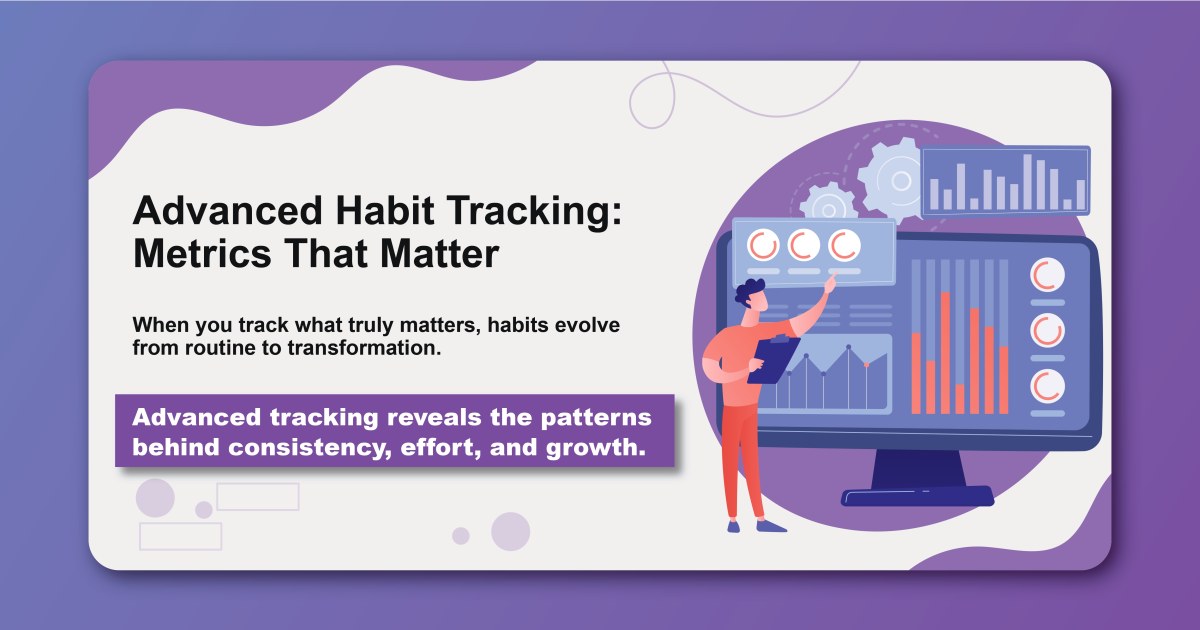
Most people start habit tracking with simple checkboxes—did I exercise today? Did I meditate? Did I read? While this basic approach can be effective, it only scratches the surface of what habit tracking can reveal about your behavior patterns and optimization opportunities. Advanced habit tracking goes beyond binary completion to capture the rich context and quality factors that determine whether your habits truly stick and contribute to your goals.
The difference between basic and advanced tracking is like the difference between knowing whether you arrived at your destination versus understanding the full journey—the route you took, the obstacles you encountered, the conditions that helped or hindered your progress, and the factors that made the experience enjoyable or challenging. This deeper level of tracking provides insights that can transform your approach to habit building.
Advanced metrics help you understand not just what you did, but how well you did it, under what conditions, and with what outcomes. They reveal patterns that aren't visible in simple completion data, such as which environments support your habits, how your energy levels affect performance, what times of day work best for different activities, and how various habits interact with each other.
However, advanced tracking isn't about collecting data for its own sake. It's about gathering meaningful information that leads to actionable insights and better results. The key is identifying metrics that provide genuine value while avoiding the trap of over-measurement that can turn tracking into a burdensome chore rather than a helpful tool.
This guide will explore the most valuable advanced metrics for habit tracking, how to collect them efficiently, and how to use the insights they provide to optimize your habit-building approach. Whether you're looking to troubleshoot struggling habits, maximize the impact of successful ones, or simply understand your behavior patterns better, these advanced tracking strategies will take your habit formation to the next level.
Beyond Basic Completion: Understanding Quality
Performance Quality Metrics
Effort Level Tracking Rather than just marking completion, rate the effort you put into each habit on a scale of 1-10. This reveals patterns about when you're giving your best effort versus when you're just going through the motions.
Implementation Examples:
- Exercise: Rate how hard you pushed yourself during your workout
- Reading: Rate how focused and engaged you were with the material
- Meditation: Rate how present and mindful you felt during the session
- Work habits: Rate how concentrated and productive you were
Satisfaction and Enjoyment Track how much you enjoyed or felt satisfied by each habit performance. This metric often predicts long-term sustainability better than completion rates.
Why It Matters:
- Habits you enjoy are more likely to stick
- Low satisfaction scores can indicate the need for habit modification
- Patterns in enjoyment can reveal optimal timing or conditions
- Satisfaction often correlates with habit quality and effectiveness
Difficulty and Resistance Monitor how difficult or easy each habit felt to perform. This can help identify patterns in motivation, energy, and environmental factors.
Tracking Approaches:
- Rate perceived difficulty (1-10 scale)
- Note specific challenges or obstacles
- Track resistance levels before starting
- Monitor how difficulty changes over time
Completion Quality For habits with variable outcomes, track not just whether you did them but how well you performed them.
Quality Indicators:
- Duration (how long you spent on the habit)
- Intensity (how vigorously you performed it)
- Consistency (how well you followed your planned approach)
- Results (what you achieved or accomplished)
Environmental and Contextual Factors
Location and Setting Metrics
Environment Tracking Record where you perform each habit to identify optimal locations and environmental factors that support or hinder your success.
Environmental Variables:
- Physical location (home, office, gym, outdoors)
- Social environment (alone, with others, specific people)
- Noise levels and distractions
- Lighting and ambiance
- Weather conditions (for outdoor activities)
Context Documentation Track the broader context in which your habits occur, including what you were doing before and after the habit.
Contextual Factors:
- Preceding activities and transitions
- Following activities and their impact
- Interruptions and distractions
- Available time and schedule pressure
- Competing priorities and demands
Temporal Patterns
Timing Analysis Track not just when you do habits but analyze patterns in timing effectiveness across different time periods.
Temporal Metrics:
- Specific time of day (with 15-minute precision)
- Day of the week patterns
- Seasonal variations
- Relationship to meals and other routines
- Duration between intention and action
Rhythm and Flow Monitor how habits fit into your natural rhythms and energy patterns throughout the day.
Rhythm Tracking:
- Energy levels when starting the habit
- Natural momentum and flow states
- Compatibility with chronotype (morning lark vs. night owl)
- Relationship to ultradian rhythms (90-minute cycles)
Physiological and Psychological States
Energy and Mood Metrics
Energy Level Tracking Record your energy levels before and after performing habits to understand their impact on your overall vitality.
Energy Measurements:
- Physical energy (1-10 scale)
- Mental energy and focus
- Emotional energy and motivation
- Energy change after habit completion
- Energy patterns throughout the day
Mood and Emotional State Track your emotional state before and after habits to understand their psychological impact and identify optimal emotional conditions.
Mood Indicators:
- Pre-habit mood rating
- Post-habit mood change
- Stress levels and anxiety
- Motivation and enthusiasm
- Confidence and self-efficacy
Sleep and Recovery Monitor how your habits affect and are affected by your sleep quality and recovery patterns.
Sleep Metrics:
- Sleep quality the night before
- Sleep duration and timing
- Morning alertness and readiness
- Impact of habits on subsequent sleep
- Weekly sleep debt patterns
Health and Wellness Indicators
Physical State Tracking Record relevant physical metrics that might influence habit performance or be influenced by your habits.
Physical Metrics:
- Overall health and wellness feelings
- Soreness or physical discomfort
- Hydration levels
- Nutrition timing and quality
- Physical symptoms or limitations
Cognitive Function Track mental clarity, focus, and cognitive performance as both inputs and outputs of your habits.
Cognitive Indicators:
- Mental clarity and sharpness
- Attention span and focus quality
- Memory and learning capacity
- Decision-making effectiveness
- Creative thinking and problem-solving
Habit Interaction and System Metrics
Habit Stacking Analysis
Sequence Effectiveness Track how well different habits work together when stacked or chained in sequence.
Stacking Metrics:
- Completion rates for habit sequences
- Energy flow between connected habits
- Natural transition points and friction
- Optimal sequence ordering
- Breaking points in habit chains
Synergy and Interference Monitor how different habits support or compete with each other for time, energy, and attention.
Interaction Patterns:
- Habits that enhance each other
- Habits that conflict or compete
- Resource sharing and allocation
- Compound effects of habit combinations
- Optimal spacing between different habits
System-Level Performance
Overall Habit Portfolio Analyze your entire habit system rather than individual habits in isolation.
System Metrics:
- Total habit completion rates
- Balance across different life areas
- Resource allocation efficiency
- System sustainability and maintenance
- Bottlenecks and limiting factors
Habit Lifecycle Tracking Monitor habits through their entire lifecycle from initial implementation to automatic maintenance.
Lifecycle Stages:
- Initial adoption and consistency building
- Skill development and optimization
- Plateau periods and breakthrough moments
- Maintenance and autopilot phases
- Evolution and adaptation over time
Advanced Data Collection Methods
Automated Tracking Integration
Wearable Device Data Integrate data from fitness trackers, smartwatches, and other wearable devices to automatically capture relevant metrics.
Automated Metrics:
- Heart rate and physiological data
- Movement and activity patterns
- Sleep quality and duration
- Location and environmental data
- Stress indicators and recovery metrics
Smart Home Integration Use smart home devices to automatically track environmental conditions and habit-related behaviors.
Smart Home Data:
- Light levels and circadian rhythm support
- Temperature and air quality
- Noise levels and acoustic environment
- Appliance usage patterns
- Presence and movement detection
Micro-Tracking Techniques
Momentary Assessment Use brief, frequent check-ins to capture state-dependent variables that change throughout the day.
Micro-Tracking Methods:
- Smartphone notifications for random sampling
- Quick voice memos for context capture
- Photo documentation of environments
- Brief questionnaires at key moments
- Mood and energy spot checks
Habit Microscopy Zoom in on specific aspects of habits to understand micro-patterns and optimization opportunities.
Microscopy Focus Areas:
- Exact habit start and end times
- Micro-interruptions and resumptions
- Attention and focus fluctuations
- Physical posture and positioning
- Breathing and physiological states
Data Analysis and Insight Generation
Pattern Recognition
Correlation Analysis Look for relationships between different metrics to identify factors that influence habit success.
Correlation Examples:
- Sleep quality vs. morning habit completion
- Stress levels vs. evening routine adherence
- Social environment vs. habit enjoyment
- Weather conditions vs. outdoor activity success
- Energy levels vs. habit quality ratings
Trend Analysis Track changes over time to identify improvement patterns, plateau periods, and potential regression risks.
Trend Indicators:
- Consistency trends over weeks and months
- Quality improvement patterns
- Seasonal variations and adaptations
- Skill development progressions
- Motivation and engagement changes
Predictive Modeling
Success Probability Forecasting Use historical data to predict the likelihood of habit success under different conditions.
Predictive Factors:
- Optimal timing windows
- Best environmental conditions
- Supportive activity sequences
- Energy and mood prerequisites
- Social and contextual factors
Intervention Trigger Points Identify early warning signs that indicate when habits might be at risk and need additional support.
Warning Indicators:
- Declining quality ratings
- Increasing difficulty scores
- Reduced enjoyment levels
- Environmental disruptions
- Competing priority pressures
Practical Implementation Strategies
Gradual Metric Introduction
Phased Approach Start with basic metrics and gradually add more sophisticated tracking as your system becomes established.
Implementation Phases:
- Phase 1: Basic completion tracking
- Phase 2: Add quality and satisfaction ratings
- Phase 3: Include environmental and contextual factors
- Phase 4: Integrate physiological and psychological metrics
- Phase 5: Advanced analysis and optimization
Metric Selection Criteria Choose metrics based on your specific goals, habits, and optimization opportunities rather than trying to track everything.
Selection Guidelines:
- Focus on actionable metrics that can inform decisions
- Prioritize metrics that address current challenges
- Balance depth with sustainability
- Consider the effort-to-insight ratio
- Align metrics with your primary goals
Technology and Tools
Integrated Tracking Platforms Use platforms that can combine multiple data sources and provide comprehensive analysis capabilities.
Platform Features:
- Multi-source data integration
- Advanced analytics and visualization
- Pattern recognition and insights
- Automated data collection where possible
- Export capabilities for further analysis
Custom Solution Development For advanced users, consider developing custom tracking solutions tailored to your specific needs and metrics.
Custom Approaches:
- Spreadsheet-based tracking systems
- Database applications for complex data
- API integrations for automated collection
- Custom dashboards and visualizations
- Automated reporting and insights
Avoiding Common Pitfalls
Over-Measurement Syndrome
Tracking Fatigue Be aware of the risk of tracking becoming so complex that it interferes with habit performance itself.
Prevention Strategies:
- Regularly audit and simplify your tracking system
- Focus on metrics that provide genuine value
- Automate data collection where possible
- Batch similar measurements together
- Schedule regular system reviews and optimization
Analysis Paralysis Avoid getting so caught up in data analysis that you lose sight of actual habit performance and improvement.
Balance Approaches:
- Set limits on analysis time
- Focus on actionable insights
- Maintain a bias toward action over analysis
- Use data to inform decisions, not replace them
- Remember that perfect data isn't necessary for progress
Metric Manipulation
Gaming the System Be aware of the tendency to optimize for metrics rather than the underlying goals they're meant to support.
Prevention Methods:
- Regularly review and update metrics
- Focus on outcome metrics as well as process metrics
- Use multiple metrics to create a complete picture
- Maintain awareness of the bigger picture
- Adjust metrics when they stop serving their purpose
Metric Fixation Avoid becoming so focused on hitting specific metric targets that you lose sight of the habit's true purpose and benefits.
Healthy Perspectives:
- View metrics as tools, not goals
- Maintain flexibility in metric interpretation
- Focus on trends rather than individual data points
- Remember that metrics are approximations, not exact measures
- Keep the bigger picture and true goals in mind
Advanced habit tracking transforms simple completion monitoring into a sophisticated system for understanding and optimizing your behavior patterns. By tracking meaningful metrics beyond basic completion, you gain insights that can dramatically improve your habit success rates and overall life satisfaction.
The key is to start simple and gradually add complexity as your tracking system becomes established. Focus on metrics that provide actionable insights and align with your specific goals and challenges. Remember that the goal isn't to have perfect data, but to gather enough information to make better decisions about your habits and behavior.
Use these advanced tracking techniques to move beyond the trial-and-error approach of basic habit building. With better data comes better understanding, and with better understanding comes the ability to create habits that truly stick and contribute to the life you want to live.
Ready to take your habit tracking to the next level with advanced metrics and insights? Start your data-driven habit optimization journey with Habityzer and discover how the right metrics can transform your ability to build and maintain life-changing habits.