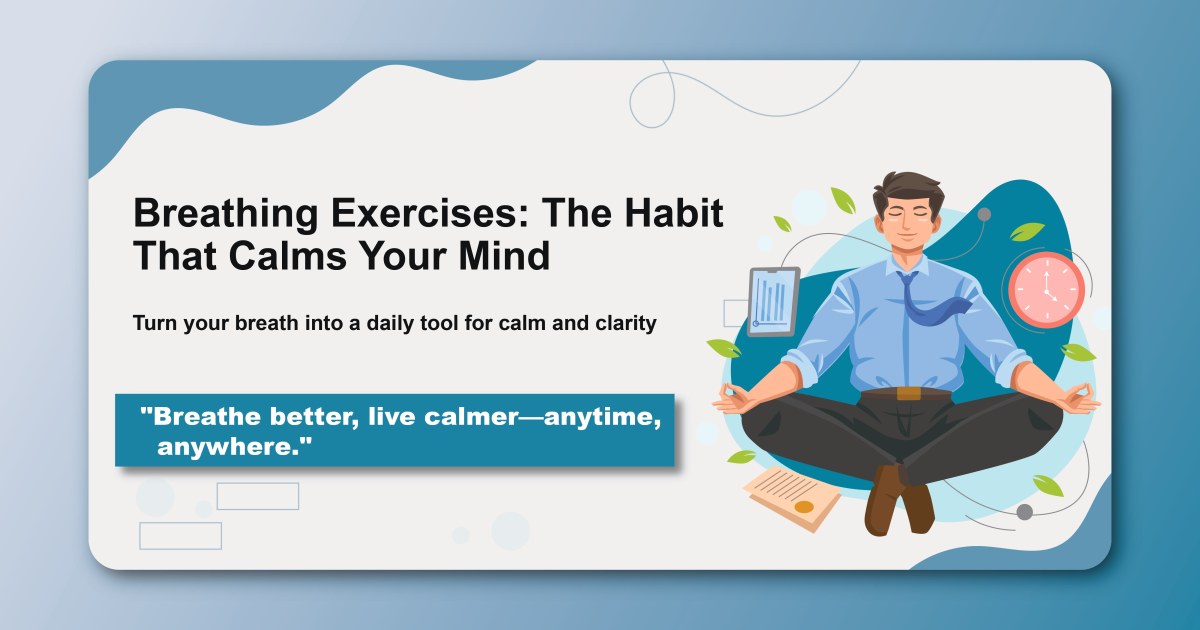
Your breath is the most powerful tool you carry with you everywhere, yet it's often the most overlooked resource for managing stress, anxiety, and mental overwhelm. Unlike other wellness practices that require special equipment, time, or specific environments, breathing exercises can be practiced anywhere, anytime, making them the ultimate accessible habit for mental well-being.
The beauty of breathing exercises lies in their immediate effectiveness and profound simplicity. Within minutes of conscious breathing, you can shift from a state of stress and reactivity to one of calm and clarity. This isn't just a temporary fix—regular breathing practice literally rewires your nervous system, creating lasting changes in how you respond to life's challenges.
Breathing exercises work because they directly influence your autonomic nervous system, the part of your nervous system responsible for your body's automatic functions. When you consciously control your breath, you're essentially taking the reins of your stress response system, teaching your body to activate its natural relaxation response instead of staying stuck in fight-or-flight mode.
The most remarkable aspect of breathing exercises is their cumulative effect. While each practice session provides immediate benefits, consistent daily practice creates a foundation of calm that supports everything else you do. When breathing exercises become a habit, you develop an inner reservoir of peace that you can tap into whenever life becomes overwhelming.
The Science of Breathing and Mental Health
The Breath-Mind Connection
Autonomic Nervous System Regulation Your breath is directly connected to your autonomic nervous system through the vagus nerve. Slow, deep breathing activates the parasympathetic nervous system (rest and digest), while shallow, rapid breathing activates the sympathetic nervous system (fight or flight).
Immediate Physiological Changes Within seconds of conscious breathing, your body begins to shift:
- Heart rate slows and becomes more variable
- Blood pressure decreases
- Stress hormones like cortisol begin to normalize
- Feel-good neurotransmitters like GABA increase
Brain Wave Patterns Rhythmic breathing practices can induce alpha and theta brain waves associated with relaxation, creativity, and meditative states. This is why breathing exercises often lead to insights and solutions that weren't apparent during stressed states.
The Stress Response and Breathing
Shallow Breathing Reinforces Stress When stressed, most people breathe shallowly into their chest, which signals to the brain that danger is present. This creates a feedback loop where stress causes shallow breathing, which reinforces the stress response.
Deep Breathing Breaks the Cycle Conscious deep breathing sends a signal to your brain that it's safe to relax. This single action can interrupt the stress response cycle and initiate the relaxation response within minutes.
Neuroplasticity and Breathing Regular breathing practice strengthens the prefrontal cortex (responsible for emotional regulation) and calms the amygdala (the brain's alarm system). Over time, this creates lasting changes in how your brain responds to stress.
Research Findings
Clinical Studies
- A 2017 study found that just 20 sessions of breathing exercises reduced anxiety by 60% in participants
- Research shows breathing exercises can be as effective as medication for certain anxiety disorders
- Studies demonstrate that breathing practices improve heart rate variability, a marker of resilience
Cognitive Benefits
- Breathing exercises improve focus and attention span
- Regular practice enhances memory and learning capacity
- Breathwork increases mental clarity and decision-making abilities
Essential Breathing Techniques
Foundation Techniques
Diaphragmatic Breathing (Belly Breathing) This is the foundation of all breathing exercises.
How to Practice:
- Place one hand on your chest, one on your belly
- Breathe in slowly through your nose, expanding your belly
- The hand on your belly should rise while the chest hand stays relatively still
- Exhale slowly through your mouth, gently contracting your belly
- Practice for 5-10 minutes daily
Benefits: Reduces stress, improves oxygen delivery, strengthens the diaphragm
4-7-8 Breathing A powerful technique for immediate calming.
How to Practice:
- Exhale completely through your mouth
- Close your mouth and inhale through your nose for 4 counts
- Hold your breath for 7 counts
- Exhale completely through your mouth for 8 counts
- Repeat 3-4 cycles
Benefits: Rapid stress relief, improved sleep, anxiety reduction
Box Breathing (4-4-4-4) Used by Navy SEALs for stress management in high-pressure situations.
How to Practice:
- Inhale for 4 counts
- Hold for 4 counts
- Exhale for 4 counts
- Hold empty for 4 counts
- Repeat for 5-10 cycles
Benefits: Enhances focus, regulates nervous system, builds mental resilience
Intermediate Techniques
Alternate Nostril Breathing A yogic technique for balancing the nervous system.
How to Practice:
- Use your right thumb to close your right nostril
- Inhale through your left nostril for 4 counts
- Close your left nostril with your ring finger, open your right nostril
- Exhale through your right nostril for 4 counts
- Inhale through your right nostril for 4 counts
- Close your right nostril, open your left nostril
- Exhale through your left nostril for 4 counts
- Complete 5-10 cycles
Benefits: Balances the nervous system, improves focus, reduces anxiety
Coherent Breathing (5-5 Breathing) Breathing at a rate of 5 breaths per minute for optimal heart rate variability.
How to Practice:
- Inhale for 6 counts
- Exhale for 6 counts
- Maintain this rhythm for 10-20 minutes
- Focus on smooth, effortless breathing
Benefits: Optimizes heart rate variability, enhances emotional regulation, improves resilience
Breath Counting A mindfulness technique that combines breathing with mental focus.
How to Practice:
- Breathe naturally and count each exhale
- Count from 1 to 10, then start over
- If you lose count, simply return to 1
- Practice for 10-20 minutes
Benefits: Develops concentration, calms mental chatter, builds mindfulness
Advanced Techniques
Wim Hof Breathing A powerful technique for building resilience and energy.
How to Practice:
- Take 30 deep breaths, inhaling fully and exhaling partially
- After the 30th breath, exhale completely and hold your breath
- Hold until you feel the urge to breathe, then take a recovery breath
- Hold this breath for 10-15 seconds
- Repeat for 3-4 rounds
Benefits: Builds stress tolerance, increases energy, enhances immune function
Breath of Fire A yogic technique for energizing and cleansing.
How to Practice:
- Sit with a straight spine
- Take a deep breath in
- Exhale forcefully through your nose while pulling your belly in
- Allow the inhale to happen naturally
- Continue rapid exhales for 30-60 seconds
- Return to normal breathing
Benefits: Increases energy, clears mental fog, strengthens core muscles
Building Your Breathing Practice
Starting Your Practice
Begin with Basics
- Start with 5 minutes of diaphragmatic breathing daily
- Focus on establishing the habit before adding complexity
- Choose a consistent time and place for practice
- Use guided audio or apps initially for support
Creating the Right Environment
- Find a quiet space where you won't be disturbed
- Sit comfortably with your spine straight
- Keep your shoulders relaxed and eyes closed or soft-gazing
- Use a timer to track your practice sessions
Dealing with Common Challenges
- If you feel dizzy, slow down your breathing or take a break
- If your mind wanders, gently return focus to your breath
- If you feel emotional, allow the feelings to arise and pass
- If you can't find time, start with just 2-3 minutes
Progressive Development
Week 1-2: Foundation Building
- Practice diaphragmatic breathing for 5 minutes daily
- Focus on establishing the routine
- Notice how breathing affects your stress levels
- Experiment with different times of day
Week 3-4: Technique Expansion
- Add 4-7-8 breathing for evening relaxation
- Use box breathing during stressful moments
- Increase practice time to 10 minutes
- Begin using breathing exercises preventively
Week 5-8: Integration and Mastery
- Experiment with different techniques for different purposes
- Use breathing exercises throughout the day
- Practice in various environments and situations
- Develop your personal breathing toolkit
Month 2+: Advanced Practice
- Explore more advanced techniques
- Combine breathing with meditation or movement
- Use breathing for specific goals (energy, focus, sleep)
- Share your practice with others or join breathing groups
Practical Applications
Daily Life Integration
Morning Activation
- Use energizing breath techniques to start your day
- Practice 5 minutes of breath of fire or coherent breathing
- Set intentions while breathing deeply
- Use breathing to transition from sleep to wakefulness
Workday Stress Management
- Take 3-minute breathing breaks between meetings
- Use box breathing before important presentations
- Practice breath awareness during stressful conversations
- Use breathing to maintain focus during demanding tasks
Evening Wind-Down
- Practice 4-7-8 breathing before bed
- Use diaphragmatic breathing to release the day's stress
- Combine breathing with gratitude or reflection
- Create a breathing ritual to signal bedtime
Specific Situations
Anxiety and Panic
- Use 4-7-8 breathing for immediate calm
- Practice box breathing during anxious moments
- Focus on extending the exhale to activate relaxation
- Use breathing to ground yourself in the present moment
Anger and Frustration
- Take 10 deep breaths before responding
- Use coherent breathing to regulate emotions
- Practice breathing to create space between stimulus and response
- Use breath awareness to maintain perspective
Decision-Making
- Use breathing to clear mental fog
- Practice coherent breathing before important decisions
- Use breath awareness to access intuition
- Breathe deeply to reduce decision fatigue
Physical Discomfort
- Use breathing to manage pain and tension
- Practice breathing with awareness of body sensations
- Use breath to relax tense muscles
- Combine breathing with gentle movement
Building Consistency
Habit Formation Strategies
Start Small
- Begin with just 2-3 minutes daily
- Choose one technique and master it before adding others
- Link breathing practice to existing habits
- Celebrate small wins and consistency streaks
Use Environmental Cues
- Place reminders in visible locations
- Use phone alarms or apps for practice reminders
- Create a dedicated breathing space
- Use specific situations as cues (red lights, elevator rides)
Track Your Practice
- Keep a simple log of daily practice
- Note how breathing affects your mood and stress
- Track which techniques work best for different situations
- Use apps or journals to maintain consistency
Overcoming Obstacles
"I Don't Have Time"
- Start with 30-second breathing breaks
- Use breathing during existing activities (commuting, waiting)
- Practice breathing instead of scrolling social media
- Remember that breathing practice saves time by reducing stress
"I Can't Focus"
- Start with shorter sessions and build gradually
- Use guided breathing apps or recordings
- Practice in quieter environments initially
- Remember that wandering attention is normal
"It Doesn't Work for Me"
- Try different techniques to find what resonates
- Give each technique at least a week of consistent practice
- Adjust techniques to fit your needs and preferences
- Consider working with a breathing coach or therapist
"I Keep Forgetting"
- Link breathing to existing habits
- Set multiple reminders throughout the day
- Practice breathing during routine activities
- Find an accountability partner or group
Advanced Integration
Combining with Other Practices
Breathing and Meditation
- Use breathing as the foundation for meditation practice
- Combine breath awareness with mindfulness meditation
- Use breathing to deepen contemplative practices
- Practice breathing meditation for extended periods
Breathing and Movement
- Coordinate breathing with yoga or tai chi
- Use breathing during walking or running
- Practice breathing while stretching
- Combine breathing with strength training
Breathing and Visualization
- Use breathing to enhance visualization practices
- Combine breathing with positive affirmations
- Practice breathing while visualizing healing or goals
- Use breathing to deepen imagery experiences
Teaching Others
Sharing Your Practice
- Teach simple techniques to family and friends
- Lead breathing exercises in groups or classes
- Share your experience and benefits with others
- Model conscious breathing in daily interactions
Supporting Others
- Guide others through breathing exercises during stressful times
- Create a calm presence through your own breathing
- Encourage others to explore their own breathing practice
- Share resources and techniques that have worked for you
Breathing exercises represent one of the most powerful and accessible tools for mental wellness available to us. They require no special equipment, can be practiced anywhere, and provide both immediate relief and long-term benefits. When you make conscious breathing a daily habit, you're not just managing stress—you're building a foundation of calm that supports every aspect of your life.
The key to success with breathing exercises is consistency rather than perfection. Start with simple techniques, practice regularly, and allow your practice to evolve naturally. Remember that every conscious breath you take is an investment in your mental and physical well-being.
Your breath is always with you, ready to serve as an anchor of calm in the storm of daily life. By developing a regular breathing practice, you're cultivating a skill that will serve you throughout your life, providing a reliable pathway to peace and clarity whenever you need it most.
Ready to harness the power of conscious breathing for mental calm? Track your breathing practices and build mindfulness habits with Habityzer and discover how this simple yet powerful habit can transform your relationship with stress and anxiety.