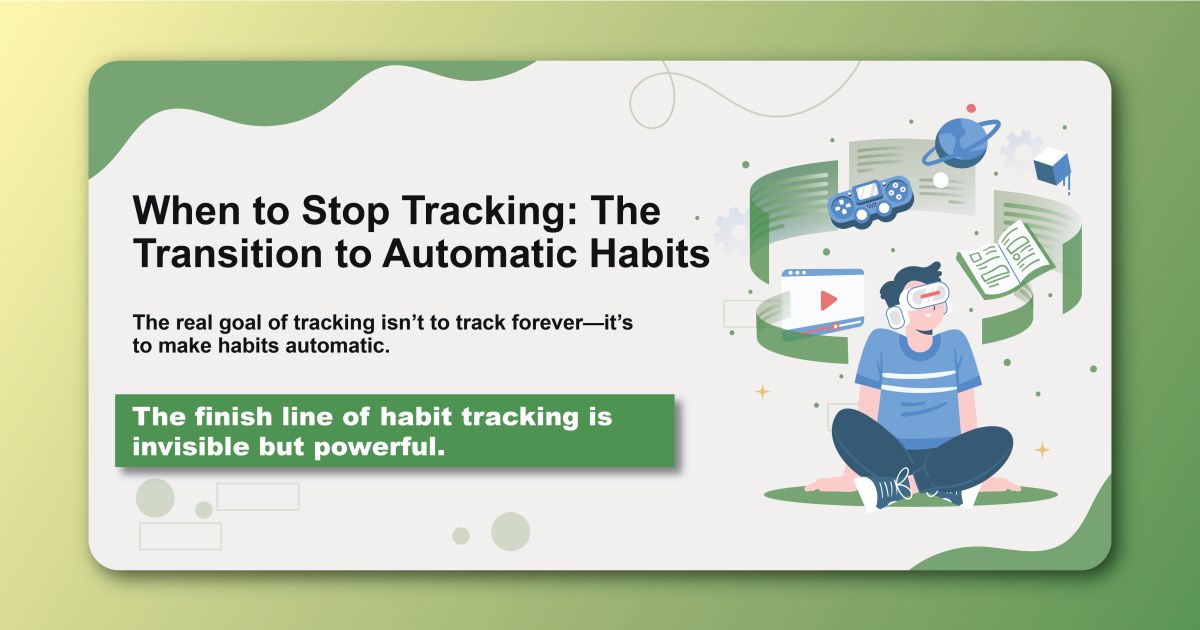
One of the most overlooked aspects of habit formation is knowing when to stop tracking. While tracking is incredibly powerful for building new habits, there comes a point where continued monitoring can become counterproductive—turning natural, automatic behaviors back into conscious, effortful tasks. The goal of habit tracking isn't to track forever; it's to create behaviors that eventually become so automatic they no longer require conscious attention or external monitoring.
This transition from tracked to automatic represents one of the most significant milestones in habit formation. It's the difference between having to think about and manage your habits versus having them flow naturally as part of your identity and daily routine. When habits become truly automatic, they require less mental energy, create less decision fatigue, and integrate seamlessly into your life without constant vigilance.
However, the transition away from tracking requires careful consideration and strategic planning. Stop tracking too early, and you risk losing habits that weren't yet fully established. Stop tracking too late, and you may create unnecessary dependence on external monitoring that prevents natural automation. The key is recognizing the signs that indicate a habit is ready for independence and implementing strategies that support the transition without losing momentum.
Understanding when and how to stop tracking is crucial for long-term habit success. It's about recognizing that tracking is a tool for building habits, not a permanent requirement for maintaining them. The most successful habit builders know how to use tracking to create automatic behaviors and then gradually transfer that external structure to internal motivation and natural routine.
This comprehensive guide explores the signs that indicate your habits are ready to become automatic, strategies for transitioning away from tracking, and methods for maintaining habits without constant monitoring. Whether you're wondering if you're ready to stop tracking certain habits or looking to optimize your approach to habit automation, you'll discover how to create truly sustainable behaviors that last without external support.
Understanding Automatic Habits
The Nature of Automaticity
Unconscious Competence Automatic habits operate at the level of unconscious competence, where you perform the behavior skillfully without conscious thought or effort.
Characteristics of Automatic Habits:
- Minimal conscious attention required
- Consistent performance across different contexts
- Resistance to interruption or distraction
- Integration with existing routines and identity
- Emotional neutrality—neither exciting nor burdensome
Neurological Automation When habits become automatic, they shift from prefrontal cortex control to basal ganglia processing, requiring significantly less mental energy.
Brain Changes in Automation:
- Reduced activity in decision-making regions
- Strengthened neural pathways for habit performance
- Faster processing and execution
- Less susceptible to willpower depletion
Levels of Habit Automation
Conscious Tracking Stage Early habit formation requires conscious effort and external tracking to maintain consistency.
Semi-Automatic Stage Habits begin to feel more natural but still benefit from occasional monitoring and reinforcement.
Automatic Stage Habits operate naturally without conscious effort or external tracking, integrated into daily routine.
Identity Integration Stage Habits become part of your identity and self-concept, making them extremely stable and resistant to change.
Signs Your Habits Are Ready to Become Automatic
Behavioral Indicators
Consistent Performance Your habit has become so consistent that you rarely miss days, even without reminders or external pressure.
Consistency Markers:
- 90%+ completion rate over 2-3 months
- Minimal variation in performance quality
- Automatic execution without decision-making
- Resistance to skipping even when busy or tired
Effortless Execution The habit feels natural and easy, requiring minimal willpower or conscious effort to perform.
Effortlessness Signs:
- No internal resistance or debate
- Smooth integration with existing routines
- Ability to perform while distracted
- Consistent execution across different moods and contexts
Contextual Flexibility You can maintain the habit across different environments, schedules, and circumstances without significant adaptation.
Flexibility Indicators:
- Successful habit maintenance while traveling
- Adaptation to schedule changes
- Performance in various locations
- Consistency despite life disruptions
Psychological Indicators
Identity Integration The habit has become part of your identity rather than something you do—you see yourself as "someone who exercises" rather than "someone trying to exercise."
Identity Markers:
- Natural language use ("I'm a runner" vs. "I run")
- Automatic behavior in social contexts
- Resistance to identity-conflicting actions
- Natural advocacy for the habit
Reduced Tracking Satisfaction The act of tracking begins to feel unnecessary or even burdensome rather than satisfying or motivating.
Tracking Fatigue Signs:
- Forgetting to track without impact on performance
- Feeling annoyed by tracking requirements
- Preferring to focus on performance rather than measurement
- Tracking feeling like an interruption
Intrinsic Motivation Your motivation has shifted from external rewards and tracking satisfaction to internal satisfaction and natural enjoyment.
Intrinsic Motivation Indicators:
- Genuine enjoyment of the habit itself
- Natural curiosity about improvement
- Self-directed learning and development
- Habit performance for its own sake
Strategies for Transitioning Away from Tracking
Gradual Reduction Approach
Frequency Reduction Gradually reduce how often you track the habit while maintaining performance.
Reduction Schedule:
- Daily tracking → Every other day
- Every other day → Weekly check-ins
- Weekly → Monthly reviews
- Monthly → Quarterly assessments
- Quarterly → Annual reflections
Spot-Check Monitoring Transition to occasional monitoring to ensure habits remain stable without constant tracking.
Spot-Check Methods:
- Random weekly assessments
- Monthly performance reviews
- Quarterly habit audits
- Annual goal alignment checks
Alternative Monitoring Systems
Outcome-Based Tracking Shift from process tracking to outcome tracking, focusing on results rather than daily performance.
Outcome Metrics:
- Health markers instead of workout tracking
- Skill improvements instead of practice logging
- Relationship quality instead of communication tracking
- Financial results instead of spending monitoring
Environmental Indicators Use environmental cues and natural feedback to monitor habit maintenance.
Environmental Signals:
- Physical evidence of habit performance
- Natural consequences and results
- Social feedback and recognition
- Seasonal or cyclical patterns
Habit Maintenance Without Tracking
Routine Integration Fully integrate habits into your daily routine so they become inseparable from other activities.
Integration Strategies:
- Habit stacking with established routines
- Environmental design for automatic triggers
- Time-based scheduling integration
- Location-based habit anchoring
Identity Reinforcement Strengthen the identity aspects of your habits to maintain them through self-concept rather than external monitoring.
Identity Reinforcement Methods:
- Regular self-reflection on identity
- Social role and community engagement
- Value alignment exercises
- Story and narrative development
Maintaining Automatic Habits
Preventing Habit Decay
Periodic Reviews Conduct regular but infrequent reviews to ensure automatic habits remain aligned with your goals and values.
Review Frequency:
- Quarterly habit assessments
- Annual goal alignment checks
- Life transition evaluations
- Major change adaptations
Early Warning Systems Develop sensitivity to early signs that automatic habits might be degrading.
Warning Signs:
- Increased internal resistance
- Declining performance quality
- Reduced consistency
- Loss of identity connection
Adaptation and Evolution
Habit Evolution Allow automatic habits to evolve and improve over time without returning to intensive tracking.
Evolution Approaches:
- Natural skill development
- Gradual challenge increases
- Quality improvements
- Scope expansions
Life Change Adaptation Adapt automatic habits to major life changes without losing their automatic nature.
Adaptation Strategies:
- Flexible implementation methods
- Core habit preservation
- Environmental modifications
- Support system adjustments
Dealing with Disruptions
Temporary Disruptions Handle short-term disruptions to automatic habits without losing long-term automaticity.
Disruption Management:
- Rapid re-engagement after interruptions
- Flexible adaptation during disruptions
- Maintenance of habit identity
- Quick return to normal patterns
Major Life Changes Navigate major life transitions while preserving automatic habits.
Transition Strategies:
- Proactive habit adaptation planning
- Core habit identification and protection
- Gradual adjustment processes
- Support system activation
Advanced Concepts in Habit Automation
Habit Ecosystems
Interconnected Habits Recognize how automatic habits support and reinforce each other within larger behavioral ecosystems.
Ecosystem Benefits:
- Mutual reinforcement between habits
- Shared identity and value alignment
- Efficient resource utilization
- Compound behavior effects
Keystone Habit Identification Identify keystone habits that automatically trigger and support other positive behaviors.
Keystone Characteristics:
- Natural spillover effects
- Identity-shaping influence
- Energy and motivation generation
- Routine structure creation
Meta-Habits and Systems
Habit Formation Habits Develop automatic habits around habit formation itself, creating a natural capacity for building new behaviors.
Meta-Habit Examples:
- Regular reflection and planning
- Continuous learning and improvement
- Adaptation and flexibility
- Self-awareness and monitoring
System-Level Automation Create automatic systems that support ongoing habit development and maintenance.
System Automation:
- Environmental design habits
- Planning and review routines
- Learning and adaptation processes
- Community and support engagement
Cultural and Social Automation
Social Habit Maintenance Leverage social environments and relationships to maintain automatic habits without personal tracking.
Social Strategies:
- Community identity and belonging
- Social expectation and accountability
- Role modeling and influence
- Cultural norm alignment
Environmental Automation Create environments that naturally support and maintain automatic habits.
Environmental Design:
- Physical space optimization
- Tool and resource availability
- Cue and reminder systems
- Friction reduction
Common Challenges and Solutions
Timing Issues
Stopping Too Early Avoid stopping tracking before habits are truly automatic, which can lead to habit decay.
Early Stopping Signs:
- Inconsistent performance without tracking
- Continued dependence on external motivation
- Vulnerability to minor disruptions
- Identity not yet fully integrated
Stopping Too Late Recognize when continued tracking becomes counterproductive and hinders natural automation.
Late Stopping Indicators:
- Tracking feels burdensome
- Natural performance without tracking
- Strong identity integration
- Consistent performance across contexts
Dependency Issues
Tracking Dependency Avoid becoming so dependent on tracking that habits can't function without it.
Dependency Prevention:
- Gradual reduction in tracking frequency
- Regular tracking-free periods
- Focus on intrinsic motivation development
- Identity and value alignment
External Validation Dependency Prevent habits from becoming dependent on external recognition or feedback.
Validation Independence:
- Intrinsic satisfaction development
- Personal meaning and purpose
- Self-directed improvement
- Internal success metrics
Monitoring Challenges
Loss of Awareness Maintain appropriate awareness of habit performance without intensive tracking.
Awareness Maintenance:
- Natural outcome monitoring
- Periodic check-ins
- Environmental feedback
- Social and community indicators
Quality Maintenance Ensure habit quality doesn't decline when tracking stops.
Quality Preservation:
- Intrinsic motivation for excellence
- Natural skill development
- Periodic quality assessments
- Continuous improvement mindset
Creating a Sustainable Habit Practice
Long-Term Perspective
Lifecycle Thinking Understand that habits have natural lifecycles and tracking is just one phase of their development.
Lifecycle Stages:
- Formation (intensive tracking)
- Establishment (reduced tracking)
- Automation (minimal tracking)
- Integration (natural monitoring)
- Evolution (adaptive maintenance)
Sustainable Practices Build sustainable practices that support long-term habit maintenance without constant effort.
Sustainability Principles:
- Energy efficiency over intensity
- Natural integration over forced discipline
- Flexibility over rigidity
- Identity over behavior
Integration with Life Design
Holistic Approach Integrate automatic habits into your broader life design and personal development.
Integration Elements:
- Values and purpose alignment
- Life role and identity consistency
- Goal and vision connection
- Meaning and fulfillment contribution
Continuous Evolution Allow your habit practice to evolve and mature over time.
Evolution Aspects:
- Increasing sophistication and skill
- Natural adaptation to life changes
- Expanding impact and influence
- Deepening meaning and purpose
The transition from tracking to automatic habits represents a crucial milestone in personal development. It's the difference between managing your habits and living them, between conscious effort and natural flow. When done thoughtfully, this transition creates behaviors that serve you effortlessly for years to come.
The key is recognizing that tracking is a tool for building habits, not a permanent requirement for maintaining them. The most successful habit builders use tracking to create automatic behaviors and then trust those behaviors to operate independently. This trust is built through careful observation, gradual transition, and understanding of the psychological and neurological markers of true automaticity.
Remember that the goal isn't to stop tracking all habits immediately, but to graduate habits from tracking when they're ready. Some habits may need ongoing monitoring due to their complexity or importance, while others can become completely automatic. The wisdom lies in knowing the difference and applying the right approach to each habit.
Whether you're just beginning your habit journey or looking to optimize your current practice, understanding when and how to stop tracking will help you create truly sustainable behaviors that enhance your life without requiring constant attention or effort.
Ready to graduate your habits from tracking to automatic behavior? Start your journey toward effortless habit maintenance with Habityzer and discover how to create behaviors that serve you naturally for life.