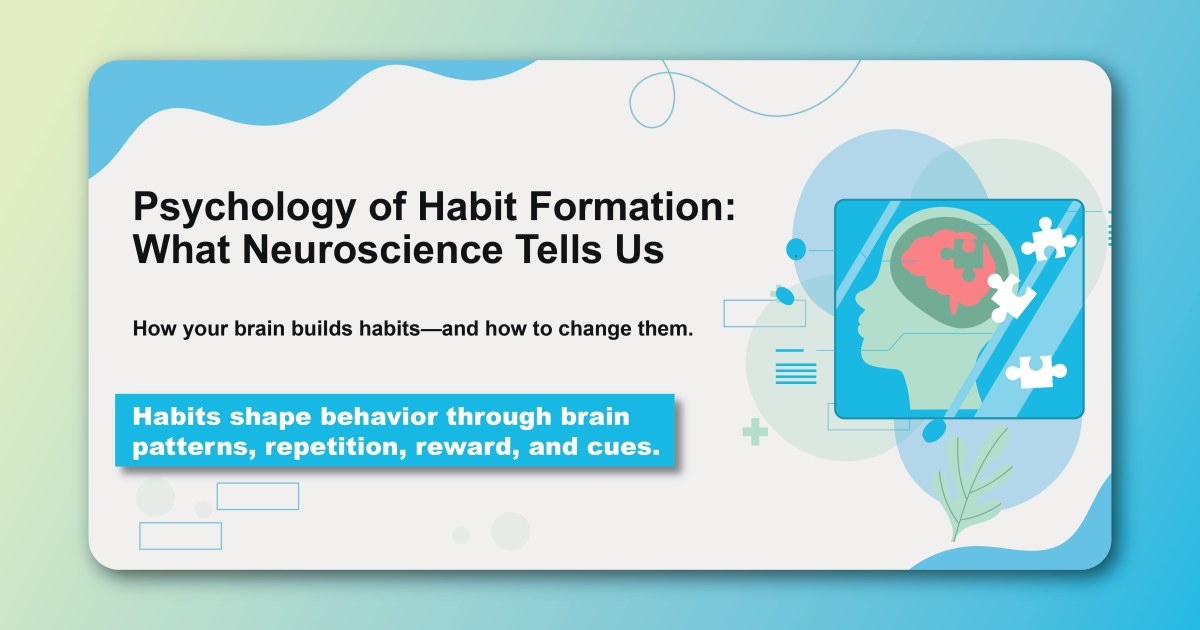
Why do some habits stick while others fade away? Why can you drive home without thinking about it, but struggle to remember to take your vitamins? The answers lie in the fascinating world of neuroscience and psychology.
Understanding how your brain creates and maintains habits isn't just academically interesting—it's practically essential for anyone wanting to build lasting change. In this comprehensive guide, we'll explore the cutting-edge research that reveals exactly how habits work in your brain and what you can do to leverage this knowledge.
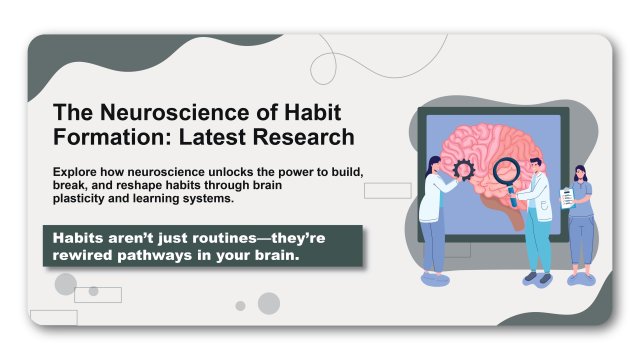
The Neuroscience of Habit Formation
The Brain's Habit Centers
Your brain has several key regions involved in habit formation:
The Basal Ganglia
- Primary habit processing center
- Converts conscious decisions into automatic behaviors
- Becomes more active as habits strengthen
- Processes the habit loop (cue → routine → reward)
The Prefrontal Cortex
- Responsible for conscious decision-making
- Highly active during new behavior learning
- Activity decreases as habits become automatic
- Can override habitual responses with conscious effort
The Striatum
- Part of the basal ganglia
- Processes rewards and motivation
- Creates associations between actions and outcomes
- Crucial for habit maintenance
The Neuroplasticity Advantage
Your brain's ability to change throughout your life (neuroplasticity) is what makes habit formation possible. Every time you repeat a behavior, you strengthen the neural pathways associated with that action.
How Neural Pathways Change:
- Initial learning: Prefrontal cortex works hard to process new behavior
- Repetition: Neural pathways between brain regions strengthen
- Automation: Basal ganglia takes over, requiring less conscious effort
- Habit formation: Behavior becomes automatic and effortless
The Chunking Process
One of the most important discoveries in habit research is "chunking"—how your brain packages sequences of actions into single units.
Example of Chunking:
- Day 1: Consciously think about each step of making coffee
- Day 30: The entire coffee-making routine becomes one "chunk"
- Day 60: You can make coffee while thinking about other things
- Result: Mental energy is freed up for other tasks
This chunking process is why habits are so powerful—they allow you to perform complex behaviors with minimal mental effort.
The Psychology Behind Habit Loops
The Dopamine Connection
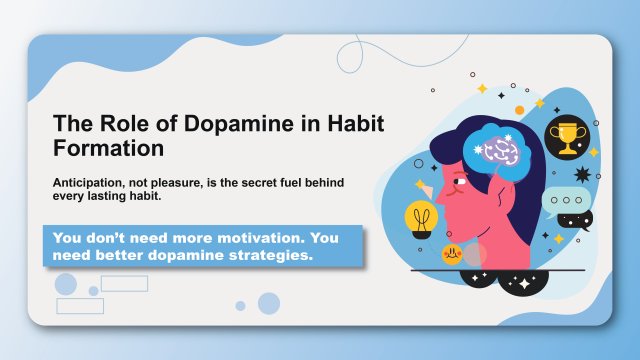
Dopamine, often called the "reward chemical," plays a crucial role in habit formation. But recent research reveals that dopamine doesn't just signal reward—it signals the anticipation of reward.
The Dopamine Cycle:
- Cue detection: Dopamine spikes when you encounter a habit cue
- Anticipation: Brain expects the reward from completing the habit
- Action: You perform the habitual behavior
- Reward: Dopamine reinforces the behavior (if reward is received)
This is why habit tracking is so effective—checking off a completed habit provides a small dopamine hit that reinforces the behavior.
The Role of Stress and Habit Formation
Stress significantly impacts habit formation, but not in the way you might expect.
Stress and New Habits:
- High stress impairs learning of new habits
- Cortisol interferes with prefrontal cortex function
- Makes it harder to form new neural pathways
- Reduces motivation to start new behaviors
Stress and Existing Habits:
- Stress strengthens existing habits (good or bad)
- People revert to familiar patterns under pressure
- Basal ganglia activity increases during stress
- Automatic behaviors become more dominant
This explains why you might abandon your new exercise routine during stressful periods but still automatically reach for comfort foods.
Different Types of Habits: A Neuroscience Perspective
Motor Habits
These are physical behaviors that become automatic through repetition.
Brain regions involved: Primary motor cortex, cerebellum, basal ganglia Examples: Typing, driving, playing musical instruments Formation time: 30-60 days for simple motor habits Characteristics: Highly automatic, resistant to change, performed with minimal conscious attention
Cognitive Habits
Mental patterns and thought processes that become automatic.
Brain regions involved: Prefrontal cortex, anterior cingulate cortex Examples: Problem-solving approaches, decision-making patterns, attention habits Formation time: 45-90 days, depending on complexity Characteristics: Can be modified with conscious effort, influenced by context
Emotional Habits
Automatic emotional responses to specific triggers.
Brain regions involved: Amygdala, prefrontal cortex, limbic system Examples: Stress responses, mood patterns, social reactions Formation time: Varies widely (days to years) Characteristics: Deeply ingrained, often unconscious, tied to identity
The Science of Habit Strength
Measuring Habit Strength
Neuroscientists measure habit strength through several indicators:
Behavioral Measures:
- Automaticity: How little conscious effort is required
- Consistency: How reliably the behavior occurs
- Resistance to change: How the habit persists despite obstacles
- Context independence: How the habit transfers across situations
Neural Measures:
- Basal ganglia activity: Increased activity indicates stronger habits
- Prefrontal cortex activity: Decreased activity shows automaticity
- Neural pathway strength: Measured through brain imaging
- Response time: Faster responses indicate stronger habits
The Habit Strength Spectrum
Habits exist on a spectrum from weak to strong:
Weak Habits (1-3 weeks):
- Require conscious effort
- Easily disrupted by changes
- High prefrontal cortex activity
- Vulnerable to forgetting
Moderate Habits (1-3 months):
- Becoming more automatic
- Some resistance to disruption
- Balanced brain activity
- Occasional lapses possible
Strong Habits (3+ months):
- Highly automatic
- Resistant to change
- Dominant basal ganglia activity
- Persistent across contexts
Factors That Strengthen Habits
Repetition Frequency:
- Daily repetition creates stronger habits than weekly
- Consistent timing strengthens neural pathways
- Skipping days weakens habit strength
Contextual Consistency:
- Same time, same place strengthens habits
- Consistent environmental cues enhance automation
- Variable contexts can weaken habit formation
Reward Consistency:
- Reliable rewards strengthen habits
- Intermittent rewards can be even more powerful
- Immediate rewards are more effective than delayed ones
The Neuroscience of Habit Change
Why Habits Are Hard to Change
Understanding why habits resist change helps explain why willpower alone isn't enough:
Neural Inertia:
- Established neural pathways prefer familiar patterns
- Brain conserves energy by maintaining automatic behaviors
- Changing habits requires conscious prefrontal cortex effort
The Habit Memory:
- Habits are stored as procedural memories
- These memories are different from conscious memories
- They persist even when you consciously want to change
Stress Response:
- Stress activates the basal ganglia
- This strengthens existing habits
- Makes it harder to implement new behaviors
The Golden Rule of Habit Change
Research reveals that you can't eliminate habits—you can only change them. The most effective approach is:
- Keep the same cue
- Change the routine
- Keep the same reward
This works because you're leveraging existing neural pathways while redirecting the behavioral output.
Neuroplasticity and Habit Modification
Your brain's plasticity allows for habit change at any age, but the process requires specific conditions:
Optimal Conditions for Change:
- Focused attention: Conscious effort to change
- Repetition: Consistent practice of new behaviors
- Positive emotions: Enjoyment and satisfaction
- Social support: Environmental encouragement
- Adequate sleep: Necessary for neural consolidation
The Role of Attention in Habit Formation
Attention and Automaticity
There's an inverse relationship between attention and habit strength:
High Attention Phase (New behaviors):
- Prefrontal cortex is highly active
- Behaviors require conscious control
- Easy to modify or stop
- Mentally exhausting
Low Attention Phase (Established habits):
- Basal ganglia dominates
- Behaviors run automatically
- Difficult to consciously modify
- Mentally efficient
Mindfulness and Habit Awareness
Mindfulness practices can help you become more aware of your habits:
Benefits of Mindful Habit Awareness:
- Increases conscious control over automatic behaviors
- Helps identify habit triggers
- Allows for real-time habit modification
- Reduces unconscious habit execution
Mindfulness Techniques:
- Present-moment awareness: Notice when habits occur
- Trigger identification: Recognize what initiates habits
- Response choice: Consciously choose your response
- Non-judgmental observation: Watch habits without criticism
The Social Psychology of Habits
Mirror Neurons and Habit Modeling
Your brain has specialized neurons that fire when you observe others performing actions. This has significant implications for habit formation:
How Mirror Neurons Affect Habits:
- Observational learning: You unconsciously mimic others' habits
- Social contagion: Habits spread through social networks
- Environmental influence: Surroundings shape habit formation
- Peer effects: Friends' habits influence your own
Cultural and Social Influences
Your social environment profoundly impacts habit formation:
Social Factors:
- Family patterns: Early exposure shapes lifelong habits
- Peer influence: Friends' behaviors become normalized
- Cultural norms: Society defines "normal" behaviors
- Social proof: Others' actions validate your habits
Leveraging Social Influence:
- Join communities: Surround yourself with people who have desired habits
- Find accountability partners: Social pressure supports habit maintenance
- Create social cues: Use social situations as habit triggers
- Share your goals: Public commitment increases follow-through
Individual Differences in Habit Formation
Personality and Habit Formation
Different personality types form habits differently:
Conscientiousness:
- Higher conscientiousness = easier habit formation
- Better at maintaining routines
- More likely to stick with difficult habits
- Naturally more organized and disciplined
Openness to Experience:
- Higher openness = more flexible habits
- Easier to change existing habits
- More likely to try new behaviors
- Better at adapting habits to new contexts
Neuroticism:
- Higher neuroticism = more difficulty with habits
- Stress interferes with habit formation
- More likely to abandon habits during challenges
- Benefits from extra support and structure
Genetic Influences
Research shows that genetics influence habit formation:
Genetic Factors:
- Dopamine receptor variations: Affect reward sensitivity
- Serotonin transporter genes: Influence mood and habit maintenance
- Executive function genes: Impact self-control and planning
- Stress response genes: Determine how stress affects habits
Important Note: Genetics influence but don't determine habit formation. Environmental factors and conscious effort can overcome genetic predispositions.
Practical Applications of Habit Psychology
Using Neuroscience to Build Better Habits
Leverage Your Brain's Natural Patterns:
- Start small: Reduce prefrontal cortex load
- Be consistent: Strengthen neural pathways through repetition
- Use triggers: Create strong cue-behavior associations
- Celebrate wins: Provide dopamine reinforcement
Optimize Your Environment:
- Remove friction: Make good habits easier
- Add friction: Make bad habits harder
- Use visual cues: Leverage your brain's pattern recognition
- Create context: Use location and time as habit triggers
Habit Stacking and Neural Efficiency
Habit stacking works because it leverages existing neural pathways:
How to Stack Habits:
- Identify a strong existing habit
- Add a small new habit immediately after
- Use the formula: "After I [existing habit], I will [new habit]"
- Repeat consistently to strengthen the connection
Examples of Effective Stacking:
- After I pour my coffee, I will write in my journal
- After I brush my teeth, I will do 10 squats
- After I sit down for lunch, I will take three deep breaths
The Neuroscience of Habit Tracking
Habit tracking works because it activates multiple brain systems:
Why Tracking Works:
- Dopamine release: Checking off completed habits provides reward
- Pattern recognition: Visual patterns motivate continuation
- Prefrontal cortex engagement: Conscious monitoring strengthens habits
- Feedback loops: Immediate feedback reinforces behavior
Optimal Tracking Methods:
- Immediate tracking: Record completion right after the habit
- Visual systems: Use charts, apps, or physical markers
- Simple tracking: Complex systems reduce compliance
- Positive focus: Celebrate successes rather than dwelling on failures
The Future of Habit Science
Emerging Research Areas
Neurofeedback and Habit Formation:
- Real-time brain monitoring during habit execution
- Personalized habit training based on neural patterns
- Biofeedback systems for habit optimization
Pharmacological Interventions:
- Medications that enhance neuroplasticity
- Drugs that modify dopamine sensitivity
- Compounds that reduce habit-change resistance
Technology Integration:
- AI-powered habit coaching
- Virtual reality habit training
- Wearable devices for habit monitoring
Personalized Habit Science
Future research will likely focus on:
- Individual neural patterns: Customized approaches based on brain scans
- Genetic profiling: Habit strategies based on genetic markers
- Lifestyle factors: Personalized timing and context optimization
- Real-time adaptation: Dynamic habit programs that adjust based on performance
Building Your Habit Psychology Toolkit
Assessment Tools
Evaluate Your Habit Readiness:
- Current stress levels
- Available mental resources
- Social support systems
- Environmental factors
Identify Your Patterns:
- When do you form habits most easily?
- What triggers support your habits?
- How do you respond to setbacks?
- What rewards motivate you most?
Implementation Strategies
Phase 1: Preparation
- Choose one habit based on your psychological profile
- Design environmental supports
- Identify potential obstacles
- Create measurement systems
Phase 2: Formation
- Start with minimal viable habits
- Use consistent cues and context
- Track progress immediately
- Celebrate small wins
Phase 3: Strengthening
- Gradually increase habit difficulty
- Add variation to prevent boredom
- Connect habits to identity
- Plan for maintenance
Phase 4: Integration
- Link habits to other behaviors
- Create habit systems
- Develop habit flexibility
- Share your success with others
Conclusion: Your Brain Is Your Habit Ally
Understanding the psychology and neuroscience of habit formation reveals that your brain is designed to create habits. Rather than fighting against this natural tendency, you can work with your brain's systems to build the habits you want.
Key takeaways:
- Habits are neurological: They're created by specific brain processes
- Repetition strengthens: Consistent practice builds neural pathways
- Context matters: Environment shapes habit formation
- Change is possible: Neuroplasticity allows habit modification at any age
- Small starts work: Minimal habits avoid overwhelming your brain's systems
Your brain wants to help you succeed—you just need to understand how to work with it, not against it.
Ready to build habits that work with your brain's natural patterns? Start your neuroscience-based habit journey with Habityzer and discover how understanding your brain can transform your habit formation success.