Every January, millions of people set ambitious goals: lose 30 pounds, save $10,000, read 50 books, or learn a new skill. By March, most of these goals have been abandoned, leaving behind a trail of frustration, self-doubt, and broken promises. The problem isn't with the goals themselves—it's with our fundamental approach to achievement.
What if the secret to extraordinary results isn't setting better goals, but building better systems? What if the key to lasting success lies not in focusing on outcomes, but in falling in love with the process?
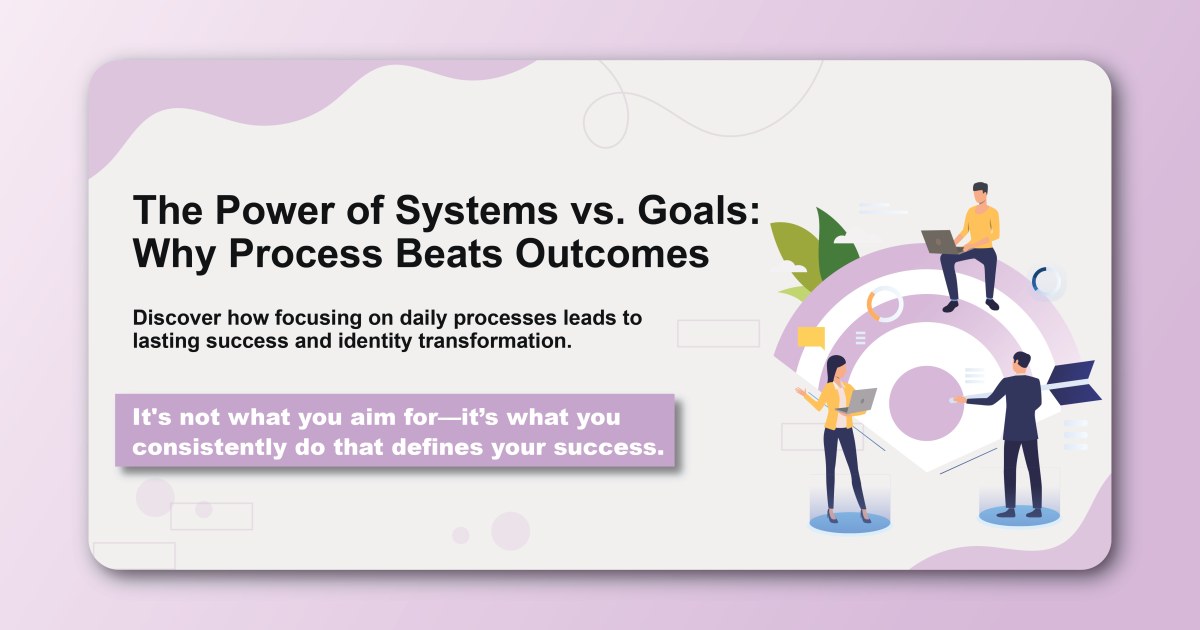
This is the revolutionary insight that separates consistent achievers from chronic strugglers. While most people fixate on what they want to achieve, the most successful individuals focus on who they want to become and what they want to do repeatedly. They understand that goals are about the results you want to achieve, but systems are about the processes that lead to those results.
The distinction between systems and goals isn't just semantic—it's fundamental to how we approach personal development, business growth, and life satisfaction. When you shift from outcome-focused thinking to process-focused thinking, you don't just achieve better results; you build a sustainable foundation for continuous improvement and lasting success.
Understanding the Systems vs. Goals Paradigm
What Are Goals?
Goals are specific outcomes you want to achieve. They're the destination on your personal development journey:
- "I want to lose 20 pounds"
- "I want to earn $100,000 this year"
- "I want to write a book"
- "I want to run a marathon"
Goals provide direction and can be motivating in the short term. They give you something to aim for and a way to measure progress. But goals also have significant limitations that can actually hinder long-term success.
What Are Systems?
Systems are the processes, habits, and routines that lead to results. They're the vehicle that takes you to your destination:
- "I have a system for eating healthy meals and exercising regularly"
- "I have a system for developing valuable skills and creating multiple income streams"
- "I have a system for writing consistently and improving my craft"
- "I have a system for building endurance and maintaining fitness"
Systems focus on the inputs rather than the outputs. They're about what you do, not what you achieve. They create the conditions that make success inevitable rather than hoping for success through willpower alone.
The Fundamental Difference
Goals ask: "What do I want to achieve?" Systems ask: "What kind of person do I want to become, and what would that person do?"
Goals focus on: The end result Systems focus on: The daily process
Goals are about: Getting somewhere Systems are about: Becoming someone
This shift in perspective changes everything about how you approach challenges, setbacks, and long-term development.
Why Systems Are More Powerful Than Goals
1. Systems Create Sustainable Motivation
The Goal Problem: Goal-based motivation is temporary and fragile. You're motivated when you're making progress toward your goal, but what happens when progress slows or stops? When you hit a plateau or face setbacks, goal-based motivation evaporates.
The Systems Solution: Systems create intrinsic motivation through process enjoyment. When you build a system you enjoy, you don't need external motivation to maintain it. The process becomes its own reward.
Example: Instead of being motivated by "losing 20 pounds," you're motivated by "becoming someone who takes care of their health every day." The daily actions become satisfying in themselves.
2. Systems Handle Setbacks Better
The Goal Problem: Goals create an all-or-nothing mentality. If you miss your goal, you feel like a failure. If you achieve it, you often lose direction and motivation.
The Systems Solution: Systems are resilient to setbacks. If you miss a day or week in your system, you simply return to the process. There's no failure, only temporary interruption.
Example: If your goal is to read 50 books this year and you fall behind, you might give up. If your system is to read for 30 minutes every morning, missing a few days doesn't derail your entire approach.
3. Systems Compound Over Time
The Goal Problem: Goals are binary—you either achieve them or you don't. Once achieved, you need to set new goals to maintain progress.
The Systems Solution: Systems create compound growth. Each day you follow your system, you're not just making progress toward an outcome; you're reinforcing an identity and building capabilities that serve you indefinitely.
Example: A goal to "get in shape" ends when you reach your target. A system of daily exercise builds not just fitness, but discipline, body awareness, stress management, and a fitness identity that serves you for life.
4. Systems Create Identity Change
The Goal Problem: Goals rely on willpower and external motivation. They don't change who you are, so it's easy to revert to old patterns.
The Systems Solution: Systems create identity change through repeated action. You become the type of person who does these things, making future action feel natural and automatic.
Example: The goal "I want to be a writer" relies on external validation. The system "I write every day" gradually transforms you into someone who thinks of themselves as a writer.
5. Systems Provide Continuous Feedback
The Goal Problem: Goals provide feedback only at the end. You don't know if you're on track until it's too late to adjust.
The Systems Solution: Systems provide daily feedback through process metrics. You can see immediately whether you're following your system and make adjustments in real-time.
Example: A goal to "save $10,000" provides feedback once a year. A system to "save $200 every week" provides feedback every week and allows for immediate course correction.
Building Effective Systems
Step 1: Identify Your Core Systems
Life Areas for Systems:
- Health and fitness
- Learning and skill development
- Relationships and social connections
- Financial management
- Creative expression
- Career advancement
- Personal reflection and growth
System Identification Questions:
- What daily or weekly actions would create the results I want?
- What would someone who already has what I want do differently?
- What processes would make success inevitable rather than hoping for success?
- What systems would I enjoy maintaining regardless of immediate results?
Step 2: Design Your Systems
Characteristics of Effective Systems:
Specific and Actionable
- Clear, concrete actions rather than vague intentions
- Specific triggers and contexts for action
- Defined frequency and duration
Sustainable and Enjoyable
- Realistic given your current situation
- Intrinsically rewarding or pleasurable
- Flexible enough to adapt to changing circumstances
Measurable and Trackable
- Clear metrics for system adherence
- Regular feedback mechanisms
- Progress indicators beyond just outcomes
Identity-Aligned
- Consistent with who you want to become
- Reinforces positive self-concept
- Builds desired character traits
Step 3: Implementation Strategies
Start Small and Build
- Begin with the minimum viable system
- Focus on consistency over intensity
- Gradually increase complexity and challenge
Focus on Process Metrics
- Track adherence to the system, not just outcomes
- Measure leading indicators of success
- Celebrate system consistency
Build Environmental Support
- Design your environment to support your systems
- Remove friction from desired behaviors
- Add friction to unwanted behaviors
Create Accountability
- Share your systems with others
- Join communities of like-minded individuals
- Use technology and tools to support adherence
Systems in Action: Case Studies
Case Study 1: Health and Fitness System
Traditional Goal Approach: "I want to lose 30 pounds in 6 months"
Problems: All-or-nothing thinking, external motivation, no guidance on daily actions, unsustainable timeline pressure
Systems Approach: "I am someone who takes care of their health every day through consistent nutrition and movement habits"
The System:
- Morning: 20-minute walk while listening to podcasts
- Breakfast: Protein and vegetables prepared the night before
- Lunch: Homemade meal with balanced macronutrients
- Afternoon: 10-minute movement break
- Dinner: Light meal with family, focusing on conversation
- Evening: 15-minute stretching routine
- Weekly: Meal prep Sunday for the week ahead
Results: Not only weight loss, but improved energy, better sleep, enhanced mood, stronger family relationships, and a healthy identity that maintains itself.
Case Study 2: Learning and Skill Development System
Traditional Goal Approach: "I want to learn Python programming and get a new job in 12 months"
Problems: Overwhelming scope, unclear daily actions, external validation dependency, binary success/failure
Systems Approach: "I am someone who continuously develops valuable skills through consistent learning and practice"
The System:
- Morning: 30 minutes of coding practice before work
- Lunch: 15 minutes reading programming articles or documentation
- Evening: 45 minutes working on personal projects (3 days per week)
- Weekly: Share learning progress and projects on social media
- Monthly: Attend programming meetups or online communities
- Quarterly: Assess skills and adjust learning focus
Results: Not only programming skills, but improved problem-solving abilities, professional network expansion, increased confidence, and a learning identity that serves continuous career development.
Case Study 3: Financial Management System
Traditional Goal Approach: "I want to save $50,000 for a house down payment in 5 years"
Problems: Distant timeline, no daily guidance, vulnerability to spending impulses, lack of financial education
Systems Approach: "I am someone who makes smart financial decisions and builds wealth through consistent, intelligent money management"
The System:
- Daily: Review spending and categorize expenses
- Weekly: Transfer 20% of income to savings automatically
- Monthly: Review and optimize all expenses
- Quarterly: Assess and rebalance investment portfolio
- Annually: Increase savings rate and review financial goals
- Ongoing: Educate yourself through books, podcasts, and courses
Results: Not only savings accumulation, but financial literacy, spending awareness, investment knowledge, and a wealth-building identity that creates long-term financial security.
Case Study 4: Creative Expression System
Traditional Goal Approach: "I want to write a novel and get it published"
Problems: Overwhelming scope, perfectionism paralysis, external validation dependency, unclear daily actions
Systems Approach: "I am a writer who creates valuable content consistently and shares it with the world"
The System:
- Morning: 30 minutes of writing before checking phone or email
- Daily: Carry a notebook for capturing ideas and observations
- Weekly: Share one piece of writing (blog post, social media, newsletter)
- Monthly: Read one book in your genre and take notes
- Quarterly: Attend writing workshops or join writing groups
- Ongoing: Study the craft through books, courses, and analysis of admired writers
Results: Not only completed writing projects, but improved writing skills, creative confidence, professional network, and a writer identity that produces continuous creative output.
Common Systems Mistakes and How to Avoid Them
Mistake 1: Making Systems Too Complex
The Problem: Trying to implement too many systems at once or making individual systems too complicated.
The Solution: Start with one simple system and build complexity gradually. Master the basics before adding advanced elements.
Example: Instead of a complex morning routine with 10 elements, start with just 5 minutes of journaling and build from there.
Mistake 2: Focusing on Outcomes Instead of Process
The Problem: Using your system as a means to an end rather than embracing the process itself.
The Solution: Find ways to enjoy and value the process independent of results. Celebrate system adherence as much as outcomes.
Example: Instead of exercising just to lose weight, find physical activities you genuinely enjoy and focus on how they make you feel.
Mistake 3: Perfectionism and All-or-Nothing Thinking
The Problem: Abandoning your system when you miss a day or don't perform perfectly.
The Solution: Build flexibility into your systems and focus on consistency over perfection. Plan for interruptions and setbacks.
Example: If your system is to write every day, have backup plans for busy days (even 5 minutes counts) and quick restart protocols for getting back on track.
Mistake 4: Ignoring Environmental Design
The Problem: Trying to maintain systems in environments that don't support them.
The Solution: Design your environment to make your systems easier to follow and harder to ignore.
Example: If your system includes healthy eating, stock your kitchen with healthy foods and remove tempting junk food.
Mistake 5: Lack of Tracking and Feedback
The Problem: Not measuring system adherence or progress, making it difficult to stay motivated and make improvements.
The Solution: Create simple tracking systems that provide regular feedback on your process adherence and progress.
Example: Use a simple habit tracker, calendar, or app to monitor your system consistency and identify patterns.
Advanced Systems Thinking
Systems Integration
Individual Systems → Life Systems As you master individual systems, look for ways to integrate them into a cohesive life system where different areas support and reinforce each other.
Example: Your morning routine might include elements of your health system (exercise), learning system (reading), financial system (reviewing investments), and creative system (journaling).
Systems Optimization
Continuous Improvement Regularly review and optimize your systems based on what you learn about yourself and what produces the best results.
Efficiency Enhancement Look for ways to make your systems more efficient without losing effectiveness. Combine activities, streamline processes, and eliminate redundancies.
Seasonal Adjustment Adapt your systems to different seasons, life phases, and changing circumstances while maintaining core principles.
Systems Scaling
Personal → Professional Apply systems thinking to your career and business endeavors. Create systems for skill development, relationship building, and value creation.
Individual → Team Share and implement systems thinking with family, friends, and colleagues. Create shared systems that benefit everyone involved.
Local → Global Consider how your personal systems can contribute to broader positive change in your community and the world.
The Philosophy of Systems Thinking
Identity-Based Change
Systems thinking recognizes that lasting change comes from identity change, not just behavior change. When you consistently follow systems that align with your desired identity, you gradually become the person you want to be.
Process Over Outcomes
Systems thinking prioritizes the journey over the destination. While outcomes matter, the process of pursuing them is where life is actually lived. By creating systems you enjoy, you improve both the journey and the destination.
Continuous Growth
Systems thinking embraces continuous improvement over binary achievement. Instead of trying to "arrive" at some final state, you commit to ongoing growth and development.
Long-Term Perspective
Systems thinking takes a long-term view of success. Instead of seeking quick fixes or immediate results, you invest in processes that compound over time and create lasting change.
The power of systems over goals isn't just about achieving better results—it's about creating a better way of living. When you focus on building systems that align with your values and desired identity, you create a life of continuous growth, sustainable success, and deep satisfaction.
Goals will always have their place in providing direction and motivation. But systems provide the foundation for everything you want to achieve. They transform aspirations into identities, hopes into habits, and dreams into daily realities.
Start by identifying one area of your life where you'd like to see improvement. Instead of setting a goal, design a system. Focus on the process, trust the compound effect, and watch as consistent action creates extraordinary results.
Ready to build powerful systems that create lasting change? Track your systems and processes with Habityzer and experience how focusing on process creates better outcomes than focusing on goals alone.