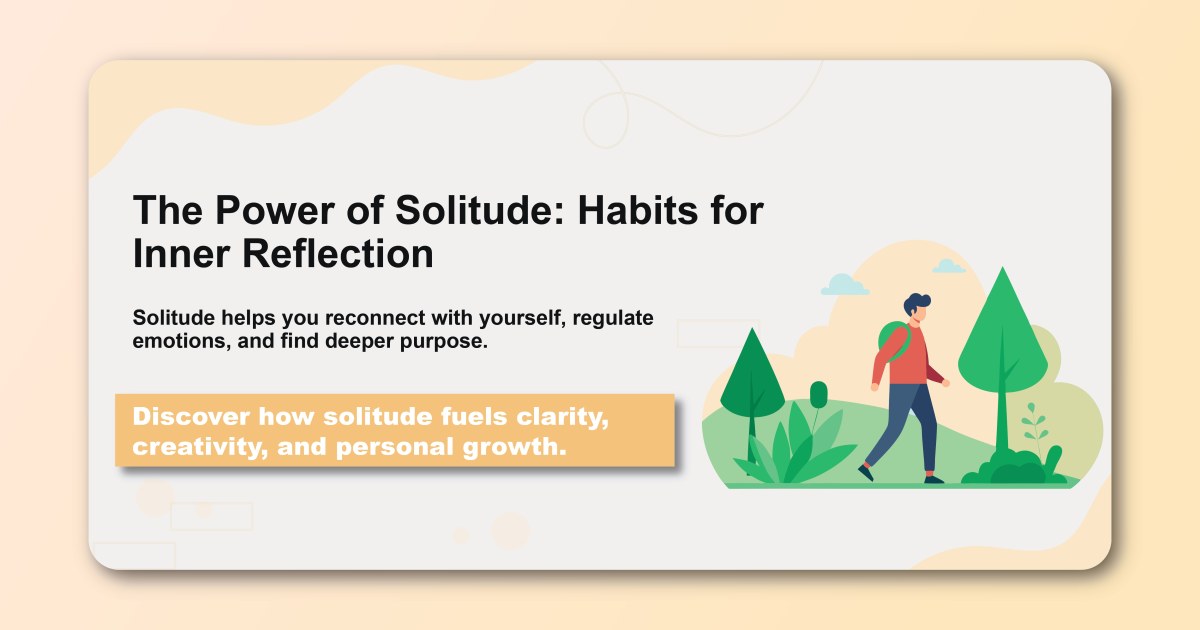
In our hyperconnected world, solitude has become a rare and precious commodity. We're constantly surrounded by noise, notifications, and the demands of others, leaving little time for quiet reflection and inner exploration. Yet solitude—quality time spent alone with our thoughts and inner experience—is essential for personal growth, creativity, and psychological well-being.
Solitude is not the same as loneliness. While loneliness is the painful experience of social isolation, solitude is the intentional choice to be alone for the purpose of reflection, restoration, and growth. It's in these quiet moments that we can hear our own inner voice, process our experiences, and connect with our deeper wisdom.
Many people fear solitude because they've lost touch with their inner world. Our culture often equates being alone with being lonely, but this misses the profound benefits that come from spending quality time with ourselves. Regular solitude can lead to increased self-awareness, improved emotional regulation, enhanced creativity, and a deeper sense of purpose and meaning.
The practice of solitude requires intentionality and skill. It's not enough to simply be alone—we must learn to use that time purposefully for reflection and growth. This involves developing habits and practices that help us turn inward, examine our thoughts and feelings, and cultivate a deeper relationship with ourselves.
When we learn to embrace solitude, we develop what psychologists call "self-sufficiency"—the ability to be content and fulfilled in our own company. This doesn't mean becoming antisocial or withdrawn, but rather developing a strong foundation of self-knowledge and inner resources that enhance all areas of our lives, including our relationships with others.
Understanding the Value of Solitude
The Science of Solitude
Brain Default Mode Network When we're alone and not focused on external tasks, our brains activate the default mode network, which is associated with self-referential thinking, creativity, and memory consolidation. This network is crucial for psychological well-being and self-understanding.
Restorative Benefits Solitude provides an opportunity for mental and emotional restoration. Without the need to respond to others or external stimuli, our nervous system can return to a state of calm and balance.
Enhanced Creativity Many creative breakthroughs occur during periods of solitude. When we're alone, we're free from social constraints and can explore ideas without judgment or interruption.
Improved Decision-Making Solitude provides the space needed for thoughtful reflection on important decisions. Without external influences, we can tune into our own values and intuition.
Psychological Benefits
Increased Self-Awareness Regular solitude helps us become more attuned to our thoughts, emotions, and patterns. This self-awareness is the foundation for personal growth and emotional intelligence.
Emotional Regulation Time alone allows us to process emotions without the pressure to immediately respond or react. This processing time is essential for emotional health and stability.
Identity Development Solitude provides space to explore who we are beyond our social roles and relationships. This exploration is crucial for developing a strong sense of identity and authenticity.
Stress Reduction Being alone can be deeply relaxing, especially for introverts or those who are highly sensitive to social stimulation. Solitude provides a break from the demands of social interaction.
Creating Meaningful Solitude
Setting the Stage for Reflection
Physical Environment Create a space that supports inner reflection and contemplation.
Elements to Include:
- Comfortable seating away from distractions
- Natural light or soft lighting
- Minimal clutter and visual distractions
- Elements of nature (plants, natural materials)
- Books, journals, or other reflective materials
Temporal Boundaries Establish clear time boundaries for solitude to make it feel intentional rather than accidental.
Time Considerations:
- Start with 15-30 minutes of intentional solitude
- Choose times when you're naturally more reflective
- Protect this time from interruptions
- Gradually increase duration as you become more comfortable
Digital Boundaries Technology can be a major barrier to meaningful solitude.
Digital Practices:
- Turn off phones and other devices
- Use airplane mode if you need a device for journaling
- Create tech-free zones in your home
- Resist the urge to fill silence with entertainment
Cultivating Comfort with Aloneness
Overcoming Initial Discomfort Many people feel anxious or restless when first spending time alone. This is normal and will improve with practice.
Strategies for Comfort:
- Start with shorter periods and gradually increase
- Have a specific purpose for your solitude (reflection, reading, walking)
- Practice self-compassion when you feel uncomfortable
- Remember that discomfort is temporary and will pass
Developing Solitude Rituals Create meaningful rituals that help you transition into solitude.
Transition Practices:
- Take several deep breaths to center yourself
- Set an intention for your time alone
- Light a candle or incense to create atmosphere
- Begin with a brief gratitude practice
Practices for Inner Reflection
Contemplative Practices
Deep Questioning Use solitude to explore important questions about your life and values.
Powerful Questions for Reflection:
- What am I most grateful for in my life right now?
- What patterns do I notice in my thoughts and behaviors?
- What am I avoiding or resisting in my life?
- What would I do if I weren't afraid?
- How do I want to grow and change?
Life Review Regular reflection on your experiences helps you extract wisdom and meaning.
Review Practices:
- Reflect on significant events from the past week, month, or year
- Examine what you've learned from challenges and successes
- Consider how your values and priorities have evolved
- Identify patterns in your relationships and choices
Values Clarification Solitude provides an opportunity to connect with your deeper values and priorities.
Values Exploration:
- Identify what matters most to you in life
- Examine how your daily actions align with your values
- Consider what you want to be remembered for
- Reflect on times when you felt most authentic and alive
Mindfulness in Solitude
Present-Moment Awareness Use alone time to practice being fully present with your experience.
Mindful Solitude Practices:
- Focus on your breath for several minutes
- Notice physical sensations in your body
- Observe thoughts and emotions without judgment
- Practice awareness of your immediate environment
Walking Meditation Combine solitude with gentle movement for reflection.
How to Practice:
- Choose a quiet path or space for walking
- Walk slowly and deliberately
- Focus on the sensations of movement
- Use walking time for contemplation and reflection
Sitting with Silence Learn to be comfortable with silence and stillness.
Silence Practices:
- Sit quietly for 10-20 minutes without doing anything
- Notice any urges to fill the silence with activity
- Practice accepting whatever arises in the silence
- Use silence as a space for inner listening
Creative Solitude
Expressive Writing Use writing as a tool for self-exploration and reflection.
Writing Practices:
- Stream-of-consciousness writing for 10-15 minutes
- Write letters to your future or past self
- Explore your dreams and their meanings
- Write about your hopes, fears, and aspirations
Artistic Expression Engage in creative activities that support self-discovery.
Creative Practices:
- Drawing, painting, or other visual arts
- Music, singing, or playing instruments
- Poetry or creative writing
- Dance or movement expression
Nature Connection Spend time in natural settings for reflection and restoration.
Nature Practices:
- Sit quietly in a garden or park
- Take contemplative walks in nature
- Practice nature meditation or observation
- Use natural settings for journaling or reflection
Building Solitude Habits
Creating Regular Solitude Practices
Daily Solitude Habits Incorporate small moments of solitude into your daily routine.
Daily Practices:
- Morning reflection time before starting the day
- Brief solitude breaks during work or busy periods
- Evening reflection before sleep
- Mindful transitions between activities
Weekly Solitude Rituals Establish longer periods of solitude for deeper reflection.
Weekly Practices:
- Dedicated time for journaling and reflection
- Solitary walks or time in nature
- Reading and contemplation
- Creative expression or artistic pursuits
Monthly and Seasonal Retreats Create extended periods of solitude for significant reflection.
Extended Practices:
- Half-day or full-day solitude retreats
- Seasonal reflection and goal-setting
- Annual reviews and planning
- Periodic digital detoxes
Habit Stacking for Solitude
Link to Existing Routines
- "After I have my morning coffee, I will spend 10 minutes in quiet reflection"
- "Before I go to bed, I will spend 5 minutes reviewing my day"
- "After I finish work, I will take a 15-minute solitary walk"
Environmental Cues
- Keep a journal in a visible location
- Create a designated space for solitude
- Use visual reminders to prompt reflection time
- Set gentle alarms for solitude breaks
Overcoming Common Obstacles
"I Feel Guilty Taking Time for Myself" Remember that solitude is not selfish—it's essential for your well-being and ultimately benefits your relationships and responsibilities.
Solutions:
- Recognize that self-care enables you to better care for others
- Start with small amounts of time to build comfort
- Communicate your needs to family and friends
- Remember that you deserve time for reflection and growth
"I Get Anxious When I'm Alone" Anxiety during solitude is common and will decrease with practice.
Solutions:
- Start with shorter periods of solitude
- Have a specific activity or purpose for your alone time
- Practice deep breathing or other calming techniques
- Be patient and compassionate with yourself
"I Don't Know What to Do with Myself" This is normal when beginning a solitude practice.
Solutions:
- Start with guided reflections or journaling prompts
- Engage in gentle activities like reading or walking
- Focus on simply being present rather than doing
- Allow yourself to be bored—boredom can lead to creativity
The Fruits of Solitude
Personal Growth and Development
Enhanced Self-Knowledge Regular solitude leads to deeper understanding of your personality, values, and motivations.
Benefits:
- Clearer sense of identity and purpose
- Better understanding of your strengths and weaknesses
- Increased awareness of your patterns and triggers
- Greater alignment between values and actions
Improved Emotional Intelligence Solitude provides space for processing emotions and developing emotional skills.
Emotional Benefits:
- Better emotional regulation
- Increased empathy and compassion
- Greater resilience in facing challenges
- Improved ability to handle stress and conflict
Creative Enhancement Many people find their creativity flourishes during periods of solitude.
Creative Benefits:
- Increased innovation and problem-solving
- Greater artistic expression and inspiration
- Enhanced imagination and visualization
- Improved ability to think outside the box
Relationship Benefits
Better Relationships Paradoxically, spending time alone can improve your relationships with others.
Relationship Improvements:
- Increased capacity for intimacy and vulnerability
- Better boundaries and communication
- Reduced codependency and neediness
- Greater appreciation for time with others
Leadership Development Solitude can enhance leadership skills and decision-making abilities.
Leadership Benefits:
- Clearer vision and direction
- Better decision-making under pressure
- Increased confidence and self-assurance
- Enhanced ability to inspire and motivate others
Balancing Solitude and Social Connection
Finding the Right Balance
Individual Needs Everyone has different needs for solitude versus social connection.
Considerations:
- Introverts typically need more solitude than extroverts
- Life circumstances affect your need for alone time
- Stress levels influence your need for solitude
- Age and life stage affect solitude preferences
Quality Over Quantity Focus on the quality of your solitude rather than the amount of time.
Quality Factors:
- Intentionality and purpose
- Freedom from distractions
- Meaningful reflection and growth
- Restoration and renewal
Integration with Daily Life
Micro-Moments of Solitude Find small opportunities for reflection throughout your day.
Micro-Practices:
- Brief moments of silence between activities
- Mindful breathing during transitions
- Contemplative moments during routine tasks
- Quiet reflection during commutes
Solitude in Relationships Maintain individual identity and growth within relationships.
Relationship Practices:
- Communicate your need for solitude to loved ones
- Create space for individual reflection and growth
- Respect others' needs for alone time
- Share insights from your solitude practice
Solitude is not a luxury—it's a necessity for psychological health and personal growth. In our busy, connected world, the ability to be alone with ourselves is both a skill and a refuge. Through regular practices of solitude and inner reflection, we can develop a deeper relationship with ourselves, enhance our creativity and decision-making, and ultimately live more authentic and fulfilling lives.
The key is to approach solitude with intention and purpose, using it as a tool for growth rather than simply a way to escape. Whether you spend five minutes in morning reflection or take periodic solitary retreats, the practice of solitude can transform your relationship with yourself and enhance every aspect of your life.
Remember that developing comfort with solitude is a gradual process. Be patient with yourself as you learn to embrace alone time and discover the profound benefits it can bring to your life. The wisdom and self-knowledge you gain through solitude will serve you throughout your lifetime, providing a foundation of inner strength and clarity that no external circumstance can shake.
Ready to embrace the power of solitude and develop habits for inner reflection? Track your solitude practices and build habits that support self-discovery with Habityzer and discover how meaningful alone time can transform your relationship with yourself and enhance your overall well-being.