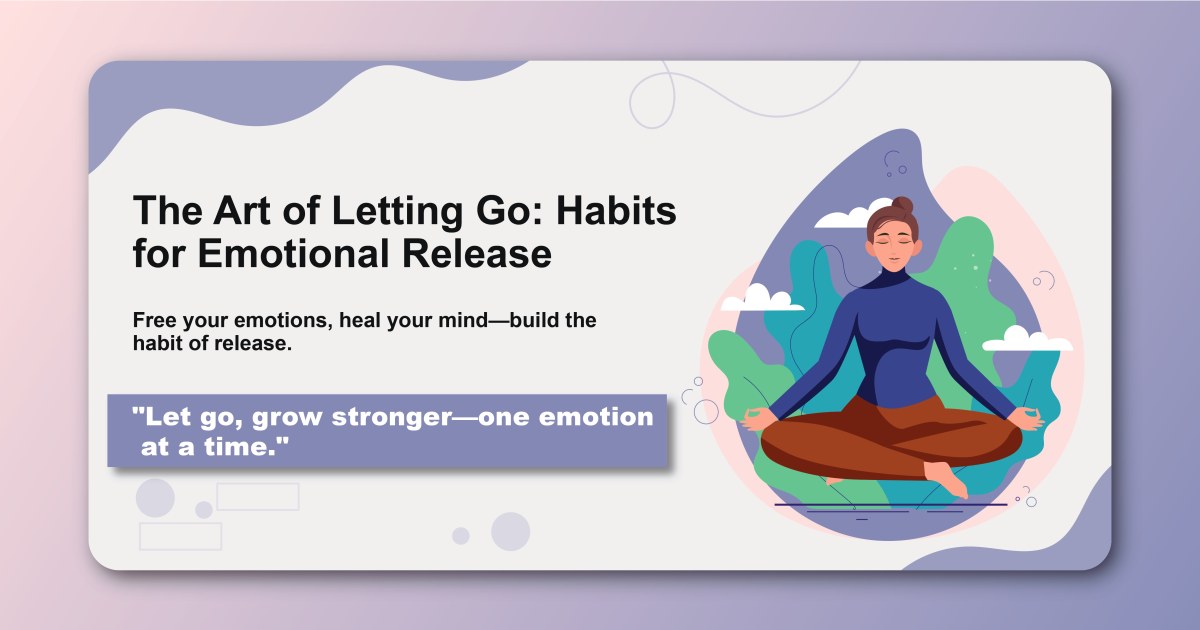
One of the most challenging yet transformative skills we can develop is the art of letting go. Whether it's releasing past hurts, negative emotions, limiting beliefs, or attachments that no longer serve us, learning to let go is essential for emotional freedom and personal growth. Yet many of us find ourselves stuck in patterns of holding on—to anger, resentment, fear, or past experiences that keep us trapped in emotional pain.
Letting go is not about forgetting, denying, or suppressing our experiences. It's about releasing the emotional charge that keeps us bound to past hurts and current frustrations. It's about choosing freedom over the familiar weight of old wounds, and creating space for new experiences, relationships, and possibilities to emerge.
The process of letting go is both an art and a practice. It requires patience, self-compassion, and often courage to face the emotions we've been carrying. But when we learn to release what no longer serves us, we create space for healing, growth, and joy. We discover that holding on to pain often hurts us more than the original experience did.
Developing habits for emotional release doesn't mean we become indifferent or detached from life. Instead, it means we learn to experience emotions fully without being controlled by them. We develop the capacity to feel, process, and release emotions in healthy ways, rather than suppressing them or being overwhelmed by them.
The journey of letting go is deeply personal and unique to each individual. What needs to be released varies from person to person, and the process itself unfolds differently for everyone. However, there are proven practices and habits that can support this journey and help us develop the skill of emotional release.
Understanding the Process of Letting Go
What Letting Go Really Means
Emotional Release vs. Suppression Letting go is not about pushing emotions away or pretending they don't exist. It's about fully experiencing emotions and then consciously choosing to release them rather than holding onto them indefinitely.
Acceptance and Release True letting go involves first accepting what has happened and what we're feeling, then making a conscious choice to release our attachment to that experience or emotion.
Freedom from the Past Letting go allows us to stop being defined by past experiences and instead choose how we want to respond to life in the present moment.
Creating Space for Growth When we release what no longer serves us, we create space for new experiences, relationships, and aspects of ourselves to emerge.
The Psychology of Holding On
Familiar Pain vs. Unknown Freedom Sometimes we hold onto familiar pain because it feels safer than the unknown territory of healing and growth. The familiar, even when painful, can feel more comfortable than change.
Identity and Attachment We may hold onto certain emotions or experiences because they've become part of our identity. Letting go can feel like losing part of ourselves.
Fear of Forgetting Some people worry that letting go means forgetting important lessons or dishonoring their experiences. In reality, letting go allows us to remember without being trapped by the emotional charge.
Control and Powerlessness Holding onto anger or resentment can give us a sense of control or power in situations where we felt helpless. Letting go requires finding new sources of empowerment.
Common Areas for Letting Go
Releasing Past Hurts
Childhood Wounds Many of us carry emotional wounds from childhood that affect our adult relationships and self-perception. Learning to release these old hurts is crucial for emotional freedom.
Relationship Pain Betrayal, abandonment, or rejection in relationships can create deep emotional wounds. Letting go doesn't mean excusing harmful behavior, but rather releasing the grip these experiences have on us.
Trauma and Loss Significant losses or traumatic experiences can leave us feeling stuck in pain. Letting go involves finding ways to honor what we've lost while moving forward with our lives.
Regret and Guilt Holding onto regret about past decisions or guilt about things we've done can keep us trapped in self-punishment. Letting go involves self-forgiveness and learning from our mistakes.
Releasing Negative Emotions
Anger and Resentment Chronic anger and resentment are like poison we drink hoping others will suffer. Learning to release these emotions is essential for our own well-being.
Fear and Anxiety While some fear is protective, chronic anxiety about future events keeps us trapped in worry. Letting go involves distinguishing between rational concerns and unnecessary fear.
Shame and Self-Judgment Shame about who we are or what we've done can be particularly toxic. Letting go involves developing self-compassion and accepting our humanity.
Envy and Comparison Comparing ourselves to others and feeling envious of their lives creates suffering. Letting go involves focusing on our own journey and appreciating what we have.
Releasing Limiting Beliefs
Self-Limiting Stories We all carry stories about ourselves that may no longer be true or helpful. Letting go involves questioning these narratives and choosing more empowering beliefs.
Perfectionism The belief that we must be perfect to be worthy of love and acceptance creates immense pressure. Letting go involves embracing our imperfections as part of being human.
Control and Expectations Trying to control outcomes or holding rigid expectations about how life should unfold creates suffering. Letting go involves accepting uncertainty and embracing flexibility.
Old Dreams and Identities Sometimes we must let go of dreams that no longer align with who we've become or identities that no longer serve us. This can be painful but necessary for growth.
Practices for Emotional Release
Mindfulness-Based Letting Go
Mindful Awareness of Emotions The first step in letting go is becoming aware of what we're holding onto. Mindfulness helps us observe our emotions and attachments without being controlled by them.
How to Practice:
- Set aside time daily to observe your emotional state
- Notice where you feel tension or resistance in your body
- Practice naming emotions without judgment
- Observe how emotions change when you simply witness them
The RAIN Technique This mindfulness practice helps us work with difficult emotions in a healthy way.
RAIN Steps:
- Recognize: What am I experiencing right now?
- Allow: Can I let this be here without fighting it?
- Investigate: How does this feel in my body? What does it need?
- Non-identification: This emotion is not who I am; it's a temporary experience
Breathing into Emotions Use the breath as a tool for releasing emotional tension and creating space around difficult feelings.
Breathing Practice:
- Identify an emotion you're ready to release
- Breathe into the area of your body where you feel it
- On the exhale, imagine releasing the emotion
- Continue until you feel a sense of spaciousness
Forgiveness Practices
Self-Forgiveness Learning to forgive ourselves is often harder than forgiving others, but it's essential for emotional release.
Self-Forgiveness Process:
- Acknowledge what you did and how it affected others
- Take responsibility without making excuses
- Feel the remorse and learn from the experience
- Make amends if possible and appropriate
- Choose to forgive yourself and commit to doing better
Forgiving Others Forgiveness doesn't mean excusing harmful behavior or reconciling with people who hurt us. It means releasing the grip that their actions have on our emotional well-being.
Forgiveness Process:
- Acknowledge the hurt and its impact on your life
- Feel the emotions fully without suppressing them
- Choose to release the resentment for your own well-being
- Send loving-kindness to the person who hurt you (this may take time)
- Focus on your own healing and growth
Writing Forgiveness Letters Writing letters (that you may or may not send) can be a powerful way to process emotions and move toward forgiveness.
Letter Writing Process:
- Write honestly about how you were hurt
- Express all your emotions without censoring
- Write about how the hurt has affected your life
- Express your desire to forgive and let go
- End with compassion for both yourself and the other person
Physical Release Practices
Movement and Exercise Physical activity can help release emotional tension stored in the body.
Movement Practices:
- Dance or movement therapy
- Running or other cardiovascular exercise
- Yoga or stretching
- Martial arts or boxing
- Shaking or trembling to release tension
Breathing Exercises Specific breathing techniques can help release emotional blocks and create a sense of lightness.
Breathing Techniques:
- Deep diaphragmatic breathing
- Alternate nostril breathing
- Breath of fire (rapid breathing)
- Sighing or vocal release with breath
Body-Based Therapy Working with the body can help release emotions that are stored in our physical being.
Body Practices:
- Massage therapy
- Acupuncture
- Somatic experiencing
- Craniosacral therapy
- Energy healing work
Creative Release Practices
Art and Expression Creative activities can provide a safe outlet for emotions that are difficult to express verbally.
Creative Practices:
- Drawing, painting, or sculpting
- Writing poetry or stories
- Playing music or singing
- Dance or movement expression
- Photography or filmmaking
Ritual and Ceremony Creating meaningful rituals can help mark the process of letting go and provide closure.
Ritual Ideas:
- Burning letters or journals
- Releasing balloons or flowers into water
- Creating and destroying sand mandalas
- Planting seeds as symbols of new growth
- Lighting candles for what you're releasing
Building Letting Go Habits
Daily Practices for Emotional Release
Morning Intention Setting Begin each day by setting an intention to release what no longer serves you.
Morning Practice:
- Spend 5 minutes in quiet reflection
- Identify anything you're carrying from yesterday
- Set an intention to release and let go
- Practice gratitude for the opportunity to start fresh
Evening Release Ritual End each day by consciously releasing the emotions and experiences of the day.
Evening Practice:
- Review the day's experiences and emotions
- Identify anything you need to release
- Practice forgiveness for yourself and others
- Set an intention to sleep peacefully and wake renewed
Emotional Check-ins Regular check-ins throughout the day can help you catch and release emotions before they become overwhelming.
Check-in Practice:
- Set gentle reminders to pause and notice your emotional state
- Ask yourself: "What am I holding onto right now?"
- Take a few deep breaths and consciously release tension
- Choose how you want to respond to current circumstances
Weekly and Monthly Practices
Weekly Review and Release Take time each week to review what you're ready to let go of.
Weekly Practice:
- Journal about the week's challenges and growth
- Identify patterns you're ready to release
- Practice forgiveness for yourself and others
- Set intentions for the coming week
Monthly Ritual Create a monthly ritual for deeper letting go work.
Monthly Practice:
- Reflect on the month's experiences and growth
- Write about what you're ready to release
- Create a meaningful ritual for letting go
- Set intentions for the coming month
Seasonal Transitions
Seasonal Letting Go Use the natural cycles of the seasons to support your letting go practice.
Seasonal Practices:
- Spring: Release old patterns and embrace new growth
- Summer: Let go of self-judgment and embrace your full self
- Fall: Release what no longer serves and prepare for rest
- Winter: Let go of busyness and embrace stillness
Overcoming Obstacles to Letting Go
Common Challenges
"I Don't Know How to Let Go" Letting go is a skill that develops with practice. Start small and be patient with yourself.
Solutions:
- Begin with minor annoyances or small disappointments
- Practice the techniques regularly, even when you don't feel like it
- Seek support from friends, family, or therapists
- Remember that letting go is a process, not a one-time event
"I'm Afraid of Forgetting" Letting go doesn't mean forgetting important lessons or experiences.
Solutions:
- Write down important lessons before releasing the emotional charge
- Remember that you can honor your experiences without being trapped by them
- Focus on what you've learned and how you've grown
- Trust that meaningful experiences will remain meaningful without causing pain
"I Don't Deserve to Let Go" Some people believe they deserve to suffer for their mistakes or that letting go is selfish.
Solutions:
- Remember that letting go benefits everyone, including those you've hurt
- Practice self-compassion and treat yourself with kindness
- Recognize that suffering doesn't undo past mistakes
- Focus on how letting go enables you to make positive contributions
Working with Resistance
Honoring the Process Resistance to letting go is natural and often indicates that you're working with something important.
Working with Resistance:
- Acknowledge resistance without judgment
- Explore what the resistance is trying to protect
- Move slowly and gently with the process
- Seek support when working with deep or traumatic material
When to Seek Help Some experiences may require professional support to process and release.
Seek Help When:
- You're dealing with trauma or abuse
- Emotions feel overwhelming or unmanageable
- You're having thoughts of self-harm
- The process feels too difficult to handle alone
The art of letting go is one of the most liberating skills we can develop. It frees us from the weight of past hurts, negative emotions, and limiting beliefs, creating space for healing, growth, and joy. While the process can be challenging, the freedom that comes from releasing what no longer serves us is immeasurable.
Remember that letting go is not a destination but a continuous practice. There will always be new experiences to process, new emotions to release, and new attachments to examine. The key is developing the habit of regular release, creating space for life to flow through you rather than getting stuck in old patterns.
Be patient and compassionate with yourself as you develop these skills. Letting go is an act of courage and self-love, and it's one of the greatest gifts you can give yourself and those around you. As you learn to release what no longer serves you, you'll discover the joy and freedom that come from living with an open heart and an unencumbered spirit.
Ready to develop the art of letting go and create habits for emotional release? Track your letting go practices and build habits that support emotional freedom with Habityzer and discover how releasing what no longer serves you can transform your emotional well-being and open new possibilities for growth and joy.