Meditation might seem mysterious or intimidating if you've never tried it before, but it's actually one of the most accessible and powerful habits you can develop for your mental, emotional, and physical well-being. At its core, meditation is simply the practice of training your attention and awareness, and like any skill, it becomes easier and more natural with consistent practice.
The beauty of meditation is that you don't need any special equipment, expensive courses, or hours of time to get started. You can begin with just a few minutes a day, using nothing but your breath and your attention. What makes meditation particularly powerful as a habit is that it provides both immediate benefits—like reduced stress and increased calm—and long-term improvements in emotional regulation, focus, and overall life satisfaction.
Many people avoid starting a meditation practice because they think they need to "empty their mind" or achieve some perfect state of peace. This misconception keeps people from experiencing the profound benefits of meditation. In reality, meditation is about noticing when your mind wanders and gently bringing your attention back to your chosen focus. The wandering mind isn't a failure—it's the very thing that makes meditation practice possible.
When you approach meditation as a habit rather than a perfect performance, you set yourself up for success. Like brushing your teeth or taking a daily walk, meditation becomes a natural part of your routine that supports your overall well-being and helps you navigate life's challenges with greater ease and clarity.
Understanding Meditation
What Meditation Really Is
Attention Training Meditation is fundamentally about training your attention. Just as physical exercise strengthens your muscles, meditation strengthens your ability to focus and maintain awareness.
Present-Moment Awareness Rather than being caught up in thoughts about the past or future, meditation helps you develop the skill of being present with whatever is happening right now.
Observing Without Judgment Meditation teaches you to notice your thoughts, emotions, and sensations without immediately reacting to them or judging them as good or bad.
Mental Space Creation Regular meditation practice creates mental space between you and your thoughts, giving you more choice in how you respond to life's situations.
Common Meditation Myths
Myth: "I Need to Empty My Mind" Reality: Thoughts arising during meditation is completely normal and expected. The practice is noticing when your mind has wandered and gently returning to your focus.
Myth: "I Don't Have Time" Reality: You can start with just 2-3 minutes a day. Many people find that meditation actually gives them more time by improving focus and reducing mental clutter.
Myth: "I'm Too Restless to Meditate" Reality: Restlessness is often a sign that you would benefit most from meditation. The practice helps calm mental agitation over time.
Myth: "Meditation is Religious or Spiritual" Reality: While meditation has roots in various traditions, it can be practiced as a secular technique for mental training and stress reduction.
The Science of Meditation
Brain Changes Regular meditation practice creates measurable changes in brain structure, including increased gray matter in areas associated with attention, emotional regulation, and self-awareness.
Stress Reduction Meditation reduces cortisol levels and activates the parasympathetic nervous system, promoting relaxation and reducing chronic stress.
Emotional Regulation Studies show that meditation improves emotional stability, reduces reactivity, and increases positive emotions like compassion and gratitude.
Cognitive Benefits Regular practice improves attention span, working memory, and cognitive flexibility while reducing mind-wandering and mental fatigue.
Basic Meditation Techniques
Breath Awareness Meditation
This is the most fundamental and accessible meditation practice.
How to Practice:
- Sit comfortably with your back straight but not rigid
- Close your eyes or soften your gaze downward
- Begin to notice your natural breathing rhythm
- Focus your attention on the sensation of breathing
- When your mind wanders, gently return attention to your breath
- Start with 5-10 minutes and gradually increase
Benefits: Calms the nervous system, improves concentration, reduces anxiety
Tips for Success:
- Don't try to control your breathing; just observe it
- Notice where you feel the breath most clearly (nose, chest, or belly)
- Use the breath as an anchor when thoughts arise
- Be patient and gentle with yourself when your mind wanders
Body Scan Meditation
A practice that develops body awareness and promotes relaxation.
How to Practice:
- Lie down or sit comfortably
- Close your eyes and take a few deep breaths
- Start by noticing your toes and slowly move attention up through your body
- Spend 30-60 seconds focusing on each body part
- Notice any sensations without trying to change them
- If you find tension, breathe into that area and allow it to soften
Benefits: Reduces physical tension, improves body awareness, promotes better sleep
Loving-Kindness Meditation
A practice that cultivates compassion and positive emotions.
How to Practice:
- Sit comfortably and close your eyes
- Begin by directing loving wishes toward yourself: "May I be happy, may I be healthy, may I be at peace"
- Extend these wishes to someone you love
- Include a neutral person (someone you neither like nor dislike)
- Gradually include difficult people in your practice
- End by sending loving-kindness to all beings everywhere
Benefits: Increases positive emotions, reduces self-criticism, improves relationships
Walking Meditation
Meditation in motion for those who prefer active practices.
How to Practice:
- Choose a quiet path 10-20 steps long
- Walk slowly and deliberately
- Focus on the sensations of walking: lifting, moving, and placing each foot
- When you reach the end of your path, pause and turn around mindfully
- Continue for 10-20 minutes
Benefits: Combines mindfulness with gentle exercise, good for restless minds
Building Your Meditation Habit
Starting Small and Building Gradually
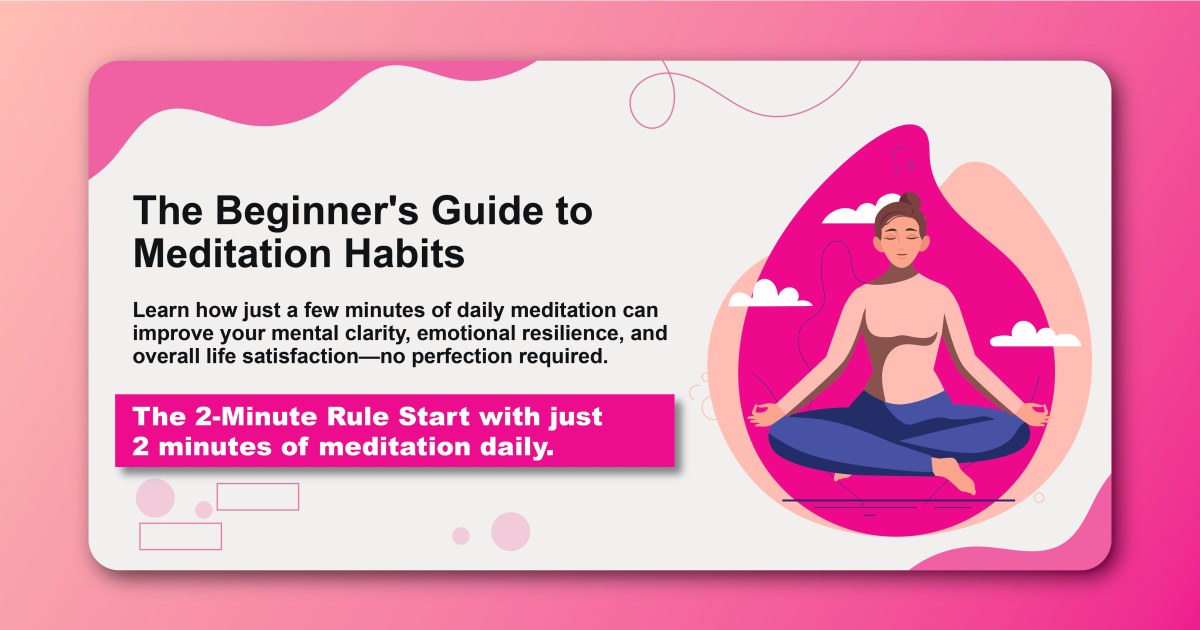
The 2-Minute Rule Start with just 2 minutes of meditation daily. This removes the barrier of time commitment and helps establish the routine.
Progressive Building Schedule:
- Week 1-2: 2-3 minutes daily
- Week 3-4: 5 minutes daily
- Week 5-6: 7-10 minutes daily
- Week 7-8: 10-15 minutes daily
- Month 2+: 15-20 minutes or longer as desired
Consistency Over Duration A 5-minute daily practice is more beneficial than a 30-minute practice done sporadically. Focus on maintaining consistency rather than achieving long sessions.
Creating Your Meditation Environment
Choosing a Space
- Find a quiet spot where you won't be disturbed
- Use the same location each time to build habit strength
- Keep the space clean and free from distractions
- Consider creating a small meditation corner with a cushion or chair
Time Considerations
- Choose a time when you're naturally alert but not rushed
- Many people find morning meditation helps set a positive tone for the day
- Evening meditation can help with relaxation and better sleep
- Experiment to find what works best for your schedule
Minimizing Distractions
- Turn off phones and other devices
- Let family members know you're meditating
- Use a timer so you don't worry about time
- Consider using earplugs if needed for noise reduction
Habit Stacking for Meditation
Link to Existing Habits
- "After I brush my teeth in the morning, I will meditate for 5 minutes"
- "After I have my morning coffee, I will do a brief meditation"
- "Before I go to bed, I will practice loving-kindness meditation"
Creating Meditation Rituals
- Light a candle or incense to signal the start of practice
- Take three deep breaths to transition into meditation
- Set a gentle intention for your practice
- End with a moment of gratitude
Overcoming Common Challenges
"My Mind Won't Stop Thinking"
Understanding the Challenge This is the most common concern for beginners, but it's based on a misunderstanding of meditation's purpose.
Reframe Your Perspective
- Thinking during meditation is completely normal
- Noticing that your mind has wandered IS the meditation
- Each time you return to your focus, you're strengthening your attention muscle
- Progress in meditation is measured by how quickly you notice mind-wandering, not by stopping thoughts
Practical Solutions
- Use counting with your breath (count 1-10, then start over)
- Try guided meditations that give your mind something to follow
- Practice labeling thoughts as "thinking" and return to your focus
- Remember that a "busy" meditation session is still beneficial
"I Don't Feel Like I'm Doing It Right"
Letting Go of Perfection There's no "perfect" way to meditate. The goal is not to achieve a particular state but to practice awareness and attention training.
Signs You're Actually Doing Well
- You notice when your mind has wandered
- You can gently return attention to your chosen focus
- You're showing up consistently for practice
- You're being kind to yourself during the process
"I Don't Have Time"
Time Reality Check Most people spend more time scrolling social media than it takes to develop a meditation practice.
Micro-Meditation Solutions
- Practice during everyday activities (washing dishes mindfully, mindful walking to the car)
- Use transition times (2 minutes between meetings, while waiting in line)
- Replace one less beneficial habit with meditation
- Remember that meditation often creates more time by improving focus and reducing stress
"I Fall Asleep"
Understanding Sleepiness Falling asleep during meditation often indicates that you need more rest or are holding a lot of stress.
Practical Solutions
- Try meditating with eyes slightly open
- Sit up straight to maintain alertness
- Practice at a different time when you're more naturally alert
- Ensure you're getting adequate sleep at night
- Consider this a sign that your body needs rest
Different Types of Meditation
Concentration Practices
Single-Pointed Focus These practices involve focusing attention on one object, such as the breath, a mantra, or a visual image.
Examples:
- Breath counting meditation
- Mantra repetition
- Candle gazing (trataka)
- Visualization practices
Benefits: Develops strong concentration, calms mental agitation, creates deep states of peace
Mindfulness Practices
Open Awareness These practices involve observing whatever arises in your experience without trying to change it.
Examples:
- Mindfulness of breathing
- Body awareness meditation
- Thought observation
- Emotion awareness practices
Benefits: Increases self-awareness, improves emotional regulation, develops equanimity
Movement-Based Practices
Active Meditation These practices combine physical movement with mindful awareness.
Examples:
- Walking meditation
- Yoga
- Tai chi
- Qigong
Benefits: Good for restless minds, combines physical and mental benefits, accessible for those who struggle with sitting still
Heart-Centered Practices
Emotional Cultivation These practices focus on developing positive emotions and qualities.
Examples:
- Loving-kindness meditation
- Compassion practices
- Gratitude meditation
- Forgiveness practices
Benefits: Increases positive emotions, improves relationships, reduces self-criticism
Integrating Meditation into Daily Life
Informal Meditation Practices
Mindful Daily Activities
- Eat one meal per day in complete silence and awareness
- Practice mindful listening during conversations
- Use waiting time for brief awareness practices
- Take mindful pauses throughout the day
Transition Practices
- Take three conscious breaths before starting new activities
- Practice brief body awareness when moving between locations
- Use mindful walking between meetings or appointments
- Create mindful rituals around routine activities
Building a Sustainable Practice
Flexibility and Adaptation
- Have backup practices for busy days (2-minute breathing space)
- Adapt your practice to different life circumstances
- Use apps or guided meditations when you need support
- Remember that any meditation is better than no meditation
Community and Support
- Join local meditation groups or online communities
- Find meditation apps with community features
- Share your practice with supportive friends or family
- Consider taking a meditation class or workshop
Advanced Considerations
When to Seek Guidance
Working with Teachers
- If you're experiencing difficult emotions or memories during practice
- When you want to deepen your understanding and practice
- If you're interested in exploring specific meditation traditions
- For accountability and motivation in maintaining practice
Meditation Retreats
- Consider day-long or weekend retreats after establishing a regular practice
- Retreats provide intensive practice and deeper understanding
- They offer community connection with other practitioners
- Extended practice can provide insights and breakthrough experiences
Dealing with Difficult Experiences
Emotional Surfacing Sometimes meditation brings suppressed emotions to the surface. This is often part of the healing process but may require additional support.
When to Seek Help
- If meditation consistently increases anxiety or distress
- When difficult memories or trauma arise
- If you experience persistent negative thoughts or emotions
- Consider working with both a meditation teacher and therapist if needed
Creating Your Personal Practice
Assessment and Goal Setting
Why Do You Want to Meditate?
- Stress reduction and relaxation
- Improved focus and concentration
- Emotional regulation and stability
- Spiritual growth and self-understanding
- Better sleep and physical health
Choosing Your Approach
- Start with breath awareness if you're completely new
- Try movement-based practices if you're very restless
- Explore heart-centered practices if you struggle with self-criticism
- Use guided meditations if you need more structure
Building Your Routine
Week 1-2: Foundation
- Choose one type of meditation and practice it daily
- Start with 2-5 minutes to build the habit
- Focus on consistency rather than perfect sessions
- Notice how meditation affects your mood and stress levels
Week 3-4: Deepening
- Gradually increase session length
- Experiment with different times of day
- Begin to notice patterns in your practice
- Start integrating informal mindfulness into daily activities
Week 5-8: Integration
- Establish your preferred routine and stick with it
- Try different meditation techniques to find what resonates
- Begin to see meditation as a natural part of your day
- Notice improvements in other areas of your life
Meditation is one of the most valuable habits you can develop for your overall well-being. While it may seem challenging at first, remember that every moment of practice is beneficial, regardless of how "successful" it feels. The key is to approach meditation with patience, kindness, and consistency.
Start small, be gentle with yourself, and trust the process. As you develop your meditation habit, you'll likely find that it not only helps you feel calmer and more centered but also improves your relationships, work performance, and overall life satisfaction. The simple act of sitting quietly and training your attention can transform your relationship with your thoughts, emotions, and experiences in profound ways.
Your meditation journey is unique to you. There's no rush to achieve anything specific—simply showing up for a few minutes each day is enough to begin experiencing the transformative power of this ancient practice in your modern life.
Ready to start your meditation journey and build a sustainable practice? Track your meditation habits and build mindfulness practices with Habityzer and discover how this simple yet powerful habit can transform your mental well-being and overall life satisfaction.