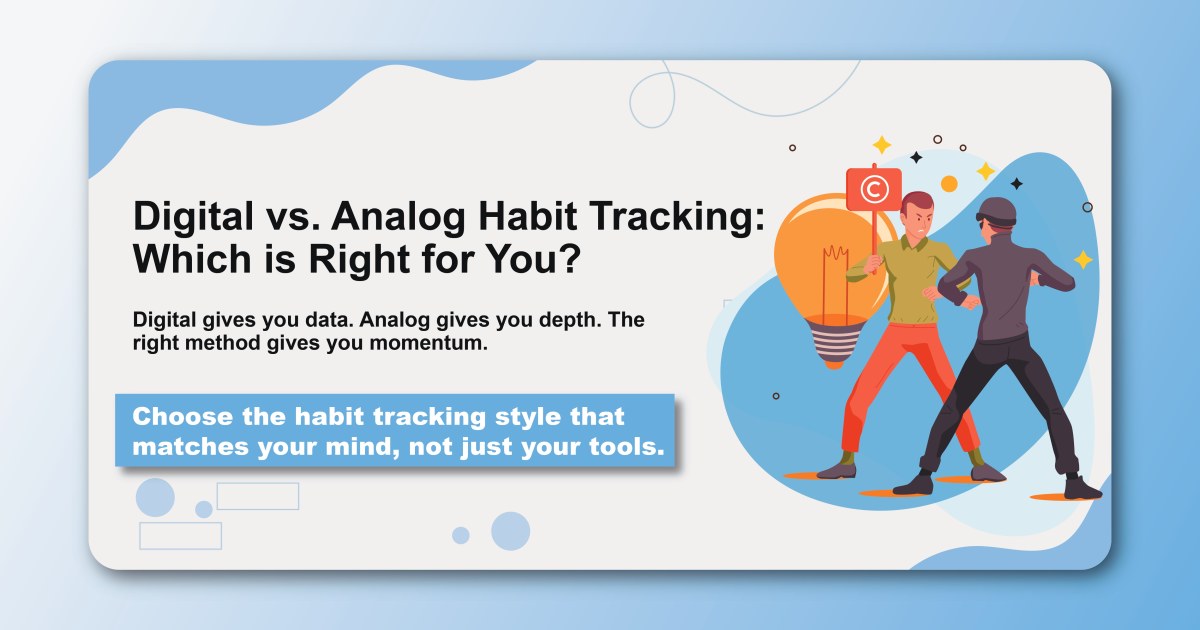
In the world of habit tracking, one of the most fundamental decisions you'll make is whether to use digital tools or stick with analog methods like paper journals and calendars. Both approaches have passionate advocates and proven track records of success, but they offer very different experiences and benefits. The choice between digital and analog isn't just about preference—it can significantly impact your consistency, engagement, and long-term success with habit building.
Digital tracking offers convenience, automation, and sophisticated analysis capabilities that would be impossible with pen and paper. You can set reminders, track complex metrics, and visualize your progress in ways that feel almost magical compared to traditional methods. Many digital tools can even track certain habits automatically, removing the friction of manual logging entirely.
On the other hand, analog tracking provides a tactile, mindful experience that many find more engaging and memorable than tapping on a screen. There's something powerful about physically writing down your progress, and research suggests that the act of handwriting can enhance memory and commitment in ways that digital input cannot match.
The reality is that neither approach is universally superior—the best choice depends on your personality, lifestyle, goals, and the specific habits you're trying to build. Some people thrive with the simplicity and focus of analog methods, while others benefit from the features and convenience of digital tools. Some even find success combining both approaches for different types of habits or different phases of their journey.
Understanding the strengths and limitations of each approach will help you make an informed decision that aligns with your natural tendencies and supports your long-term success. Let's explore the key differences between digital and analog habit tracking to help you find your ideal system.
The Case for Digital Habit Tracking
Convenience and Accessibility
Always Available Your smartphone is likely with you most of the time, making digital tracking incredibly convenient. You can log habits immediately after completing them, regardless of where you are or what you're doing.
Automatic Reminders Digital tools can send push notifications, alerts, and reminders at optimal times, helping you remember to both perform and track your habits without relying on willpower alone.
Cloud Synchronization Your tracking data is automatically backed up and synchronized across devices, ensuring you never lose your progress and can access your information from anywhere.
Instant Updates There's no need to carry around physical trackers or worry about forgetting to bring your journal. Digital tracking can happen instantly, in the moment.
Advanced Features and Functionality
Data Visualization Digital tools can create beautiful charts, graphs, and visual representations of your progress that would be time-consuming or impossible to create manually.
Statistical Analysis Apps can automatically calculate success rates, streak lengths, trends, and patterns, providing insights that would require manual calculation with analog methods.
Multiple Habit Management Digital platforms excel at managing numerous habits simultaneously, with features like categorization, filtering, and bulk operations that streamline complex tracking.
Integration Capabilities Many digital tools can integrate with other apps and devices, automatically importing data from fitness trackers, calendar apps, and other sources.
Gamification and Motivation
Streaks and Achievements Digital platforms often include built-in gamification elements like streak counters, badges, achievement levels, and progress celebrations that can boost motivation.
Social Features Many apps offer community features, friend connections, and social accountability that can provide additional motivation and support.
Personalized Insights Advanced digital tools can analyze your patterns and provide personalized recommendations for improving your habits and optimizing your routine.
Automated Encouragement Apps can provide motivational messages, celebrate milestones, and offer encouragement based on your progress patterns.
Automation and Smart Features
Automatic Tracking For certain habits, digital tools can track progress automatically using device sensors, location data, or integration with other apps.
Smart Scheduling Digital tools can help optimize your habit timing based on your calendar, past success patterns, and other factors.
Data Export Most digital platforms allow you to export your data for deeper analysis or to migrate to other systems if needed.
Backup and Recovery Digital tracking provides automatic backup and recovery options that protect your long-term progress data.
The Case for Analog Habit Tracking
Mindfulness and Intentionality
Deliberate Action The physical act of writing or marking your progress requires more intentional engagement than tapping a screen, potentially strengthening your commitment to the habit.
Mindful Reflection Analog tracking naturally encourages brief moments of reflection as you consider your progress and write your entry.
Reduced Digital Overwhelm For people trying to reduce screen time or digital dependency, analog tracking provides a welcome break from technology.
Present-Moment Awareness The slower, more deliberate nature of analog tracking can help you stay present and mindful about your habits and progress.
Flexibility and Customization
Complete Creative Control With analog methods, you have unlimited flexibility to design your tracking system exactly as you want it, without being constrained by app features or templates.
Easy Modification You can quickly adjust your tracking format, add new elements, or completely redesign your system without learning new software or worrying about data migration.
Personal Expression Analog tracking allows for artistic expression, creative layouts, color coding, drawings, and personal touches that make the experience uniquely yours.
Context and Notes It's often easier to add contextual notes, sketches, or additional observations with analog methods than within the constraints of digital forms.
Simplicity and Focus
No Technical Barriers Analog tracking works regardless of battery life, internet connectivity, software updates, or technical difficulties.
Reduced Distractions Paper-based tracking eliminates the risk of getting distracted by notifications, other apps, or the general draw of your digital device.
Single-Purpose Focus When you open a physical journal or calendar, you're focused solely on habit tracking rather than being tempted by other digital activities.
Timeless Reliability Analog methods don't become obsolete, don't require updates, and don't rely on companies maintaining their services.
Psychological Benefits
Tactile Satisfaction Many people find the physical act of writing more satisfying and memorable than digital input, leading to stronger habit reinforcement.
Cognitive Benefits of Handwriting Research suggests that handwriting engages different cognitive processes than typing, potentially improving memory and learning.
Tangible Progress Physical evidence of your progress (filled pages, completed calendars) can provide a sense of accomplishment that digital progress bars may not match.
Ritual and Ceremony The ritual of sitting down with your journal can become a meaningful part of your habit routine that enhances the overall experience.
Comparing Key Factors
Learning Curve and Setup
Digital Tools
- Initial setup may require time to learn features
- Ongoing learning as apps update and add features
- Potential frustration with interface changes
- May require research to find the right app
Analog Methods
- Immediate usability with minimal learning curve
- Complete control over complexity level
- No need to research or compare options
- Can start immediately with basic materials
Cost Considerations
Digital Tools
- Many free options available
- Premium features often require subscription fees
- Long-term costs can add up over time
- Risk of losing access if you stop paying
Analog Methods
- Low upfront cost for basic supplies
- No ongoing subscription fees
- Can be as cheap or expensive as you choose
- One-time purchases that last indefinitely
Data Security and Privacy
Digital Tools
- Data stored on company servers
- Privacy policies and data handling practices vary
- Risk of data breaches or company closure
- Potential for data mining and advertising
Analog Methods
- Complete privacy and data control
- No risk of digital breaches or company closure
- Physical security depends on where you keep materials
- Cannot be hacked or accessed remotely
Long-term Sustainability
Digital Tools
- Apps may be discontinued or dramatically changed
- Data export options vary by platform
- Technology dependencies may increase over time
- Risk of vendor lock-in with proprietary formats
Analog Methods
- Extremely sustainable and future-proof
- Complete ownership of your data and system
- No dependency on external companies or technology
- Can be maintained indefinitely regardless of technological changes
Finding Your Ideal Approach
Personality Considerations
Digital-Friendly Personalities
- Enjoy technology and new features
- Prefer efficiency and automation
- Track multiple complex habits
- Like data analysis and insights
- Value convenience and portability
Analog-Friendly Personalities
- Prefer simplicity and mindfulness
- Enjoy creative expression and customization
- Value privacy and independence
- Like tactile experiences and handwriting
- Want to reduce screen time
Lifestyle Factors
Digital Makes Sense When:
- You're frequently on the go
- You track many habits with complex metrics
- You want automated reminders and tracking
- You enjoy analyzing data and trends
- You're already heavily integrated with digital tools
Analog Makes Sense When:
- You have a consistent daily routine and location
- You prefer simple, focused tracking
- You want to reduce digital dependency
- You enjoy journaling and reflective practices
- You value privacy and data ownership
Habit-Specific Considerations
Better for Digital:
- Fitness and health metrics (steps, heart rate, sleep)
- Time-based habits with specific durations
- Habits requiring complex scheduling
- Social or shared habits with accountability partners
- Habits that can be automatically detected
Better for Analog:
- Qualitative habits involving mood, feelings, or reflection
- Creative or artistic practices
- Spiritual or mindfulness practices
- Habits involving intentional breaks from technology
- Personal development and self-reflection practices
Hybrid Approaches
Combining Both Methods
Complementary Systems Many successful habit trackers use both digital and analog methods for different purposes or types of habits.
Examples of Hybrid Approaches:
- Digital for automatic fitness tracking, analog for mindfulness practices
- Apps for daily habit checking, paper journals for weekly reflection
- Digital for busy weekdays, analog for relaxed weekends
- Smartphone for on-the-go tracking, journal for detailed home review
Sequential Approaches Some people start with one method and transition to another as their needs evolve or their habits become more established.
Transition Patterns:
- Start analog for simplicity, move to digital for advanced features
- Begin digital for convenience, transition to analog for mindfulness
- Use digital during busy periods, analog during slower times
- Seasonal switching based on schedule and goals
Best of Both Worlds
Digital for Data, Analog for Reflection Use digital tools for efficient data collection and analysis, while maintaining analog journals for deeper reflection and planning.
Backup and Redundancy Maintain both systems as backups for each other, ensuring you never lose your progress data.
Different Time Scales Use digital for daily tracking and analog for weekly or monthly reviews and goal setting.
Mood and Context Dependent Choose your method based on your current mood, energy level, or environmental context.
Making Your Decision
Experimental Approach
Try Both Methods Spend at least two weeks with each approach to get a genuine feel for how they work in your daily life.
Track Your Experience Notice which method you naturally gravitate toward and which feels more sustainable over time.
Consider Multiple Habits Test both approaches with different types of habits to see if certain habits work better with specific methods.
Listen to Your Instincts Pay attention to which method brings you more satisfaction and feels more aligned with your natural preferences.
Evaluation Criteria
Consistency Which method helps you track more consistently without feeling like a burden?
Engagement Which approach keeps you more engaged and interested in your habit-building journey?
Insights Which method provides you with the most useful insights about your patterns and progress?
Sustainability Which approach feels like something you could maintain for months or years?
Implementation Strategy
Start Simple Regardless of which approach you choose, start with simple tracking before adding complexity.
Build the Tracking Habit First Focus on making tracking itself a habit before worrying about optimizing your system.
Be Willing to Adapt Your needs may change over time, so remain open to switching methods or adjusting your approach.
Focus on the Goal Remember that tracking is a tool to support habit building, not an end in itself.
The choice between digital and analog habit tracking is deeply personal and depends on your individual preferences, lifestyle, and goals. Both approaches have proven successful for millions of people, and the best choice is the one that you'll actually use consistently.
Consider starting with the approach that feels most natural to you based on your personality and current habits. You can always experiment with the other method later or develop a hybrid approach that combines the best of both worlds.
Remember that the most important factor is consistency, not perfection. Whether you choose the high-tech convenience of digital tools or the mindful simplicity of analog methods, the key is finding a system that supports your habit-building journey and feels sustainable for the long term.
The goal is not to have the perfect tracking system, but to build the habits that will improve your life. Choose the method that best supports that goal, and don't be afraid to adjust your approach as you learn what works best for you.
Ready to find your perfect habit tracking approach? Explore both digital and analog tracking options with Habityzer and discover which method will best support your journey toward building lasting positive habits.