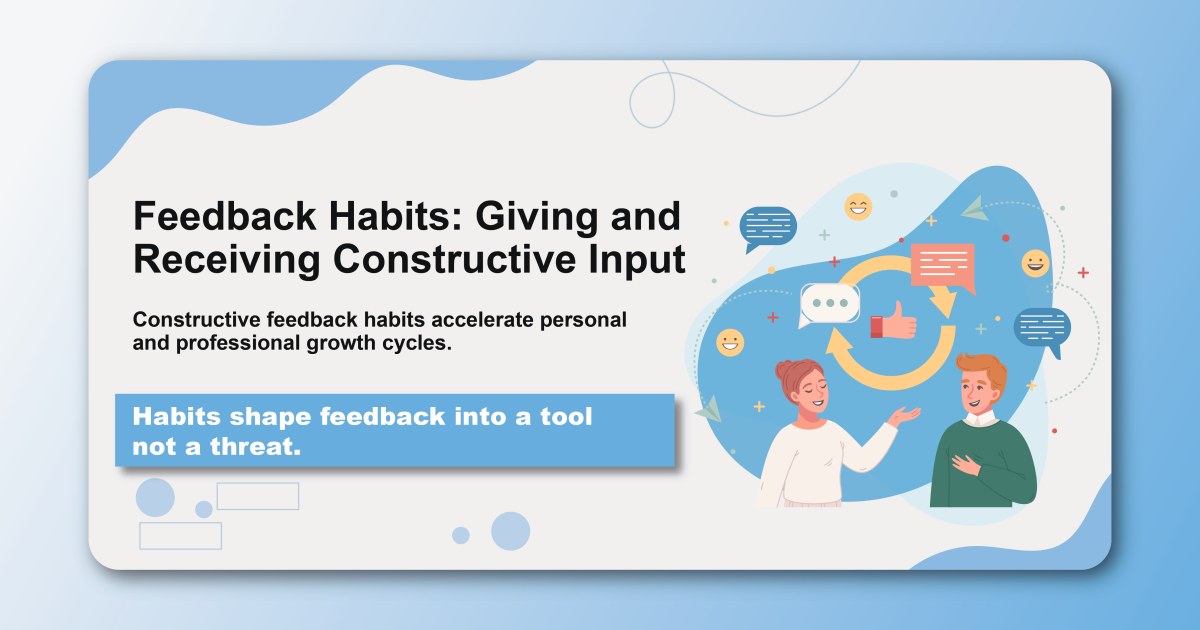
Feedback is one of the most powerful tools for professional growth and team effectiveness, yet many professionals struggle with both giving and receiving feedback effectively. Quality feedback can accelerate learning, improve performance, strengthen relationships, and drive organizational success. However, poor feedback can damage relationships, discourage growth, and create workplace dysfunction. The difference lies not in natural talent but in developing deliberate habits around feedback that make it constructive, actionable, and growth-oriented.
Effective feedback habits transform feedback from uncomfortable confrontations into valuable growth opportunities. They create cultures where continuous improvement is the norm, where people feel supported in their development, and where performance issues are addressed promptly and constructively. These habits benefit both the giver and receiver, creating positive cycles of improvement and relationship building.
The challenge with feedback is that it touches on fundamental human needs for recognition, security, and growth. When delivered poorly, feedback can trigger defensive reactions and damage relationships. When delivered skillfully, it can inspire motivation, accelerate development, and build trust. The key is developing habits that consistently produce the latter outcome.
Modern workplaces require more feedback, not less. With rapid change, remote work, and complex collaborations, regular feedback becomes essential for maintaining alignment, ensuring quality, and supporting team member development. The organizations and individuals who excel at feedback create competitive advantages through faster learning, better performance, and stronger relationships.
This comprehensive guide explores the daily habits that make feedback a powerful tool for professional success. Whether you're a manager responsible for team development, a peer seeking to improve collaboration, or an individual looking to accelerate your own growth, these habits will help you master the art of constructive feedback.
The Foundation of Effective Feedback
Understanding Feedback Purpose
Growth and Development Effective feedback is designed to help people grow and improve rather than criticize or punish.
Performance Improvement Feedback should lead to specific, measurable improvements in performance and outcomes.
Relationship Building When done well, feedback strengthens relationships and builds trust rather than damaging them.
Goal Achievement Feedback should help individuals and teams achieve their objectives more effectively.
Feedback Principles
Specificity Over Generalization Effective feedback focuses on specific behaviors and outcomes rather than general personality traits.
Timeliness Feedback is most effective when delivered close to the event or behavior being addressed.
Balance Great feedback includes both recognition of strengths and areas for improvement.
Actionability Feedback should provide clear direction for improvement that the recipient can act upon.
Daily Feedback Giving Habits
Observation and Preparation
Continuous Observation Develop habits of ongoing observation to gather specific examples for feedback.
Observation Practices:
- Notice specific behaviors and their impact
- Document examples of both positive and negative performance
- Observe patterns over time rather than isolated incidents
- Pay attention to context and circumstances
- Track progress and improvement efforts
Feedback Preparation Prepare feedback conversations to ensure they're productive and constructive.
Preparation Steps:
- Identify specific behaviors and examples
- Consider the recipient's perspective and situation
- Plan the conversation structure and key points
- Prepare suggestions for improvement
- Choose appropriate timing and setting
Intention Setting Approach feedback with clear, positive intentions focused on growth.
Intention Practices:
- Focus on helping rather than criticizing
- Seek to understand before being understood
- Aim for mutual problem-solving
- Maintain respect for the individual
- Keep long-term relationship and growth in mind
Constructive Delivery Habits
Clear Communication Deliver feedback in clear, specific, and actionable language.
Communication Strategies:
- Use specific examples and concrete behaviors
- Avoid vague generalizations or personality judgments
- Focus on impact and outcomes
- Use "I" statements to express observations
- Provide clear suggestions for improvement
Empathetic Approach Deliver feedback with empathy and understanding.
Empathy Practices:
- Consider the recipient's perspective and feelings
- Acknowledge their efforts and intentions
- Recognize challenges and obstacles they face
- Show genuine concern for their success
- Maintain dignity and respect throughout
Balanced Feedback Provide feedback that recognizes both strengths and areas for improvement.
Balance Strategies:
- Start with positive observations when appropriate
- Acknowledge what's working well
- Frame improvements as opportunities for growth
- End with encouragement and support
- Maintain overall positive tone while being honest
Feedback Conversation Management
Active Listening Listen actively to the recipient's perspective and responses.
Listening Practices:
- Give full attention without interrupting
- Ask clarifying questions to understand their viewpoint
- Acknowledge their feelings and reactions
- Seek to understand their reasoning
- Show genuine interest in their perspective
Collaborative Problem-Solving Engage in collaborative problem-solving to develop improvement plans.
Collaboration Approaches:
- Ask for their ideas and suggestions
- Work together to identify solutions
- Discuss obstacles and how to overcome them
- Set mutual goals and expectations
- Create accountability partnerships
Follow-Up Commitment Commit to ongoing support and follow-up.
Follow-Up Practices:
- Schedule regular check-ins and progress reviews
- Offer ongoing support and resources
- Provide encouragement and recognition for progress
- Adjust approaches based on what's working
- Maintain open communication channels
Daily Feedback Receiving Habits
Receptive Mindset Development
Growth Mindset Approach feedback with a growth mindset that embraces learning and improvement.
Growth Practices:
- View feedback as opportunities for development
- Focus on learning rather than defending
- Ask questions to understand feedback fully
- Seek specific examples and clarification
- Thank others for their input and perspective
Emotional Regulation Manage emotional reactions to feedback effectively.
Emotional Management:
- Take time to process feedback before responding
- Avoid defensive reactions and justifications
- Focus on the content rather than the delivery
- Use breathing techniques to stay calm
- Separate feedback from personal worth
Curiosity and Inquiry Approach feedback with genuine curiosity about improvement opportunities.
Curiosity Practices:
- Ask probing questions to understand feedback deeply
- Seek additional perspectives and examples
- Inquire about specific improvement strategies
- Request ongoing feedback and support
- Explore root causes of performance issues
Active Feedback Engagement
Clarification and Understanding Ensure you fully understand feedback before responding.
Understanding Strategies:
- Ask for specific examples and details
- Paraphrase feedback to confirm understanding
- Inquire about impact and consequences
- Seek clarification on expectations
- Request suggestions for improvement
Action Planning Develop specific action plans based on feedback received.
Planning Approaches:
- Identify specific behaviors to change or improve
- Set measurable goals and timelines
- Create accountability measures and check-ins
- Identify resources and support needed
- Document commitments and plans
Implementation Focus Focus on implementing feedback rather than just acknowledging it.
Implementation Practices:
- Take immediate action on feedback when possible
- Track progress on improvement efforts
- Seek ongoing support and guidance
- Adjust approaches based on results
- Celebrate progress and improvements
Feedback Culture Development
Creating Safe Environments
Psychological Safety Create environments where people feel safe to give and receive feedback.
Safety Building:
- Model vulnerability and openness to feedback
- Respond positively to input and criticism
- Address feedback-related conflicts constructively
- Recognize and reward feedback courage
- Create clear guidelines for feedback interactions
Regular Feedback Practices Establish regular feedback as a normal part of work culture.
Regular Practices:
- Schedule regular feedback meetings and check-ins
- Incorporate feedback into team meetings
- Use project retrospectives for systematic feedback
- Create peer feedback and review processes
- Make feedback a part of daily interactions
Feedback Skills Development Develop feedback skills across your team and organization.
Skills Development:
- Provide training on feedback techniques
- Share best practices and success stories
- Create feedback mentoring and coaching
- Practice feedback skills in safe environments
- Recognize and reward effective feedback
Peer Feedback Habits
Peer Support Systems Create systems for peer-to-peer feedback and support.
Peer Systems:
- Establish peer feedback partnerships
- Create cross-functional feedback opportunities
- Develop peer review processes
- Encourage informal feedback conversations
- Build feedback into collaborative projects
Constructive Peer Feedback Give constructive feedback to peers and colleagues.
Peer Feedback Practices:
- Focus on work impact and collaboration
- Offer support and assistance with improvements
- Share resources and best practices
- Provide recognition and appreciation
- Address issues directly and professionally
Feedback for Different Situations
Performance Management
Regular Performance Feedback Provide regular performance feedback rather than waiting for formal reviews.
Performance Practices:
- Give immediate feedback on performance issues
- Recognize good performance consistently
- Track performance trends and patterns
- Connect performance to organizational goals
- Provide clear performance expectations
Development-Focused Feedback Use feedback to support professional development and growth.
Development Approaches:
- Connect feedback to career goals and aspirations
- Identify skill development opportunities
- Provide stretch assignments and challenges
- Offer mentoring and coaching support
- Create individual development plans
Project and Team Feedback
Project Retrospectives Conduct regular project retrospectives to gather feedback and improve processes.
Retrospective Practices:
- Review what worked well and what didn't
- Identify lessons learned and improvements
- Discuss team collaboration and communication
- Plan process improvements for future projects
- Celebrate successes and acknowledge challenges
Team Dynamics Feedback Address team dynamics and collaboration through feedback.
Team Feedback:
- Discuss communication patterns and effectiveness
- Address conflicts and relationship issues
- Provide feedback on team meeting effectiveness
- Recognize positive team behaviors
- Work together to improve team functioning
Feedback Technology and Tools
Feedback Systems
Feedback Platforms Use technology platforms to facilitate feedback collection and delivery.
Platform Features:
- 360-degree feedback systems
- Peer feedback and review tools
- Anonymous feedback options
- Real-time feedback applications
- Performance tracking and analytics
Documentation and Tracking Document feedback conversations and track progress.
Documentation Practices:
- Keep records of feedback conversations
- Track improvement progress over time
- Document action plans and commitments
- Monitor feedback patterns and trends
- Use data to improve feedback effectiveness
Measurement and Improvement
Feedback Effectiveness Measure the effectiveness of feedback practices and improve them.
Effectiveness Measures:
- Track performance improvements following feedback
- Monitor relationship quality and team satisfaction
- Assess feedback frequency and quality
- Evaluate development progress and outcomes
- Gather feedback on feedback processes
Continuous Improvement Continuously improve feedback practices based on results and experience.
Improvement Strategies:
- Gather feedback on feedback effectiveness
- Experiment with different feedback approaches
- Learn from feedback success stories
- Adjust feedback practices based on outcomes
- Stay current with feedback best practices
Advanced Feedback Techniques
Difficult Feedback Situations
Challenging Conversations Handle difficult feedback conversations with skill and professionalism.
Difficult Situation Strategies:
- Prepare thoroughly for sensitive conversations
- Focus on behaviors and impact rather than personality
- Use neutral, non-judgmental language
- Provide specific examples and evidence
- Offer support and resources for improvement
Resistance and Defensiveness Handle resistance and defensive reactions constructively.
Resistance Management:
- Acknowledge emotions and concerns
- Listen actively to understand their perspective
- Avoid arguing or defending your position
- Focus on mutual goals and interests
- Seek win-win solutions and compromises
Feedback Leadership
Feedback Modeling Model effective feedback practices for others to follow.
Modeling Behaviors:
- Give feedback regularly and constructively
- Receive feedback openly and gracefully
- Demonstrate vulnerability and learning
- Show appreciation for feedback received
- Create psychological safety for feedback
Feedback Coaching Coach others in developing their feedback skills.
Coaching Approaches:
- Provide guidance on feedback techniques
- Practice feedback conversations in safe environments
- Offer feedback on their feedback delivery
- Share resources and best practices
- Support their feedback skill development
Mastering feedback habits is essential for professional success and relationship building. The habits outlined in this guide provide a comprehensive framework for making feedback a powerful tool for growth, performance improvement, and team effectiveness. Remember that feedback is a skill that improves with practice and intentional development.
Whether you're giving or receiving feedback, the key is to approach it with genuine care for improvement and growth. Focus on specific behaviors, maintain respect for individuals, and create environments where feedback is welcomed and valued. Great feedback habits create positive cycles of improvement that benefit everyone involved.
The investment in developing feedback skills pays dividends throughout your career. Organizations and individuals who excel at feedback create cultures of continuous improvement, stronger relationships, and higher performance. Start with the habits that address your biggest challenges and gradually build a comprehensive approach to feedback excellence.
Ready to transform your feedback skills and build stronger professional relationships? Start developing your feedback habits with Habityzer and discover how constructive feedback can accelerate your growth and create positive impact in your workplace.