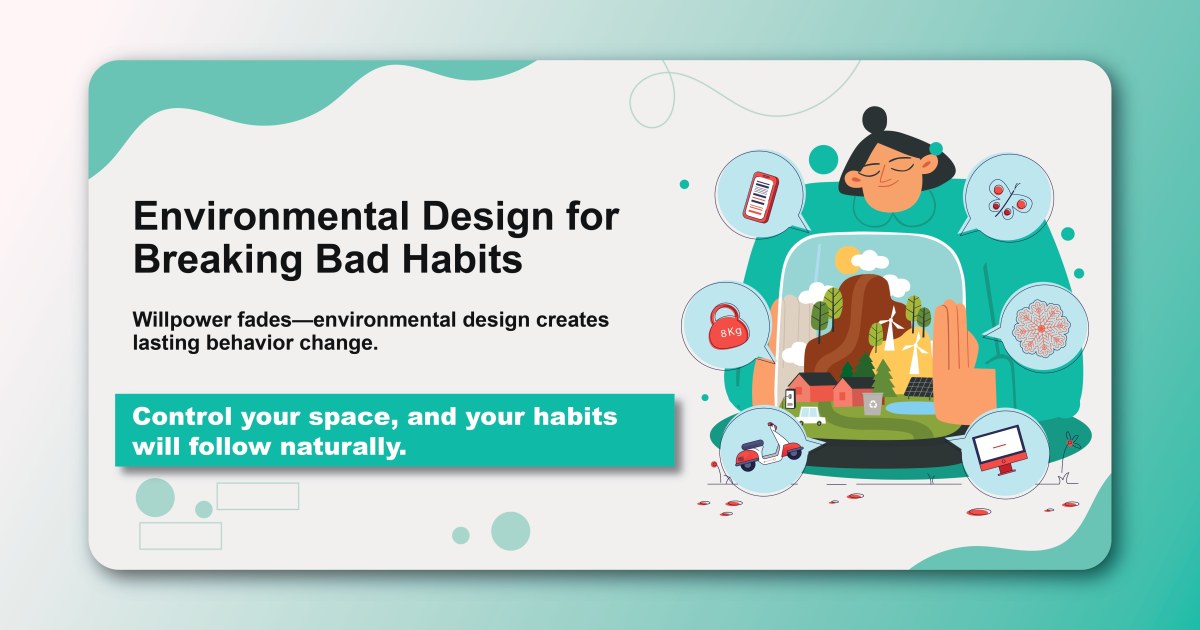
Your environment plays a crucial role in shaping your behavior, often more than willpower or motivation alone. The spaces you live and work in, the objects around you, and the systems you've created all influence your habits in ways you might not even realize. By strategically designing your environment to reduce triggers for bad habits while making positive behaviors easier and more attractive, you can create powerful support for lasting behavior change.
Environmental design for habit change operates on the principle that our surroundings constantly influence our choices and behaviors. When your environment is filled with cues that trigger bad habits, you're essentially fighting an uphill battle against these constant influences. However, when you modify your environment to remove these triggers and add prompts for positive behaviors, you make habit change feel more natural and sustainable.
The power of environmental design lies in its ability to influence behavior automatically, without requiring conscious effort or decision-making. Instead of relying on willpower to resist temptation, you can simply remove the temptation from your environment. Instead of trying to remember to do positive behaviors, you can create environmental cues that naturally prompt these actions.
This approach is particularly effective because it addresses the root causes of many bad habits—the environmental triggers that activate them. By changing your environment, you can interrupt the habit loop before it starts, making it easier to choose healthier alternatives or avoid the unwanted behavior entirely.
This comprehensive guide explores how to use environmental design to break bad habits and support positive behavior change. You'll learn how to identify and modify environmental triggers, create supportive spaces for healthy behaviors, and design systems that make positive choices the path of least resistance.
Understanding Environmental Influence on Habits
The Power of Environmental Cues
Unconscious Influence Most environmental cues influence our behavior below the level of conscious awareness. We respond to these cues automatically, often without realizing we're being influenced.
Trigger Strength Environmental triggers can be incredibly powerful because they bypass our rational decision-making processes and activate habitual responses directly.
Contextual Dependency Many habits are strongly tied to specific environments or contexts. Changing the environment can significantly reduce the likelihood of the habit occurring.
Cumulative Effect Environmental influences work cumulatively—multiple small environmental changes can have a significant impact on behavior over time.
Types of Environmental Triggers
Visual Cues Objects, colors, lighting, and visual arrangements that trigger specific behaviors or emotional responses.
Spatial Cues The layout, organization, and accessibility of spaces that influence movement patterns and behavior choices.
Social Cues The presence or absence of other people, social arrangements, and relationship dynamics within environments.
Temporal Cues Time-based environmental factors like schedules, routines, and time-of-day associations that trigger behaviors.
Sensory Cues Sounds, smells, textures, and other sensory elements that can trigger emotional responses and associated behaviors.
Environmental Assessment and Analysis
Identifying Environmental Triggers
Habit Mapping Map out where and when your bad habits typically occur to identify environmental patterns.
Trigger Audit Questions:
- Where do I typically engage in this bad habit?
- What objects or visual cues are present when I do this behavior?
- Who is usually around when this habit occurs?
- What time of day or what situations trigger this behavior?
- What emotions or states does this environment create?
Environmental Inventory Take a comprehensive inventory of your living and working spaces to identify potential triggers.
Inventory Categories:
- Physical objects that trigger or support bad habits
- Spatial arrangements that encourage unwanted behaviors
- Visual cues and reminders of bad habits
- Accessibility of items needed for bad habits
- Barriers to positive alternative behaviors
Analyzing Environmental Patterns
Habit-Environment Connections Identify specific connections between environmental factors and your bad habits.
Connection Analysis:
- Which environments make bad habits feel automatic?
- What environmental factors increase the likelihood of the habit?
- How does the environment affect your mood and decision-making?
- What environmental cues trigger cravings or urges?
- Which spaces support or undermine your goals?
Environmental Barriers Identify environmental factors that make it difficult to break bad habits or adopt positive ones.
Barrier Categories:
- Physical barriers to positive behaviors
- Convenience factors that support bad habits
- Social or cultural environmental influences
- Emotional associations with specific spaces
- Systemic issues with environmental organization
Environmental Modification Strategies
Removal and Elimination
Trigger Removal Remove or hide objects, cues, and environmental factors that trigger bad habits.
Removal Strategies:
- Remove tempting objects from sight
- Delete apps or digital triggers
- Rearrange spaces to eliminate visual cues
- Store problematic items in inconvenient locations
- Create physical barriers to access
Environmental Purging Systematically eliminate environmental supports for bad habits.
Purging Process:
- Identify all environmental supports for the bad habit
- Remove or relocate these items
- Clean and reorganize affected spaces
- Replace removed items with positive alternatives
- Monitor and adjust as needed
Friction and Barriers
Increasing Friction Make bad habits more difficult and inconvenient to perform by adding steps or obstacles.
Friction Techniques:
- Add physical distance between you and triggers
- Create time delays or waiting periods
- Require multiple steps to access problematic items
- Add financial or social costs to bad habits
- Create accountability checkpoints
Strategic Barriers Design specific barriers that interrupt the automatic flow of bad habits.
Barrier Examples:
- Lock apps behind password protection
- Store unhealthy foods in inconvenient locations
- Create physical obstacles to unwanted behaviors
- Add decision points that require conscious choice
- Implement cooling-off periods
Addition and Enhancement
Positive Environmental Cues Add environmental elements that trigger and support positive behaviors.
Positive Cue Strategies:
- Place visual reminders of goals and values
- Create dedicated spaces for positive activities
- Add tools and resources for healthy behaviors
- Design environments that inspire and motivate
- Include social elements that support positive choices
Environmental Optimization Optimize your environment to make positive behaviors easier and more attractive.
Optimization Techniques:
- Arrange spaces to support healthy workflows
- Improve lighting, air quality, and comfort
- Add elements that create positive emotions
- Organize tools and resources for easy access
- Create beautiful, inspiring environments
Room-by-Room Environmental Design
Kitchen and Dining Areas
For Healthy Eating Habits:
- Keep healthy foods visible and accessible
- Store unhealthy foods out of sight or remove them entirely
- Use smaller plates and portion control tools
- Create an appealing eating environment
- Remove distractions like TV or phones from eating areas
For Reducing Stress Eating:
- Create a calm, peaceful kitchen environment
- Remove trigger foods during stressful periods
- Add stress-relief tools like herbal teas
- Create designated eating spaces separate from stress areas
- Include reminder notes about emotional eating awareness
Home Office and Work Spaces
For Reducing Procrastination:
- Organize workspace to minimize distractions
- Remove or block access to time-wasting websites
- Create visual reminders of important tasks
- Set up dedicated work zones
- Include tools that support focus and productivity
For Reducing Digital Distractions:
- Create phone-free zones or times
- Use website blockers and app restrictions
- Arrange workspace to minimize technology temptations
- Add physical books or alternative activities
- Create clear boundaries between work and leisure spaces
Bedroom and Sleep Areas
For Better Sleep Habits:
- Remove screens and electronic devices
- Create a cool, dark, comfortable environment
- Add elements that promote relaxation
- Establish clear boundaries between sleep and other activities
- Include tools that support bedtime routines
For Reducing Late-Night Bad Habits:
- Create physical barriers to nighttime triggers
- Add relaxation tools and alternatives
- Remove stimulating elements from the bedroom
- Create environmental cues for bedtime routines
- Design spaces that promote rest and recovery
Living and Social Areas
For Reducing Mindless Consumption:
- Arrange seating to promote conversation over screen time
- Remove or relocate trigger items
- Add books, games, or other engaging alternatives
- Create spaces that encourage active rather than passive activities
- Include elements that promote social connection
For Supporting Active Habits:
- Make exercise equipment visible and accessible
- Create spaces for movement and stretching
- Add elements that inspire physical activity
- Remove barriers to active behaviors
- Include tools that support recreational activities
Digital Environment Design
Technology and Apps
App Management Modify your digital environment to reduce triggers and support positive behaviors.
App Strategies:
- Delete or hide apps that trigger bad habits
- Use app timers and restrictions
- Reorganize home screens to promote positive choices
- Add apps that support healthy behaviors
- Create friction for accessing problematic apps
Digital Decluttering Systematically remove digital clutter and distractions.
Decluttering Process:
- Unsubscribe from triggering content
- Delete unused apps and accounts
- Organize digital files and information
- Remove digital reminders of bad habits
- Clean up social media feeds and connections
Online Environment
Social Media Management Modify your online social environment to support positive behaviors.
Social Media Strategies:
- Unfollow accounts that trigger bad habits
- Follow accounts that inspire positive behaviors
- Use privacy settings to reduce unwanted exposure
- Create positive online communities
- Set boundaries around social media use
Information Environment Curate the information you consume to support your goals.
Information Curation:
- Subscribe to content that supports positive behaviors
- Remove negative or triggering information sources
- Create positive information feeds
- Use tools to filter and organize information
- Set boundaries around news and media consumption
Social Environment Design
Relationship Modification
Social Circle Assessment Evaluate how your social relationships support or undermine your habit change goals.
Social Assessment:
- Identify relationships that trigger bad habits
- Find relationships that support positive behaviors
- Assess social pressure and influence patterns
- Evaluate social environment contexts
- Consider relationship modifications needed
Social Boundary Setting Create boundaries in relationships that support your behavior change goals.
Boundary Strategies:
- Communicate your goals clearly to others
- Set limits on social activities that trigger bad habits
- Create alternative social activities
- Find accountability partners
- Seek support from like-minded individuals
Community Building
Supportive Communities Build or join communities that support your positive behavior changes.
Community Strategies:
- Join groups focused on your goals
- Participate in online communities
- Create accountability partnerships
- Engage in activities that attract like-minded people
- Contribute to positive community building
Professional Support Include professional support as part of your social environment.
Professional Support Options:
- Therapists or counselors
- Coaches or mentors
- Support groups
- Professional communities
- Educational programs
Implementation and Maintenance
Gradual Implementation
Phased Approach Implement environmental changes gradually to avoid overwhelming yourself.
Implementation Phases:
- Start with the most impactful changes
- Focus on one environment at a time
- Allow time to adjust to each change
- Monitor the effectiveness of modifications
- Make adjustments based on results
Change Management Manage the process of environmental change strategically.
Change Management Strategies:
- Set realistic expectations for adjustment periods
- Involve family members or housemates in changes
- Document changes and their effects
- Be flexible and willing to adjust
- Celebrate successful environmental modifications
Monitoring and Adjustment
Effectiveness Tracking Monitor how environmental changes affect your behavior and habits.
Tracking Methods:
- Habit occurrence frequency
- Trigger encounter rates
- Mood and energy levels
- Ease of positive behavior performance
- Overall satisfaction with environmental changes
Continuous Improvement Regularly assess and improve your environmental design.
Improvement Process:
- Regular environment audits
- Feedback from family members or housemates
- Experimentation with new modifications
- Adaptation to changing needs and circumstances
- Learning from successes and failures
Environmental design is one of the most powerful tools for breaking bad habits and supporting positive behavior change. By strategically modifying your surroundings, you can create an environment that naturally supports your goals and makes positive choices feel easier and more automatic.
Remember that environmental design is an ongoing process, not a one-time event. Your needs, circumstances, and goals may change over time, requiring adjustments to your environmental modifications. The key is to remain mindful of how your environment influences your behavior and to continuously optimize it to support your well-being and success.
The investment of time and effort in environmental design pays dividends in reduced willpower requirements and increased success in maintaining positive behaviors. When your environment is working for you rather than against you, behavior change becomes significantly more sustainable and enjoyable.
Ready to transform your environment to support positive behavior change? Start designing your habit-supporting environment with Habityzer and discover how strategic environmental modifications can make breaking bad habits feel natural and sustainable.