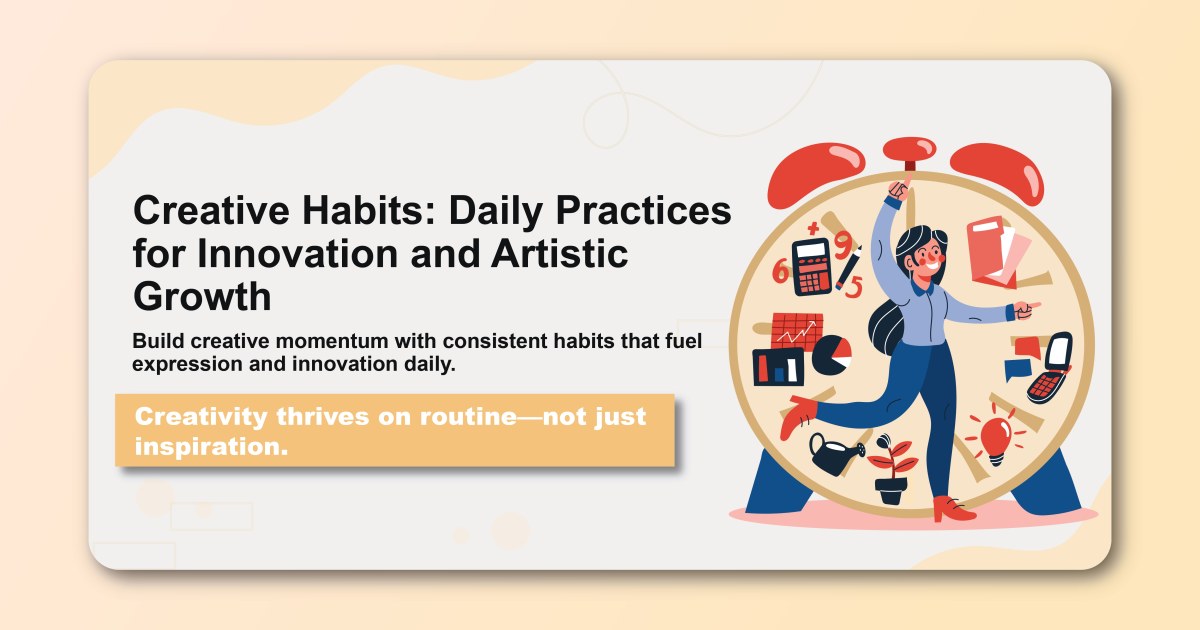
Creativity isn't a mysterious talent reserved for a chosen few—it's a skill that can be developed, nurtured, and strengthened through consistent practice. Just as athletes train their bodies and scholars exercise their minds, creative individuals must cultivate habits that support and enhance their creative abilities. Whether you're an artist, writer, entrepreneur, or simply someone looking to bring more innovation into your life, developing creative habits will transform how you approach problems, generate ideas, and express yourself.
Understanding the Creative Process
The Neuroscience of Creativity
Modern neuroscience reveals that creativity involves the dynamic interaction between different brain networks. The Default Mode Network (DMN) handles idea generation and imagination, while the Executive Attention Network focuses and refines ideas. The Salience Network determines which ideas deserve attention. Effective creative habits engage and strengthen these neural pathways.
Key Brain Functions in Creativity:
- Divergent Thinking: Generating multiple ideas and possibilities
- Convergent Thinking: Evaluating and refining ideas into practical solutions
- Cognitive Flexibility: Switching between different concepts and perspectives
- Working Memory: Holding and manipulating multiple ideas simultaneously
- Inhibitory Control: Filtering out irrelevant thoughts to focus on promising ideas
The Creative Habit Loop
Creative habits follow the same neurological pattern as other habits but with unique characteristics:
Cue → Routine → Reward
- Cue: Environmental or temporal triggers that signal creative time
- Routine: The specific creative practice or process
- Reward: The satisfaction of creation, insight, or progress
Example: Morning Writing Habit
- Cue: Cup of coffee and blank notebook on desk
- Routine: 30 minutes of stream-of-consciousness writing
- Reward: Mental clarity and captured ideas for later development
Foundational Creative Habits
Daily Creative Practice
Morning Creativity Sessions (20-60 minutes):
- Schedule creative work during your peak energy hours
- Protect this time from interruptions and obligations
- Focus on creation rather than editing or perfectionism
- Use this time for your most important creative project
Evening Idea Capture (10 minutes):
- Review and record ideas that emerged throughout the day
- Sketch, write, or voice-record concepts before they fade
- Connect new ideas to existing projects or interests
- Plan tomorrow's creative session based on today's insights
Creative Minimum Viable Practice:
- Commit to a tiny daily creative act (5 minutes minimum)
- Write one paragraph, sketch one drawing, compose one melody
- Focus on consistency over output quality
- Build creative momentum through regular engagement
Idea Generation Habits
Daily Idea Quota:
- Generate a specific number of ideas each day (start with 10)
- Ideas can be for any area: business, art, solutions to problems, improvements
- Record all ideas without immediate judgment
- Review weekly patterns to identify recurring themes
Cross-Pollination Practice:
- Intentionally consume content outside your primary field
- Read books, watch videos, or attend events in different domains
- Look for connections between disparate fields
- Ask: "How might principles from X apply to Y?"
Question Everything Habit:
- Develop a habit of asking "What if?" and "Why not?"
- Challenge assumptions in your daily environment
- Wonder about alternatives to common practices
- Record interesting questions for future exploration
Observation and Input Habits
Daily Sensory Awareness:
- Spend 5-10 minutes fully engaging your senses
- Notice colors, textures, sounds, and patterns in your environment
- Practice describing experiences in vivid detail
- Use this sensory information in your creative work
Inspiration Collecting:
- Maintain a collection system for inspiring content
- Use apps, notebooks, or digital folders to organize inspiration
- Include images, quotes, videos, articles, and experiences
- Regularly review your collection for creative sparks
Active Listening and Observation:
- Practice deep listening in conversations
- Observe human behavior and interactions
- Notice stories, conflicts, and emotions around you
- Use these observations as raw material for creative work
Creative Rituals and Environment Design
Creating Your Creative Space
Physical Environment Optimization:
- Designate a specific area for creative work
- Remove distractions and clutter
- Include tools, materials, and inspiration sources
- Ensure comfortable lighting and seating
Psychological Environment:
- Establish clear boundaries around creative time
- Communicate your creative schedule to others
- Create rituals that signal the start of creative work
- Design your space to support the specific type of creativity you practice
Portable Creative Kit:
- Assemble a mobile kit for creative work anywhere
- Include notebooks, pens, recording devices, or digital tools
- Practice creativity in different environments
- Use travel and downtime for creative exploration
Time and Energy Management
Energy-Based Creative Scheduling:
- Identify your natural creative energy patterns
- Schedule demanding creative work during peak energy
- Use lower-energy periods for administrative or preparatory work
- Honor your natural rhythms rather than forcing creativity
Creative Time Protection:
- Treat creative time as sacred and non-negotiable
- Set boundaries with family, friends, and colleagues
- Turn off notifications and distractions during creative sessions
- Batch similar activities to preserve creative flow
Creative Recovery Habits:
- Build rest and renewal into your creative practice
- Take regular breaks during intensive creative sessions
- Engage in activities that replenish creative energy
- Recognize signs of creative fatigue and respond appropriately
Specific Creative Habits by Discipline
Writing Habits
Stream-of-Consciousness Writing:
- Write continuously without stopping for a set time period
- Don't edit, censor, or worry about quality
- Use this practice to overcome writer's block
- Mine these sessions for useful ideas and insights
Character and World Building:
- Develop fictional characters through daily character sketches
- Create detailed backgrounds and motivations
- Practice dialogue writing between different characters
- Build consistent fictional worlds through regular development
Research and Fact Gathering:
- Dedicate time to research topics related to your writing
- Collect interesting facts, stories, and details
- Interview people with relevant experiences
- Use real-world details to enhance fictional work
Visual Arts Habits
Daily Sketching Practice:
- Draw something every day, regardless of skill level
- Focus on observation rather than perfect representation
- Experiment with different subjects and techniques
- Use sketching as a way to see and understand the world
Color and Composition Studies:
- Study how masters use color and composition
- Practice color mixing and theory
- Experiment with different compositional approaches
- Analyze what makes certain visual arrangements effective
Medium Exploration:
- Regularly experiment with new artistic mediums
- Combine different techniques and materials
- Push the boundaries of traditional medium use
- Document successful experiments for future reference
Music and Audio Habits
Daily Instrument Practice:
- Maintain technical skills through regular practice
- Learn new pieces or techniques consistently
- Practice improvisation and spontaneous creation
- Record practice sessions to track progress
Listening and Analysis:
- Study music theory through active listening
- Analyze compositions in different genres and styles
- Transcribe music by ear to improve understanding
- Explore music from different cultures and time periods
Sound Exploration:
- Experiment with found sounds and field recordings
- Practice creating music with unconventional instruments
- Explore electronic music production techniques
- Combine acoustic and digital elements
Business and Innovation Habits
Problem Identification:
- Regularly observe inefficiencies and pain points
- Ask customers and users about their challenges
- Look for gaps in existing products or services
- Document problems without immediately jumping to solutions
Solution Brainstorming:
- Generate multiple solutions for identified problems
- Practice lateral thinking and unconventional approaches
- Combine ideas from different industries or contexts
- Prototype and test ideas quickly and cheaply
Trend Analysis:
- Stay informed about developments in your industry
- Study emerging technologies and social changes
- Anticipate future needs and opportunities
- Connect current trends to potential business applications
Overcoming Creative Blocks
Understanding Creative Blocks
Creative blocks are natural parts of the creative process, often caused by:
- Perfectionism: Fear of creating imperfect work
- Overwhelm: Too many ideas or options to choose from
- External Pressure: Deadlines, expectations, or criticism
- Lack of Input: Insufficient inspiration or new experiences
- Fatigue: Mental or physical exhaustion
Block-Breaking Habits
Change Your Environment:
- Work in a different location
- Rearrange your creative space
- Take your work outdoors or to a coffee shop
- Use different tools or materials than usual
Impose Constraints:
- Set artificial limitations on your work
- Use random word or image prompts
- Work with limited time, materials, or scope
- Turn constraints into creative challenges
Cross-Training Activities:
- Engage in physical exercise to stimulate blood flow
- Practice a different creative discipline
- Take a shower, walk, or do mundane tasks
- Allow your subconscious mind to work on problems
Collaborative Engagement:
- Discuss your project with others
- Seek feedback on work in progress
- Collaborate with other creative individuals
- Teach or explain your process to someone else
Building Creative Confidence
Developing Creative Self-Efficacy
Small Wins Strategy:
- Set achievable daily creative goals
- Celebrate completion of creative tasks
- Document progress and improvements over time
- Build confidence through consistent practice
Experimentation Mindset:
- View failures as learning opportunities
- Practice without attachment to outcomes
- Try new techniques and approaches regularly
- Embrace mistakes as part of the creative process
Growth Documentation:
- Keep a creative journal or portfolio
- Regular review past work to see improvement
- Share work-in-progress with trusted friends or mentors
- Seek constructive feedback to accelerate growth
Creative Community and Support
Finding Your Tribe:
- Join creative communities related to your interests
- Attend workshops, meetups, or classes
- Participate in online forums and social media groups
- Build relationships with other creative practitioners
Mentorship and Learning:
- Seek mentors who inspire your creative development
- Study the habits and practices of successful creatives
- Take classes or workshops to learn new skills
- Share your knowledge with others who are learning
Accountability Partnerships:
- Find creative accountability partners
- Share goals and progress regularly
- Provide mutual support and encouragement
- Create friendly competition to maintain motivation
Advanced Creative Habits
Innovation and Breakthrough Thinking
Assumption Challenging:
- Regularly question fundamental assumptions in your field
- Ask "What if the opposite were true?"
- Look for conventions that everyone follows without thinking
- Explore what happens when you break established rules
Synthesis and Connection:
- Practice connecting seemingly unrelated concepts
- Look for patterns across different fields and experiences
- Use metaphors and analogies to generate new ideas
- Create concept maps linking different areas of knowledge
Future-Oriented Thinking:
- Regularly envision future scenarios and possibilities
- Study emerging trends and technologies
- Practice scenario planning and "what if" thinking
- Create work that anticipates future needs or interests
Creative Productivity Systems
Capture and Process System:
- Maintain a reliable system for capturing creative ideas
- Regularly process captured ideas into actionable projects
- Use tags or categories to organize different types of ideas
- Create a workflow for moving from idea to finished work
Project Pipeline Management:
- Maintain multiple projects at different stages
- Balance exploration with completion
- Have backup projects for when primary work stalls
- Practice finishing projects rather than abandoning them
Creative Metrics and Evaluation:
- Track creative output and productivity
- Measure quality improvements over time
- Monitor creative process efficiency
- Evaluate which habits most effectively support your creativity
Sustainable Creative Practice
Long-Term Creative Development
Skill Building Progression:
- Identify key skills needed for your creative goals
- Create systematic practice plans for skill development
- Seek increasingly challenging projects and opportunities
- Balance skill building with creative expression
Creative Legacy Building:
- Think about the long-term impact of your creative work
- Build a consistent body of work over time
- Develop a unique voice or style
- Consider how your creativity can influence others
Adaptation and Evolution:
- Regularly evaluate and adjust your creative habits
- Stay open to new techniques and approaches
- Allow your creative practice to evolve with your changing interests
- Balance consistency with experimentation
Integrating Creativity with Life
Work-Life Integration:
- Find ways to incorporate creativity into your professional life
- Use creative approaches to solve everyday problems
- Share your creative work appropriately with colleagues and friends
- Look for opportunities to monetize or formalize your creative practice
Creative Wellness:
- Recognize creativity as essential to mental health and well-being
- Use creative practice as stress relief and emotional processing
- Balance creative ambition with self-care
- Maintain perspective on the role of creativity in your overall life
The Creative Life
Developing creative habits isn't just about producing better art, writing, or innovative solutions—it's about cultivating a more curious, observant, and expressive approach to life. When you regularly engage in creative practice, you develop skills that enhance every aspect of your existence: problem-solving, communication, emotional expression, and personal growth.
The key to successful creative habits is consistency rather than intensity. Small daily practices compound over time to create significant creative capacity and output. Trust the process, be patient with yourself, and remember that creativity is both a skill to be developed and a gift to be shared.
Your creative practice is uniquely yours. While you can learn techniques and approaches from others, your creative voice and vision will emerge through regular practice and authentic expression. Start where you are, use what you have, and do what you can. The world needs your unique creative contribution.
Ready to unlock your creative potential? Build and track your creative habits with Habityzer and discover how daily creative practice can transform both your art and your life.