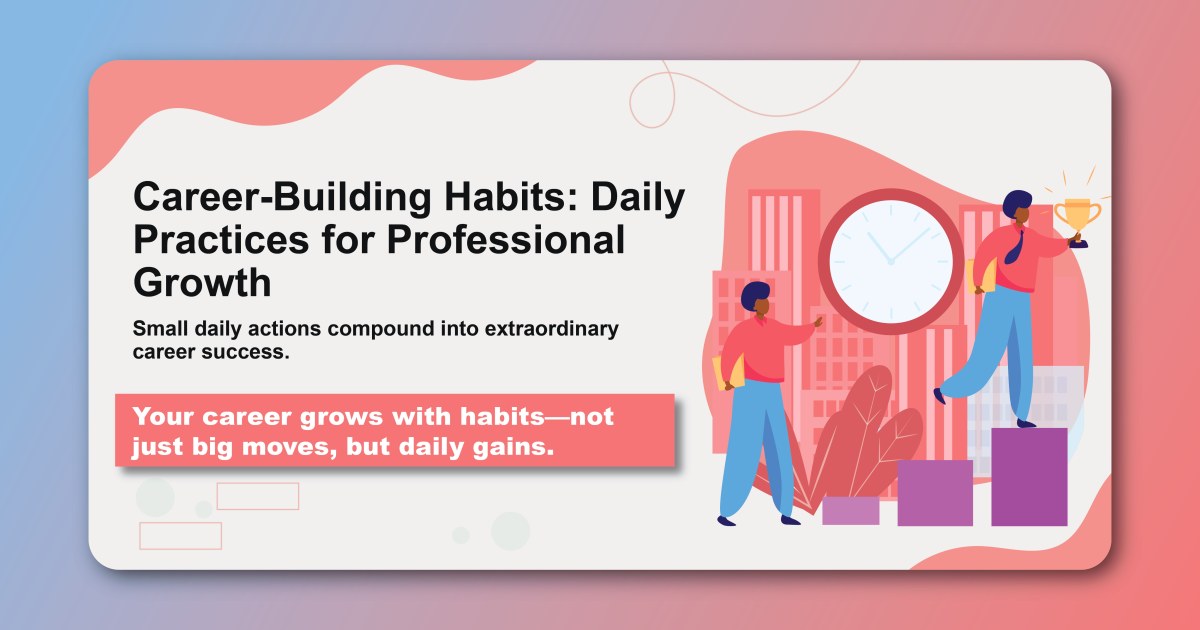
Building a successful career isn't just about talent, luck, or being in the right place at the right time. While these factors can play a role, the most sustainable path to professional growth lies in developing consistent daily habits that compound over time to create exceptional opportunities and achievements. Career-building habits are the small, intentional actions you take every day that gradually build your skills, expand your network, enhance your reputation, and position you for advancement.
The power of career-building habits lies in their compounding effect. Just as financial investments grow through compound interest, professional investments in yourself—through daily learning, relationship building, skill development, and performance excellence—create exponential returns over time. A habit as simple as spending 15 minutes each morning reading industry news or reaching out to one professional contact can transform your career trajectory over months and years.
Many professionals focus on major career moves—job changes, promotions, or dramatic skill acquisitions—while neglecting the daily practices that make these bigger moves possible. However, sustainable career growth is built on a foundation of consistent daily actions that demonstrate competence, build relationships, expand knowledge, and create value for others.
Career-building habits are particularly powerful because they work regardless of your current position, industry, or career stage. Whether you're just starting your professional journey, looking to advance in your current role, or planning a career transition, the right daily practices can accelerate your progress and open doors you might never have imagined.
This comprehensive guide explores the essential daily habits that drive professional growth, provides practical strategies for implementation, and shows you how to create a personal career development system that works consistently over time. Whether you're aiming for leadership roles, seeking expertise in your field, or building entrepreneurial skills, these habits will provide the foundation for long-term career success.
The Foundation of Career-Building Habits
Understanding Professional Compound Growth
Skill Compounding Each day you invest in learning and skill development creates a foundation for future learning and opportunities. Skills build upon each other, creating exponential rather than linear growth.
Relationship Compounding Professional relationships deepen and expand over time, creating networks that provide opportunities, insights, and support throughout your career.
Reputation Compounding Consistent excellence and reliability build a professional reputation that precedes you and opens doors to new opportunities.
Value Creation Compounding Daily practices that create value for others—whether colleagues, clients, or your organization—establish you as an indispensable professional.
Core Principles of Career Development
Consistency Over Intensity Regular, modest investments in your career are more effective than sporadic intense efforts.
Long-term Perspective Career-building habits require patience and persistence, with benefits often becoming apparent months or years later.
Systems Thinking Successful professionals think systemically about their career development, creating interconnected habits that reinforce each other.
Value-First Mindset Focus on creating value for others rather than just advancing your own interests.
Daily Learning and Skill Development Habits
Continuous Learning Practices
Daily Industry Reading Spend 15-30 minutes each morning reading industry news, trends, and insights to stay current and informed.
Reading Strategies:
- Subscribe to key industry publications and newsletters
- Follow thought leaders and experts on professional platforms
- Set up Google Alerts for relevant topics and companies
- Read one professional book per month
- Listen to industry podcasts during commutes or exercise
Skill Development Routines Dedicate time each day to developing specific skills relevant to your career goals.
Skill Development Approaches:
- Practice new software or tools for 15-20 minutes daily
- Take online courses and complete modules consistently
- Work on side projects that stretch your abilities
- Seek challenging assignments that require new skills
- Attend webinars and virtual conferences regularly
Knowledge Documentation Develop systems for capturing and organizing what you learn to maximize retention and application.
Documentation Methods:
- Maintain a learning journal or knowledge base
- Create summaries of key insights and learnings
- Share interesting findings with colleagues
- Write internal blog posts or articles
- Build personal reference materials and resources
Professional Skill Enhancement
Communication Skills Invest daily in improving your written and verbal communication abilities.
Communication Practices:
- Write clearly and concisely in all professional communications
- Practice active listening in every conversation
- Seek feedback on presentations and written work
- Join professional speaking groups like Toastmasters
- Record yourself presenting to identify improvement areas
Technical Skills Stay current with technology and tools relevant to your field.
Technical Development:
- Learn new software features and shortcuts
- Experiment with emerging technologies
- Complete online certifications and training
- Participate in technical forums and communities
- Build personal projects using new technologies
Leadership Skills Develop leadership capabilities regardless of your current role.
Leadership Development:
- Take initiative on team projects
- Volunteer to mentor newer colleagues
- Practice decision-making and problem-solving
- Study successful leaders in your industry
- Seek opportunities to lead cross-functional initiatives
Relationship Building and Networking Habits
Daily Networking Practices
Relationship Maintenance Consistently nurture existing professional relationships through regular, meaningful contact.
Maintenance Strategies:
- Send one personalized message to a professional contact daily
- Share relevant articles or opportunities with your network
- Comment thoughtfully on colleagues' social media posts
- Remember and follow up on personal and professional milestones
- Schedule regular coffee meetings or check-ins
New Connection Building Actively seek to build new professional relationships both within and outside your organization.
Connection Building:
- Introduce yourself to new colleagues and team members
- Attend networking events and professional meetups
- Join industry associations and professional groups
- Participate in online professional communities
- Volunteer for cross-departmental projects and initiatives
Value-First Networking Focus on how you can help others rather than what you can get from them.
Value Creation:
- Share your expertise and knowledge freely
- Make introductions between people who should know each other
- Offer assistance on projects and challenges
- Provide recommendations and referrals
- Share opportunities that might benefit others
Internal Relationship Building
Team Collaboration Build strong relationships with immediate colleagues and team members.
Team Relationship Habits:
- Arrive early to meetings to engage in informal conversation
- Offer help to colleagues facing challenges
- Celebrate team successes and individual achievements
- Practice empathy and understanding in difficult situations
- Contribute positively to team culture and morale
Cross-Functional Relationships Develop relationships with people in other departments and functions.
Cross-Functional Strategies:
- Learn about other departments and their challenges
- Volunteer for company-wide projects and initiatives
- Attend optional company events and activities
- Seek to understand how your work impacts other teams
- Offer your skills and expertise to other departments
Performance Excellence Habits
Daily Performance Optimization
Priority Management Develop systems for identifying and focusing on the most important tasks each day.
Priority Management Practices:
- Start each day by identifying your top 3 priorities
- Use time-blocking to allocate focused time for important work
- Review and adjust priorities based on changing circumstances
- Say no to activities that don't align with your goals
- Batch similar tasks to improve efficiency
Quality Focus Maintain high standards in all work, regardless of the task's perceived importance.
Quality Practices:
- Review all work before submission or sharing
- Seek feedback and incorporate improvements
- Go beyond minimum requirements when possible
- Take ownership of mistakes and learn from them
- Continuously refine your processes and approaches
Proactive Problem Solving Anticipate challenges and develop solutions before problems become critical.
Proactive Strategies:
- Regular risk assessment and mitigation planning
- Stay ahead of deadlines and commitments
- Communicate potential issues early and clearly
- Develop contingency plans for key projects
- Learn from past problems to prevent recurrence
Personal Brand Development
Reputation Building Consistently demonstrate reliability, competence, and professionalism in all interactions.
Reputation Building Habits:
- Meet all commitments and deadlines consistently
- Communicate clearly and professionally
- Take accountability for your work and decisions
- Support colleagues and team success
- Maintain confidentiality and professional ethics
Thought Leadership Position yourself as a knowledgeable and insightful professional in your field.
Thought Leadership Activities:
- Share insights and expertise in team meetings
- Write articles or blog posts about industry topics
- Speak at conferences or internal presentations
- Participate in industry discussions and forums
- Mentor others and share your knowledge
Professional Visibility Ensure that your contributions and achievements are visible to key stakeholders.
Visibility Strategies:
- Volunteer for high-visibility projects
- Present your work and results to leadership
- Document and share your achievements
- Participate in company-wide initiatives
- Build relationships with influential colleagues
Strategic Career Planning Habits
Goal Setting and Progress Tracking
Career Goal Clarity Regularly review and refine your career goals to ensure they remain relevant and motivating.
Goal Setting Practices:
- Conduct quarterly career goal reviews
- Set both short-term and long-term objectives
- Align daily actions with career aspirations
- Seek feedback on your career direction
- Adjust goals based on new opportunities and insights
Progress Monitoring Track your professional development and career advancement systematically.
Progress Tracking:
- Maintain a career achievement journal
- Document key accomplishments and learnings
- Track skill development and certifications
- Monitor feedback and performance reviews
- Measure progress toward career milestones
Opportunity Awareness Stay alert to new opportunities within your organization and industry.
Opportunity Identification:
- Monitor job postings and role requirements
- Understand promotion criteria and pathways
- Stay informed about organizational changes and growth
- Network with people in roles you aspire to
- Identify skill gaps and development needs
Professional Development Planning
Career Development Strategy Create and maintain a strategic approach to your professional growth.
Strategic Planning:
- Develop a 5-year career vision
- Identify key experiences and skills needed
- Create development plans with specific timelines
- Seek mentors and advisors
- Regularly assess and adjust your strategy
Feedback and Self-Assessment Actively seek feedback and conduct honest self-assessments to guide your development.
Assessment Practices:
- Request regular feedback from supervisors and peers
- Conduct personal SWOT analyses quarterly
- Identify strengths to leverage and weaknesses to address
- Set specific improvement goals based on feedback
- Track progress on development areas
Implementation and Sustainability
Building Your Career Habit System
Habit Stacking Link career-building habits to existing routines to ensure consistency.
Stacking Examples:
- Read industry news with your morning coffee
- Network during lunch breaks
- Review goals during weekly planning sessions
- Practice skills during commute time
- Reflect on achievements during evening routines
Time Management Integrate career-building activities into your daily schedule without overwhelming yourself.
Time Management Strategies:
- Allocate specific time blocks for development activities
- Use small pockets of time for quick career-building tasks
- Combine career development with necessary activities
- Set realistic expectations for daily time investment
- Protect your career development time from interruptions
Accountability and Support Create systems and relationships that support your career development efforts.
Accountability Strategies:
- Find an accountability partner or mentor
- Join professional development groups
- Share your goals with supportive colleagues
- Track your progress publicly or with others
- Celebrate milestones and achievements
Measuring Success and Adjusting
Success Metrics Define clear metrics for measuring your career development progress.
Measurement Approaches:
- Skills acquired and certifications earned
- Network expansion and relationship quality
- Project leadership and impact
- Recognition and awards received
- Career advancement and opportunities
Continuous Improvement Regularly evaluate and refine your career-building habits for maximum effectiveness.
Improvement Process:
- Monthly review of habit effectiveness
- Quarterly goal and strategy assessment
- Annual comprehensive career review
- Adjustment of habits based on results
- Integration of new habits as needs evolve
Overcoming Common Challenges
Time Constraints Address the challenge of finding time for career development in busy schedules.
Time Solutions:
- Start with small, manageable habits
- Use micro-learning opportunities throughout the day
- Integrate development with existing responsibilities
- Prioritize high-impact activities
- Eliminate low-value activities to create time
Motivation Maintenance Maintain motivation for career development over the long term.
Motivation Strategies:
- Connect habits to larger career vision
- Celebrate small wins and progress
- Find development activities you enjoy
- Seek support from mentors and peers
- Regularly remind yourself of your why
Building a successful career through daily habits requires patience, consistency, and strategic thinking. The habits you develop today will compound over time to create the career opportunities and achievements of tomorrow. By focusing on continuous learning, relationship building, performance excellence, and strategic planning, you can create a career development system that works regardless of economic conditions, industry changes, or organizational restructuring.
Remember that career-building habits are not just about advancing your own interests—they're about becoming more valuable to others, contributing more effectively to your organization, and building the skills and relationships that allow you to make a meaningful impact in your professional life.
The key is to start small, be consistent, and maintain a long-term perspective. Every day offers new opportunities to invest in your professional future through small, intentional actions that will pay dividends throughout your career.
Ready to accelerate your career growth through strategic daily habits? Start building your professional development system with Habityzer and discover how consistent daily practices can transform your career trajectory and create exceptional opportunities for advancement.